



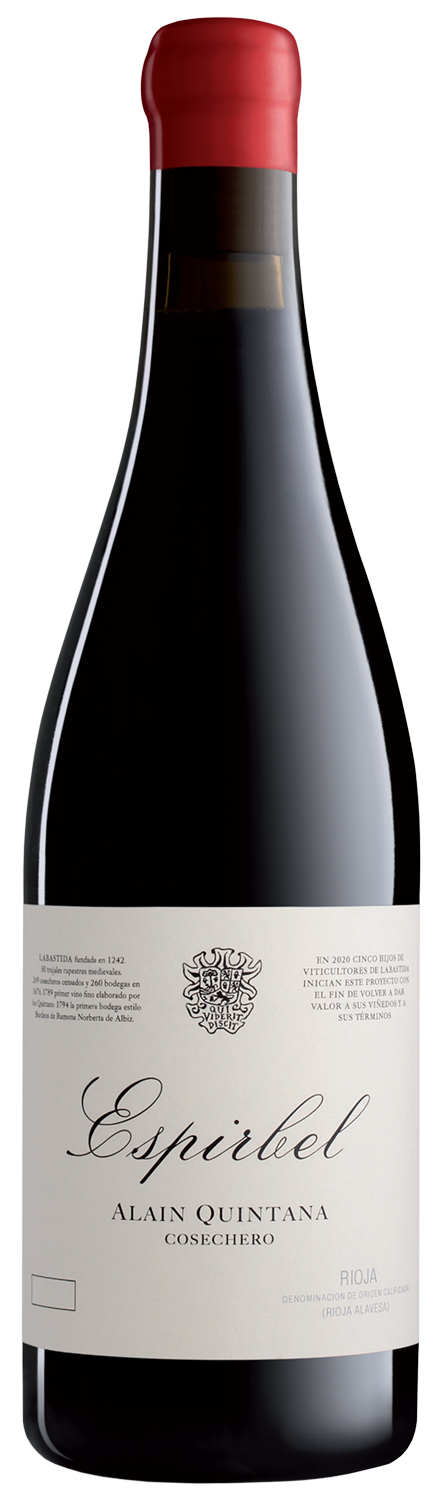
A revolution, or perhaps a restoration, is underway in Rioja. In the ancient Alavesa village of Labastida, five talented, independent farmers have reclaimed their cosechero heritage, growing grapes and producing wine from their own unique plots. In 2020, they began gathering at Granja Nuestra Señora de Remelluri to pursue their shared vision of Labastida’s viticultural future, and now, their single-vineyard expressions have come to life.
Each cosechero is the latest generation in their family to farm grapes, investing their life’s work in the practice, and doing their small part in ensuring a productive future for Labastida. Together, they’re protecting their village from succumbing to the industrial model endemic in Rioja, and showing the world the incredible diversity and quality to be found here. Telmo Rodríguez and his family put Labastida on the map with the wines of Remelluri, and their intention has always been to preserve the village’s beauty and identity. By opening the doors to Remelluri’s top-notch facilities, the sons of these five other grower-families have the chance to independently make their own wines, with the best grapes from their best vineyards. Remelluri is both an example and an incubator for these growers, creating conditions that make success more achievable than going it alone, or simply selling out.
These five single-vineyard Labastida wines, through the lens of excellent viticulture, gentle vinification, and restrained élevage, reveal the diversity of these small (0.4-1.5ha) family holdings, representing a range of grape varieties, soil types, exposures, and elevations. Amazingly, all five plots are located within an expanse of barely 3km, just to the north and the east of the horseshoe curve of the Ebro where Álava meets La Rioja. Cosecheros de Labastida shifts the priorities of Rioja from wines made in the cellar to wines made in the vineyard—a progression toward a “Rioja less traveled”, steered by growers who are inspired to translate the wonder of their family land into the bottle; a Rioja that champions people and place over brand.
The Vineyard
The Quintana family settled in Labastida in 1613 and for 12 generations have dedicated their lives to viticulture. Luis Quintana, Alain’s grandfather, was the last of the Quintanas to be a tenant of a noble family in Labastida. Changes in lifestyle and urban opportunities led these prominent families to sell their lands. Luis Quintana seized the chance to acquire vineyards, which he later bequeathed to his children. They decided to sell a large part of the estate as the urban boom continued and times for viticulture were difficult. Despite economic challenges, Alain was the sole Quintana who followed in his grandfather´s footsteps, working one of the remaining family vineyards – Espirbel.
Vinification
Grapes are harvested by hand in 12kg crates in the morning. After a manual selection in the winery, bunches are destemmed and another manual selection takes place. Grapes are cold-soaked for 3-4 days in stainless steel tanks with regular wetting of the cap, allowing naturally occurring yeast to start fermentation. The must is pumped over twice a day, with gentle aeration to ensure activation and release of nutrients. In the final third of fermentation, grapes are foot-trodden daily in the ancestral way. Once fermentation is complete, the must macerates with the skins with alternating foot treading and wetting the cap. Tasting determines the degree of extraction, followed by gentle pressing in a basket press, then racking into 500, 300, and a few 225L barrels for malolactic fermentation. After MLF, the wine is returned to the same barrels, where it stays for two years, racked once a year, until bottling.
Region
Rioja Alavesa
Village
Labastida
Cosechero
Alain Quintana
Site
Espirbel
Plot Size
1.5ha
Elevation
485m
Orientation
Southeast
Grapes
Tempranillo, Garnacha, Malvasía
Vine Age
30-50 years old
Soil
Calcareous clay and ferrous clay
Fermentation
Fermented with native yeasts with twice daily pump-overs and gentle aeration. Process is finished with foot-trodding in the ancestral way.
Malolactic Fermentation
Yes – in 500L, 300L and a few 225L barrels
Farming
Practicing Organic
Vegan
Yes
ABV
14.5%
Production
1927 bottles
Pack Size
6x750mL