



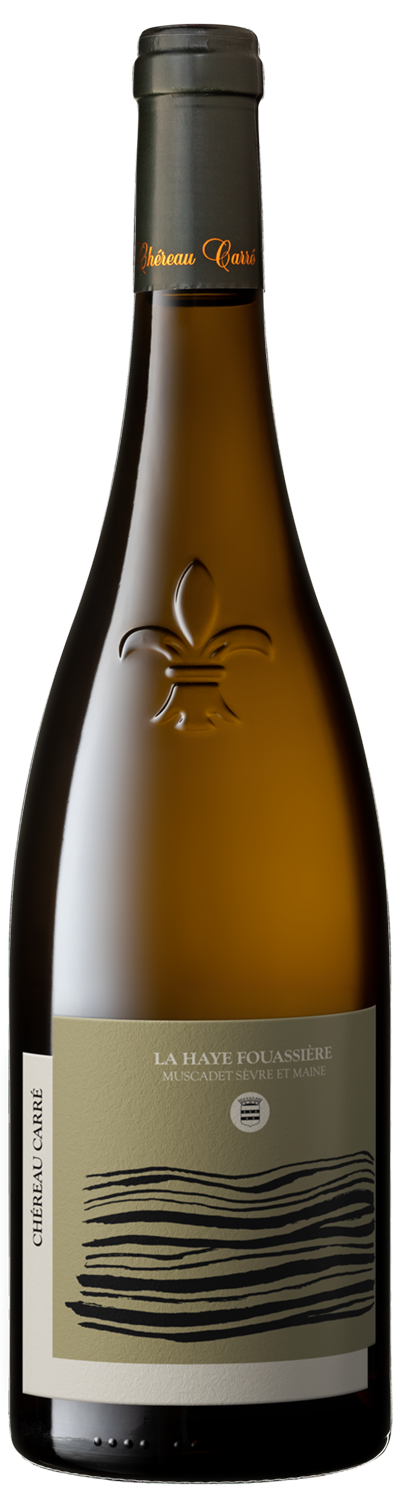
La Haye Fouassière is one of ten Muscadet villages classified as Crus Communaux, a designation seeking to define the specific places in the region that stand out for unique soil types and microclimates, producing wines of identity. The regulations for these Crus cap yields at 45hl/ha, and mandate a minimum of 24 months of aging on the lees. Chéreau Carré produces a wine from four of the Crus Communaux, each made from grapes exhibiting the distinct characteristics of the Cru that dictate Louise’s vinification choices henceforth.
La Haye Fouassière is the westernmost Cru Communaux, located north of the Sèvre at its confluence with the Maine. Since 1960, the Chéreau family has owned and farmed a 10ha vineyard called Château de l’Oiselinière in the cru. The vines here are planted on a sunny, south-facing orthogneiss dome, near the village of Vertou. This idyllic setting is within a natural clos, protected on one side by the woods, and on the other sides by the river (which also moderates temperatures for even ripening). Gneiss is a metamorphic rock, rich in minerals such as quartz and mica, forming a sandy loam soil with a high capacity for heating and mineralization.
The La Haye Fouassière Cru Communaux bottling from ‘Le Clos du Château l’Oiselinière’ is made from the prized two hectares of 80-year-old vines at the top of the dome, while the remaining eight hectares of the site contribute grapes designated for the ‘Château l’Oiselinière de la Ramée’ cuvée.
Vinification
After hand-harvesting, alcoholic fermentation occurs in temperature-controlled stainless steel tanks. After fermentation, the wine ages on the lees for 31 months underground in cement tanks before bottling. Wines further age in bottle at the winery for 2-7 years before being released, at the Chéreau’s discretion. La Haye Fouassière, like all the Chéreau Carré Crus Communaux wines, is only made in the best vintages.
Region
Loire Valley
Appellation
Muscadet Sèvre-et-Maine
Cru Communaux
La Haye Fouassière
Site
Le Clos du Château l’Oiselinière (<2ha)
Elevation
20-30m
Grapes
100% Melon de Bourgogne
Vine Age
Planted between 1940 and 1980
Soil
Orthogneiss
Fermentation
Spontaneously fermented in temperature-controlled stainless steel tanks
Aging
The 2018 vintage spent 31 months on the lees in underground cement vats, followed by 2-7 years aging in bottle
Farming
Ecologic
Vegan
Yes
ABV
12%
Pack Size
12x750mL