Michizakura Brewery
Hokkaidō | Japan

In Japan’s northernmost prefecture, Michizakura combines six generations of family legacy with the forward-thinking vision of master brewer (toji) Koji Yamada to make fresh, textural sake.
Introducing the Producer
A New Home in Hokkaidō
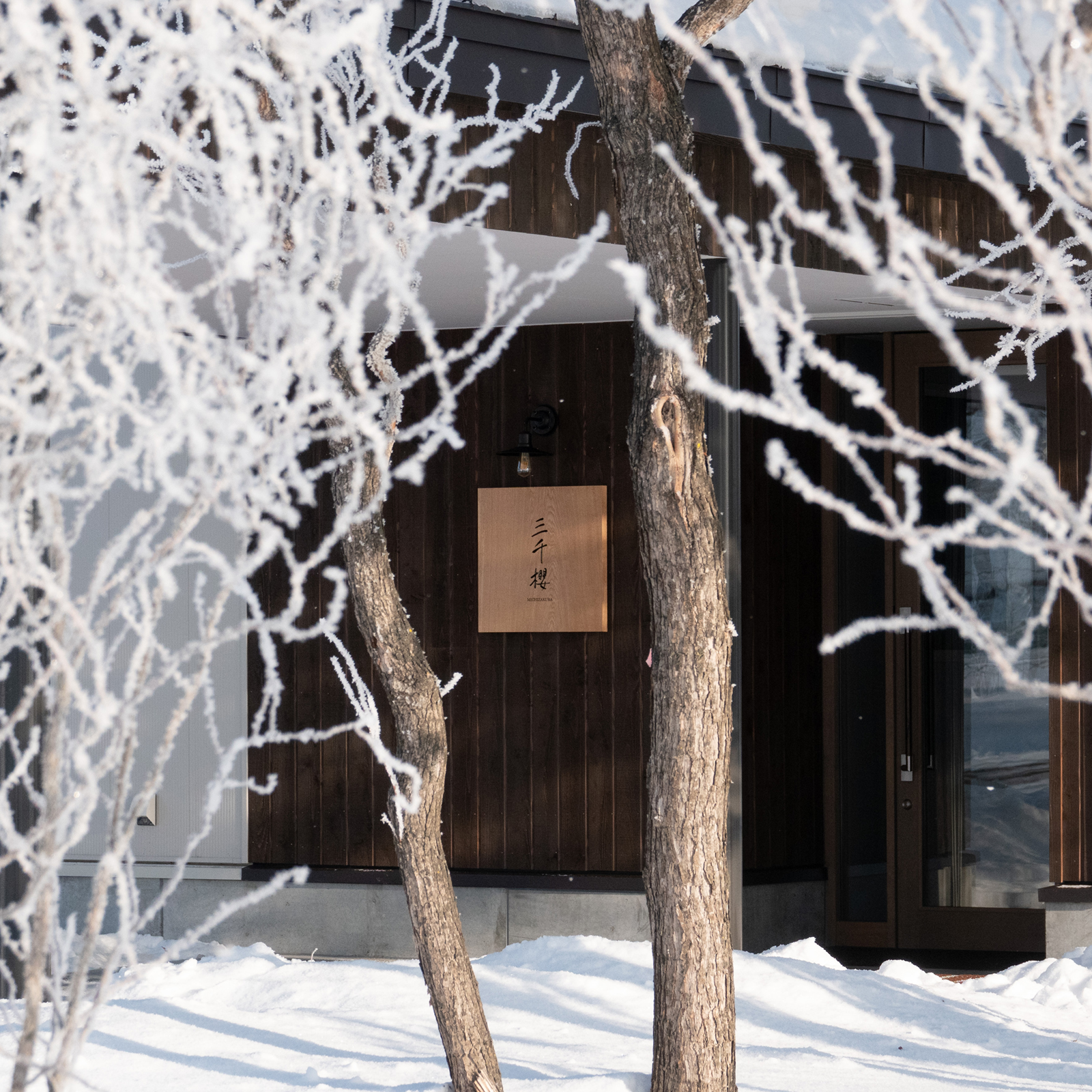
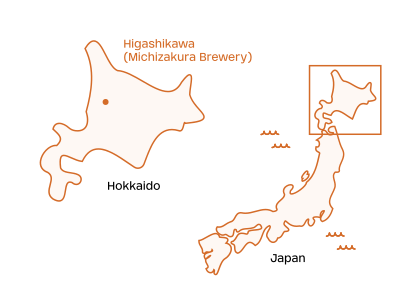
In 2019, the village of Higashikawa took the unprecedented step of inviting an established brewery to operate a publicly owned, privately managed facility. Seeking a new home in Hokkaido’s ideal climate, Koji Yamada won the opportunity and moved his family brewery from Gifu prefecture in central Japan to the northern island.
Today, Michizakura is one of just 16 active breweries in Hokkaido. Under their unique partnership, the municipality provides the state-of-the-art facility, while Michizakura retains complete independence over brewing, quality control, sales, and operations.
History & Origins
From Gifu Heritage to Hokkaido’s Frontier
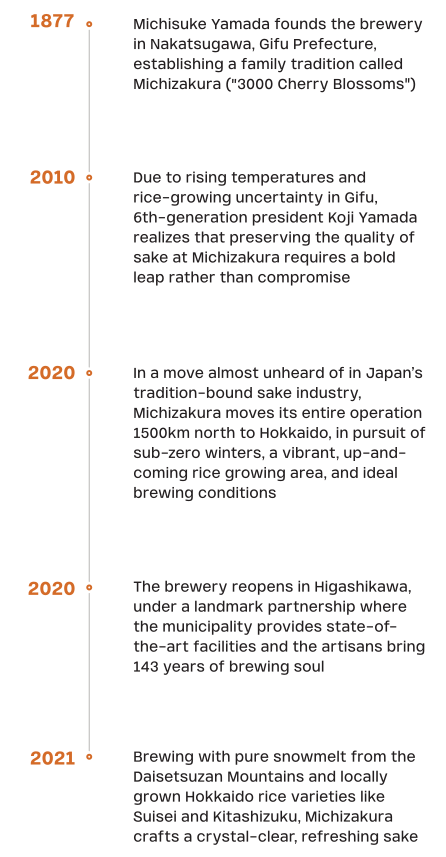
In 1877 (Meiji 10), Michisuke Yamada, a prosperous local merchant, founded a brewery in the former village of Tase, Ena District, Gifu Prefecture. He named it Michizakura (“Three Thousand Cherry Blossoms”), in a play on his own name.
For more than a century, the brewery remained intentionally small, dedicating itself to producing sake of uncompromising quality in the pristine natural environment of Nakatsugawa, where pure mountain water and clean air shaped its identity.
As the brewery buildings aged, however, maintaining the historic facilities became increasingly difficult. At the same time, the effects of climate change made traditional winter brewing more challenging each year.
In 2020, after 143 years in Gifu Prefecture, sixth-generation Koji Yamada made the momentous decision to relocate the entire brewery to Higashikawa, a village in Hokkaido, Japan’s northernmost prefecture, in a move that attracted national attention throughout Japan.
Driven by climate change and the immense potential of world-class sake production in the landscape of Hokkaido, Yamada-san chose to relocate his brewery to this rugged and pristine territory. Today, it has allowed him to explore the potential of the local rice, cooler climate and overall sake potential of Hokkaido.
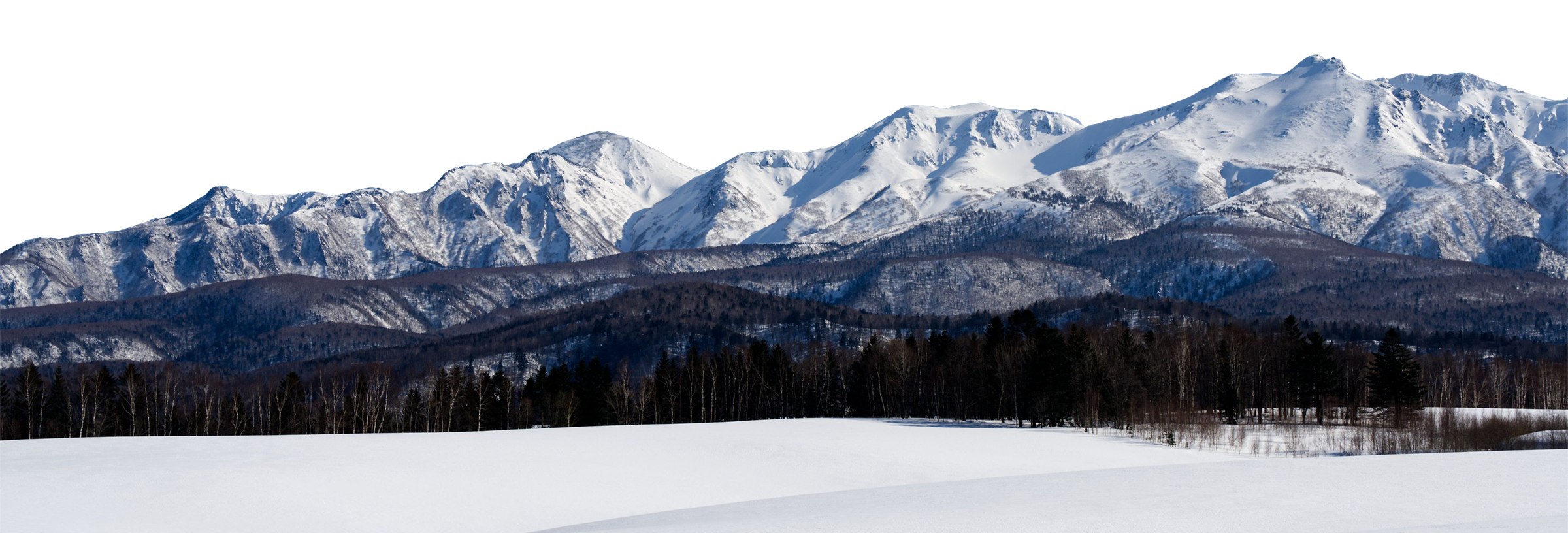
In Hokkaido, the landscape is blessed by Daisetsuzan National Park, Japan’s largest national park, and boasts untouched wilderness and dreamlike scenery across all seasons. The town of Higashikawa is abundant in the resources elemental for world class sake brewing: groundwater reserves of melted snow from the peaks of the nearby Mt.Taisetsu and fields of locally grown Higashikawa rice make this a quiet, yet powerful paradise.
Although modest in scale, Michizakura has embraced a new chapter as both the local sake brewery of Higashikawa and one of Hokkaido’s most distinctive sake producers.
Master Brewer Bio
Toji Koji Yamada
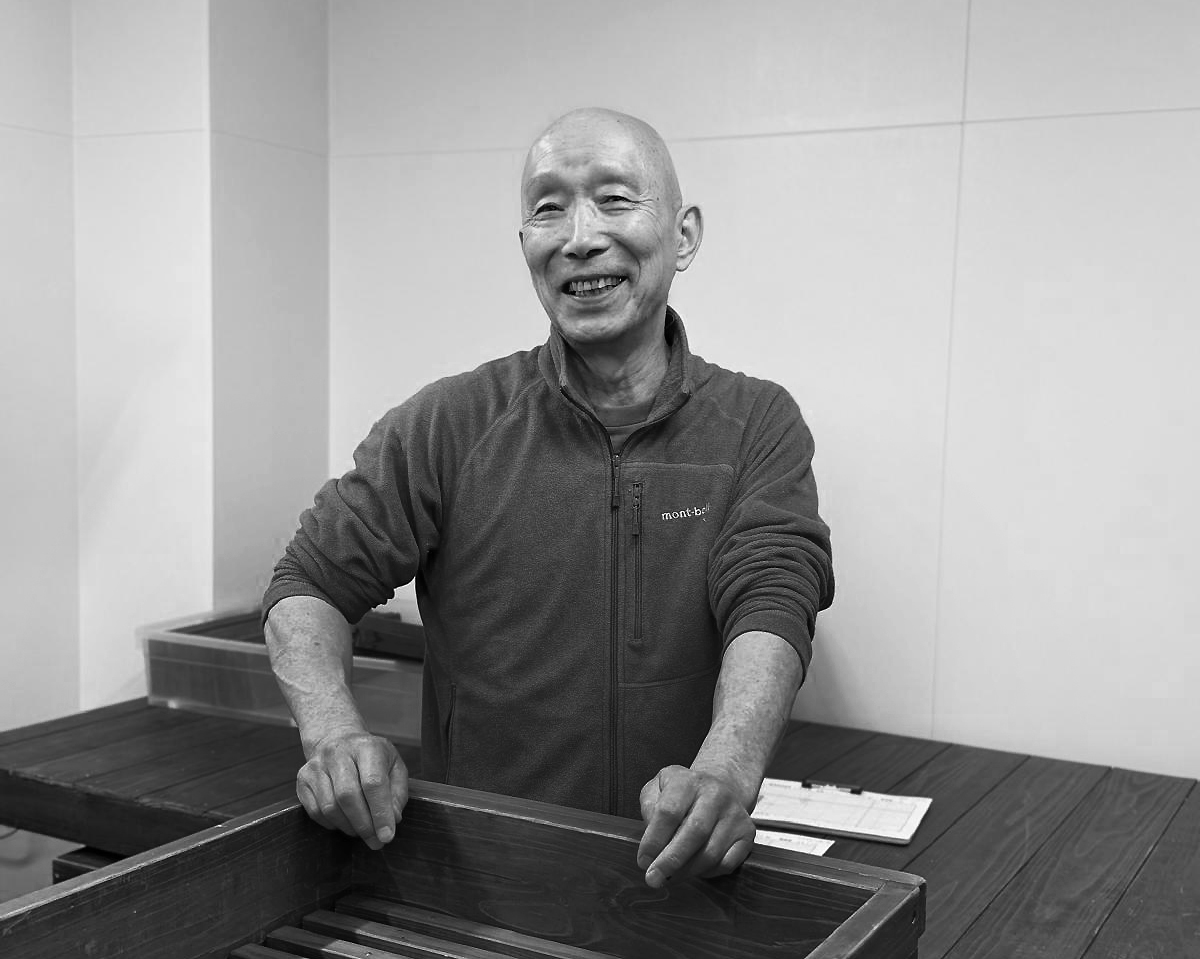
Born in 1959 in Nakatsugawa, Gifu Prefecture, Koji Yamada is the eldest son of Michizakura Brewery’s founding family. Initially, he had no intention of succeeding the family business and instead operated a Japanese language school in Taiwan. Around 1995, following his father’s declining health, he returned to the brewery. Over the next decade, he studied sake brewing under three successive toji (master brewers), refining both his technical skills and brewing philosophy. In the winter of 2004, he assumed the double role of the brewery’s owner and its toji.
Process & Philosophy
Precision & Patience
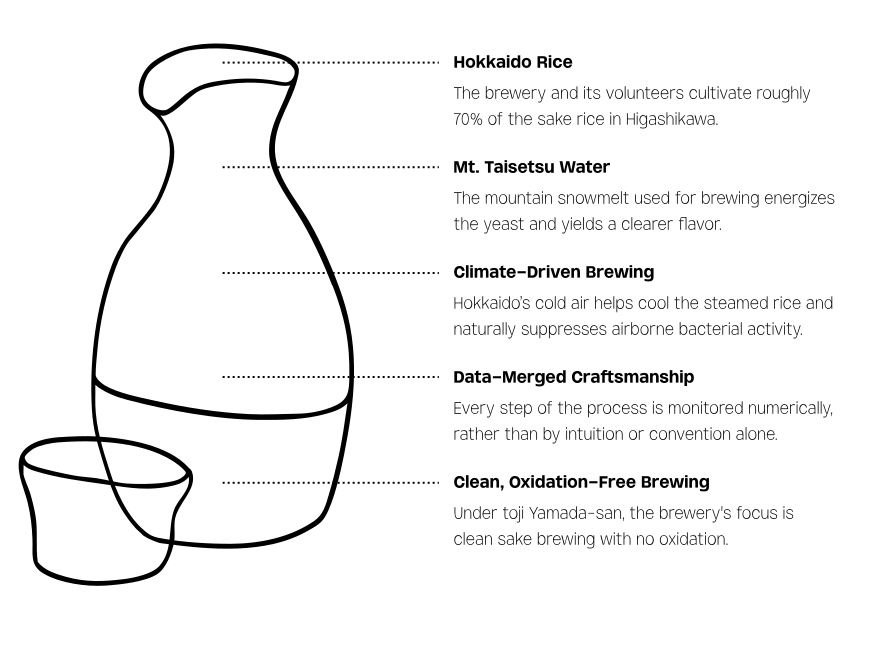
At Michizakura, brewing decisions are guided by measurable data rather than intuition alone. A tour through the processes of the pristinely clean brewery speaks to the precision and human scale of this project.Yamada-san is quick to point out what could be overdone, wasted or is just plain wrong.
Michizakura’s founder, Michisuke Yamada, was fond of saying that sake brewing is an extension of agriculture. The belief that great sake begins with great farming continues to guide the brewery today. Since relocating to Higashikawa, Michizakura has worked closely with the local agricultural cooperative and dedicated rice growers to source the premium local rice varieties Suisei and Kitashizuku. Working directly with local farmers enables a better understanding of each harvest, strengthens regional agriculture, and produces sake that truly expresses the character of its place of origin.
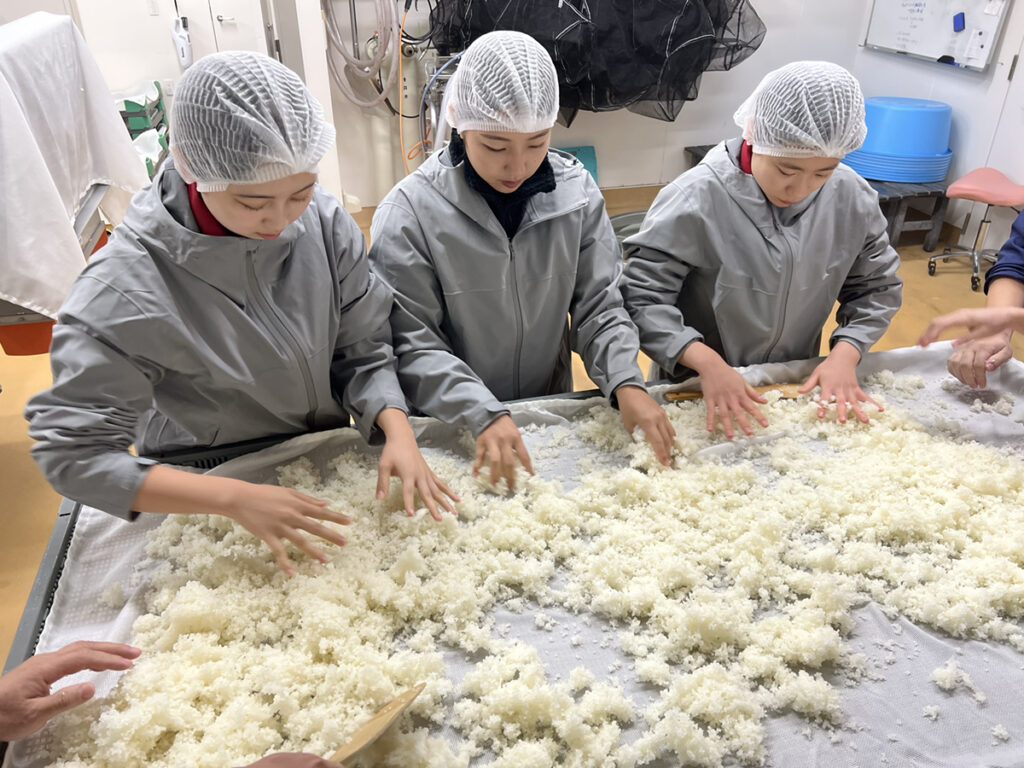
Koji is regarded as the foundation of the entire brewing process. The quality established during koji production determines the potential of every subsequent stage, from yeast propagation to fermentation and ultimately the character of the finished sake. Fermentation is designed and not left to chance. The traditional three-stage addition (Sandan Shikomi) gradually increases the volume of the mash, allowing saccharification and alcoholic fermentation to progress in balance while minimizing microbiological risk.
Another defining principle of Michizakura is its uncompromising approach to oxidation. Yamada-san believes that their job is not simply to make sake, but to manage the battle against oxidation. Every process, from pressing to bottling, is designed to minimize oxygen exposure and preserve the freshness, purity, and longevity of the sake.
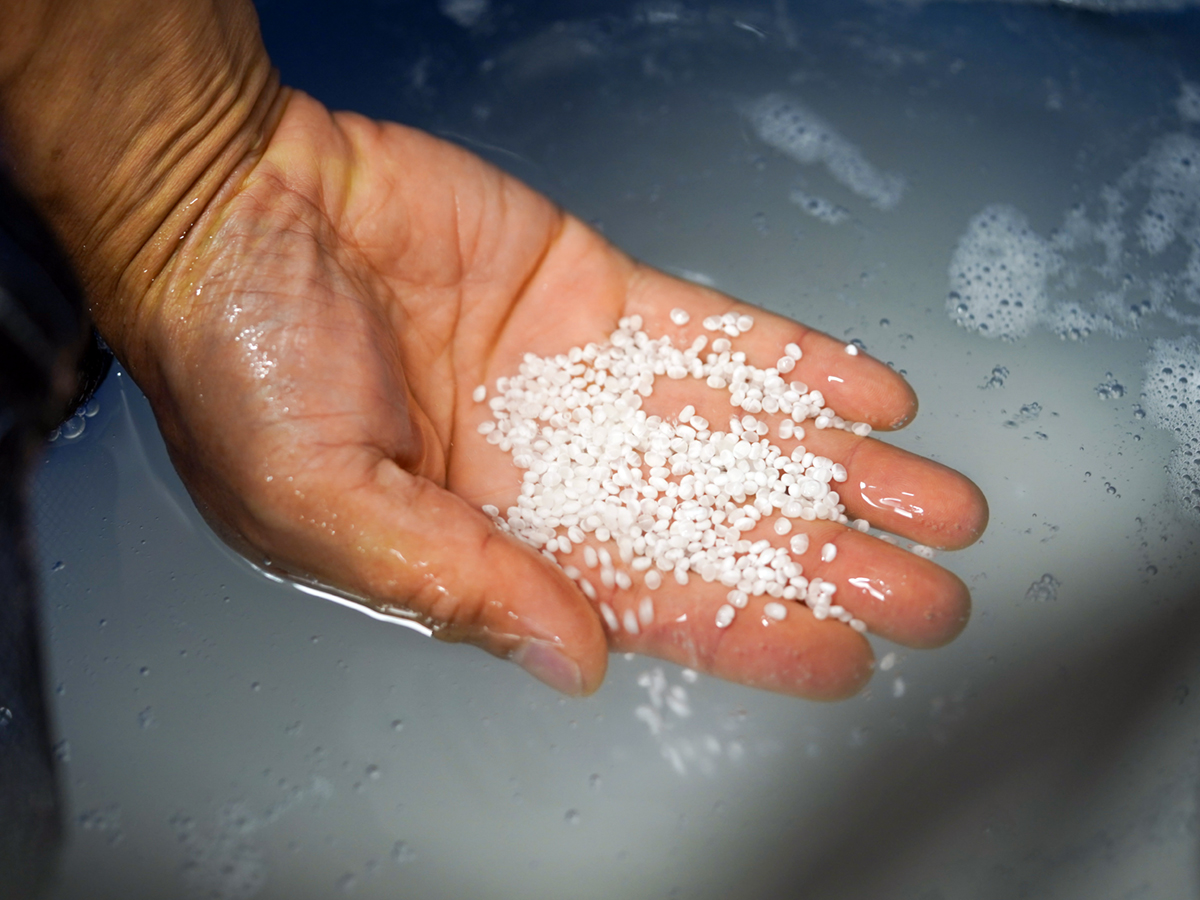
Both pasteurized and unpasteurized sake are stored at approximately 0°C (32°F) until shipment. This policy is not adopted because refrigeration is strictly necessary for every product, but because it represents the brewery’s commitment to preserving maximum freshness.
Labels are designed by a dedicated designer to maintain a unified visual identity and are carefully applied by hand, using the bottle seam as a reference to ensure consistent presentation.
Michizakura Brewery
Sake-Making Process
Data Points
Michizakura at a Glance
● Founded in 1877 in Tase, Ena District, Gifu Prefecture
● Moved to Higashikawa, Hokkaido Prefecture in 2019
● Toji: Koji Yamada
● Water: Medium-hard snowmelt from the Daisetsu Mountain
● Rice: Suisei and Kitashizuku from Hokkaido
● Yellow Koji
● Moto: Sokujo moto with 1401 and M04 Yeast
● Yabuta Press
● Roka: Super Fine filter (non-charcoal filtered)
● Binkan hiire: Pasteurized once in bottle, ~24 bottles at a time for exacting and brief time at temperature
● Every bottle is hand-labeled and stored in a cold room at 0º F
Products
Sake
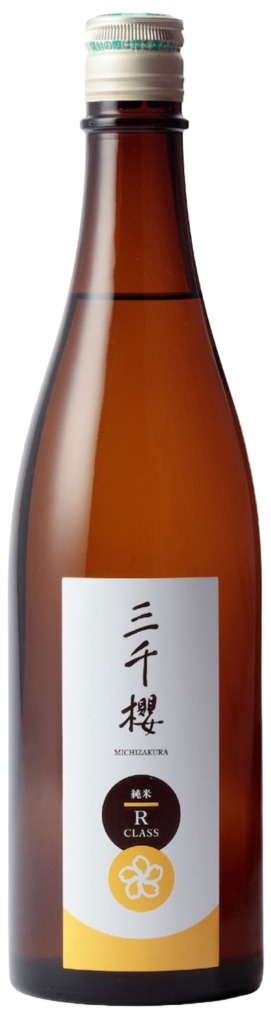
Michizakura Junmai ‘R Class’
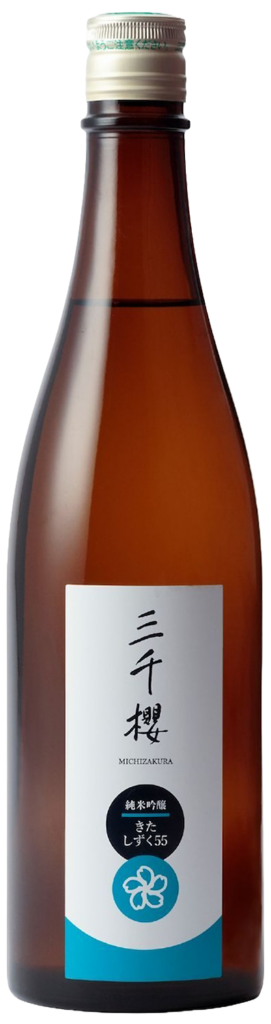
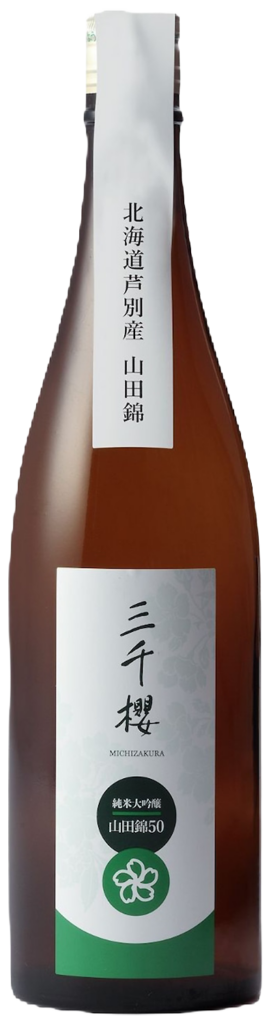
Michizakura Kitashizuku 55