Grand Saint-Cyr
Côte-Rôtie | Rhône Valley

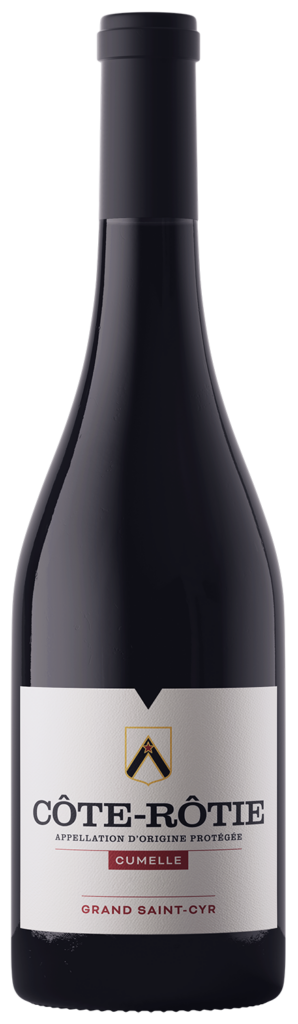
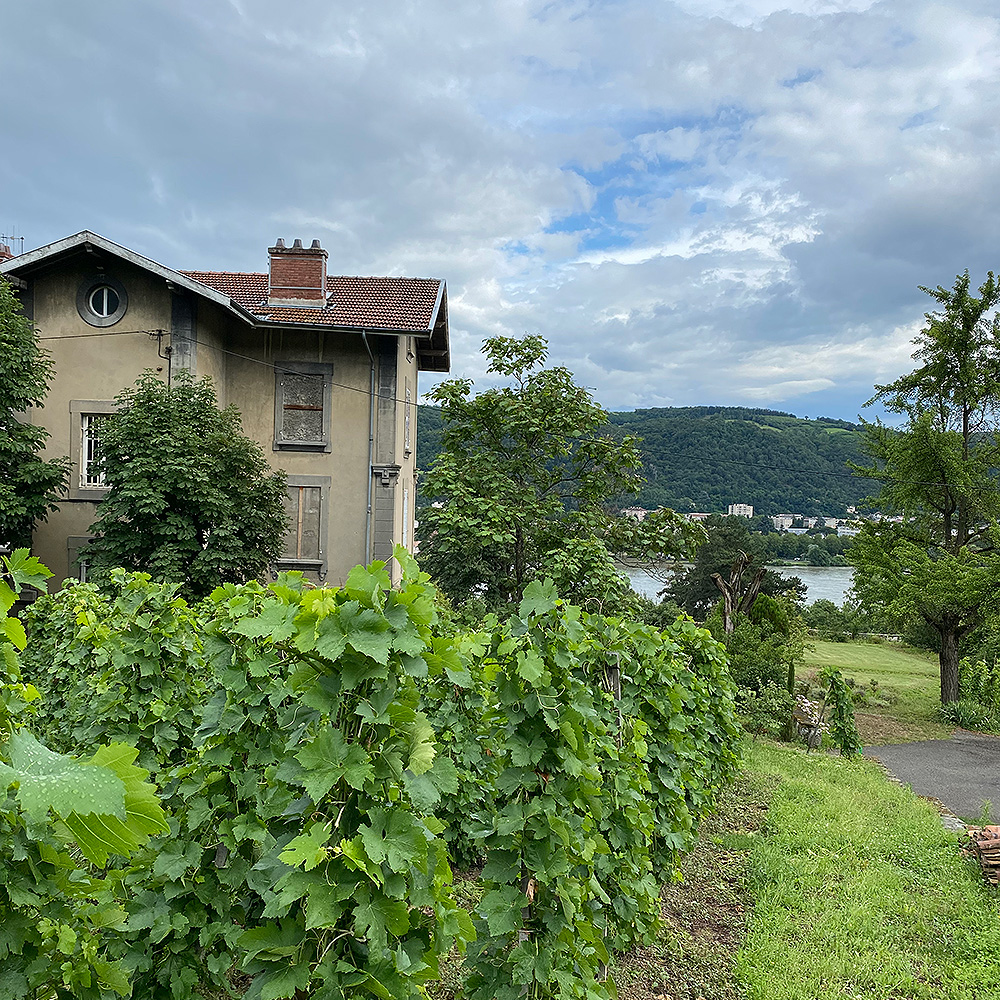
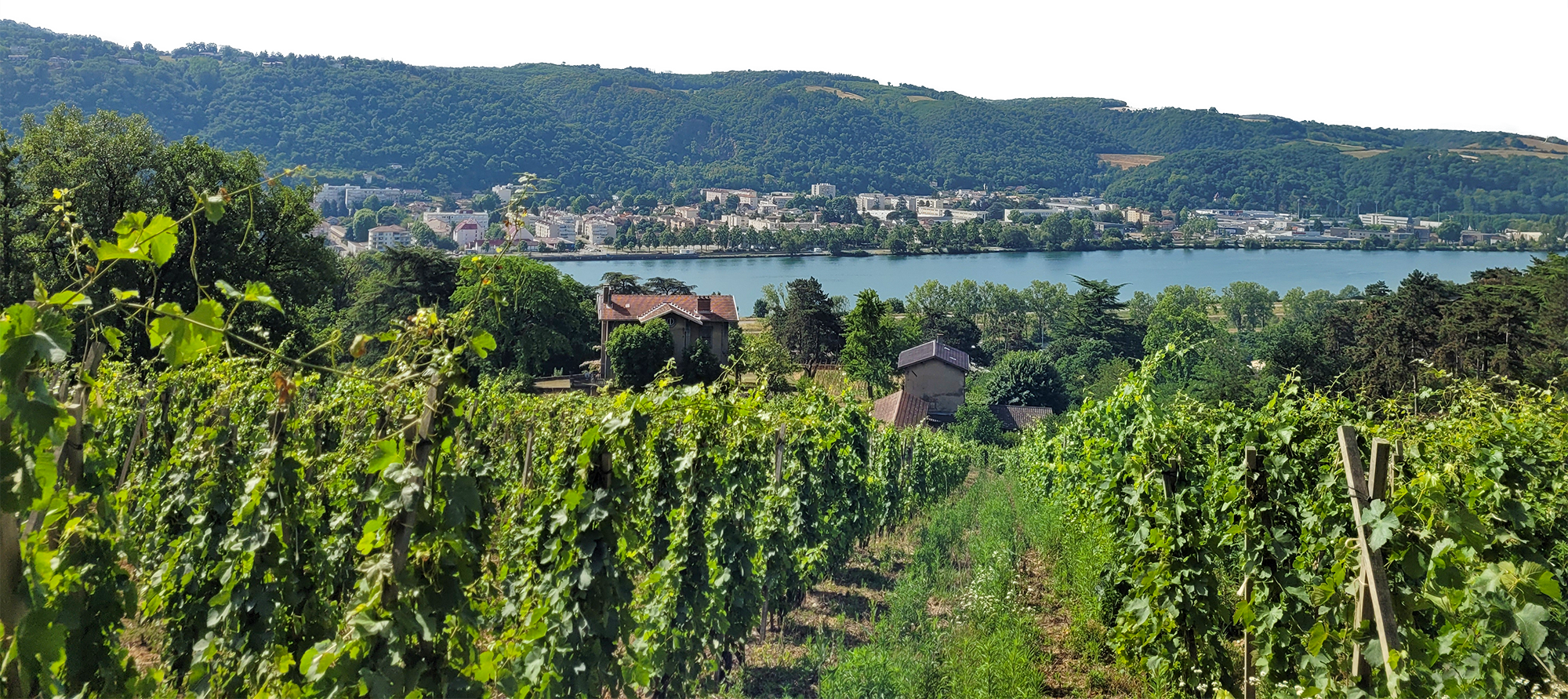
A once-abandoned amphitheater of vines in the Cumelle lieu-dit in the Côte Brune that has been given new life by an enterprising pair of siblings at their family’s ancestral home.
Introducing the Estate
A Surprise in the Northern Rhône
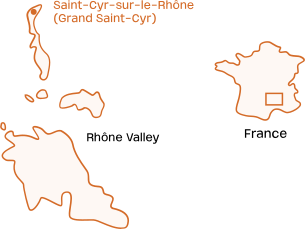
It’s not every day in the wine business that one comes across the opportunity to work with an entirely new producer in the storied Northern Rhône appellation of Côte-Rôtie. Land is famously scarce, and three families collectively control more vineyard area than all the rest of the small farmers combined. With this in mind, we were thrilled to discover a brand new story unfolding at Grand Saint-Cyr, a winery on a tiny, vertiginous 1.5ha site within the Cumelle lieu-dit in the Côte Brune, the northernmost part of the appellation in the commune of Saint-Cyr-sur-le-Rhône.
History & Origins
Abandonment & Reclamation
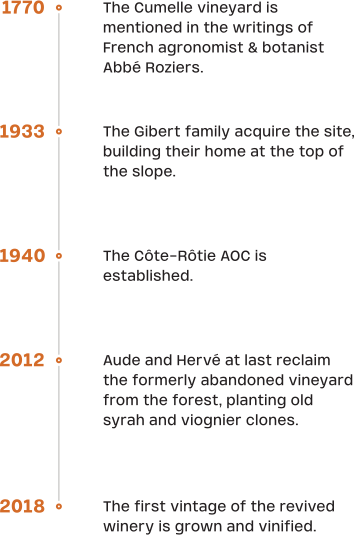
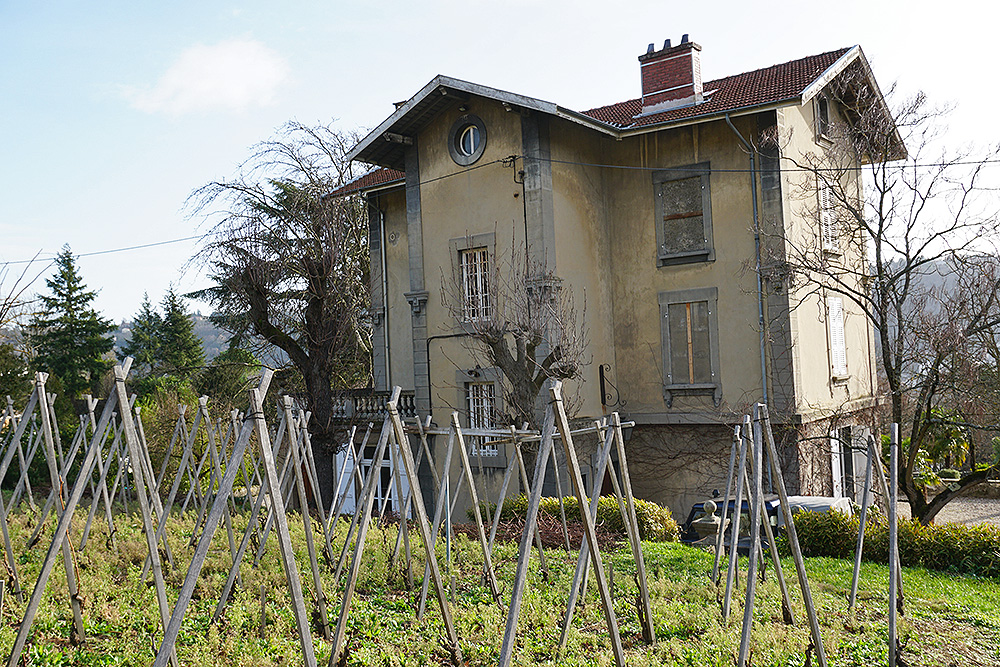
The site, attached to the ancestral family home of siblings Aude Chapuis and Hervé Gibert dating back to 1936, remained unplanted for over fifty years, having returned to wild forest. The Cumelle vineyard was first described by Abbé Roziers in 1770 and then again by Mr. Cochard in his almanac in 1820, providing an historical basis for winemaking at the epic site.
Impracticality won the day, as in the second half of the 20th century, maintenance of the plot ceased. The site boasts such extremity of slope and difficulty of cultivation that, for generations, the family left it abandoned, rather than enduring the physical toll of farming and vinifying the site.
Producer Bio
It Takes Two
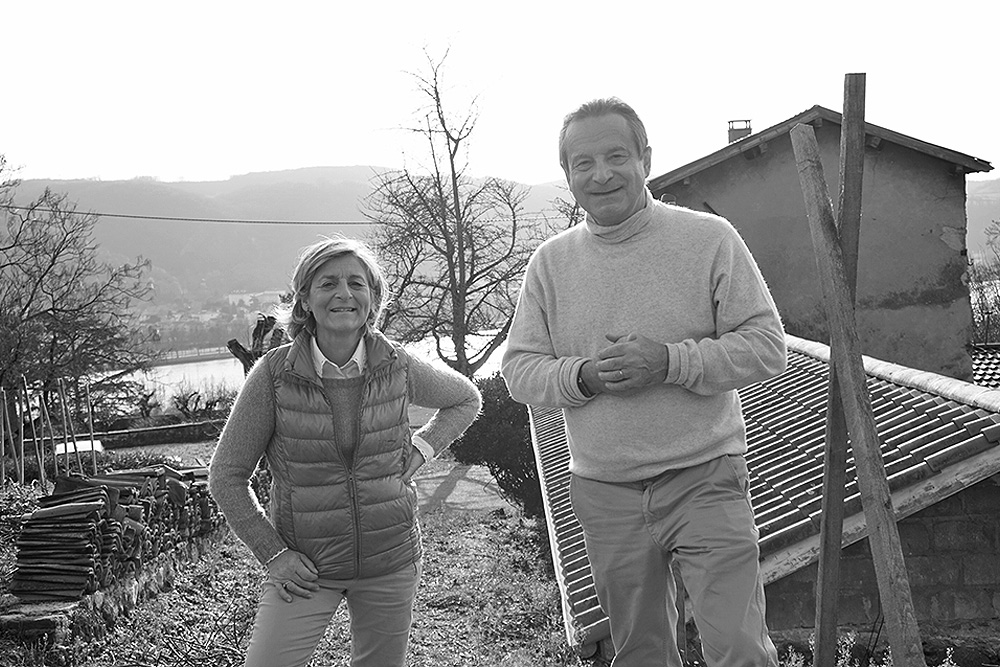
A changing of the guard eventually left the vineyard in the hands of Aude and Hervé, who were able to realize their lifelong goal of planting the site and producing wine at this very prestigious Northern Rhône address. The site was born anew in 2012 when the siblings reclaimed the vineyard from the overgrowth, and christened the winery Grand Saint-Cyr. It was originally named after the Cumelle lieu-dit itself—this, however, ran afoul of the Côte-Rôtie appellation, and the name was amended to the name of the commune. With deep roots in the Northern Rhône and the help of many famous family friends (including Yves Cuilleron as the consulting enologist for the project), this piece of once-forgotten terroir has been restored to its former glory.
The Vineyard & Land
Singularity In Every Glass
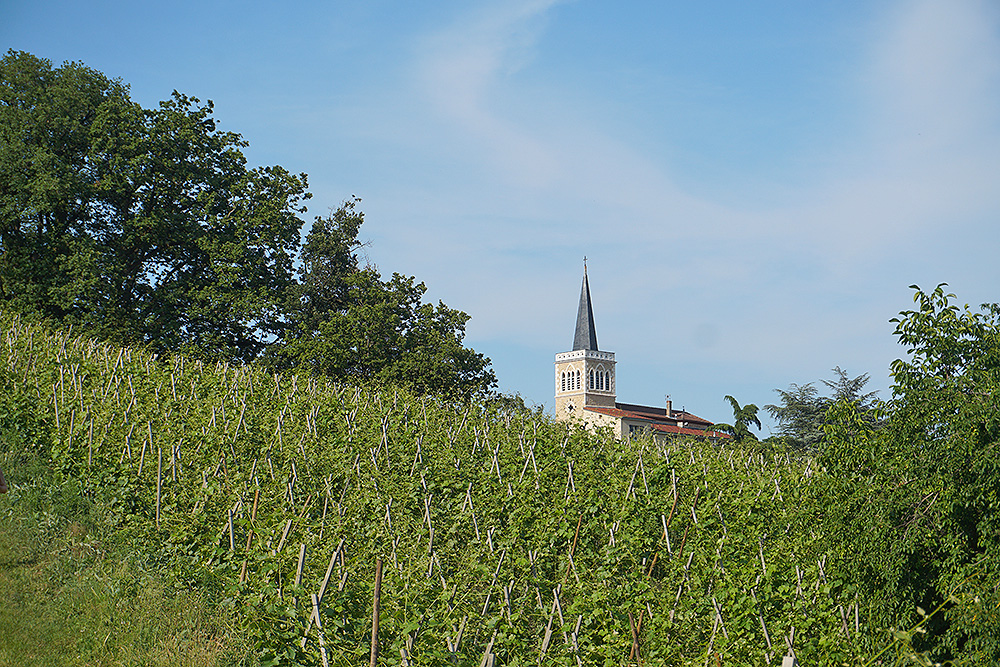
Grand Saint-Cyr consists of a single, contiguous amphitheater of southeast-facing vines on a hillside where the slope can reach a 50% grade, necessitating the construction of handmade stone terraces and requiring exclusively manual work of the vines. The terre brune soil of the site consists of mica and schist in which the source rock is sometimes only a foot beneath the soil. It was because of this unforgiving terroir that the plot had been abandoned, awaiting proprietors with the patience and grit to reclaim it and return it to productivity. The project has been farmed organically since Aude and Hervé returned, and previously the vineyard had never seen chemical treatment. They are currently in the multi-year process of obtaining organic certification.
The site was planted in traditional goblet with three different old syrah clones selected for complexity and genetic diversity, including highly prized, indigenous Sérine. Viognier was also planted with respect to the traditional composition of Côte-Rôtie, playing an important role in the final blend of Grand Saint-Cyr, averaging around 10%. Soil cultivation and harvests are carried out exclusively by hand, as demanded by the site.
The Winemaking
One Wine, One Way
The philosophy in the cellar is one of respect for the quality of their terroir, with a natural fermentation utilizing native yeasts and sulfur added judiciously at fermentation, depending on the vintage. No sulfur is added at bottling. Owing to Aude’s long relationship with the renowned Guigal family, the entirety of the production is fermented and aged exclusively in used Tonnellerie Château d’Ampuis barrels. Needless to say, the prestige of the barrels is fitting to the seriousness of the site.
The result is an incredibly elegant, fresh, and energetically classic wine. Less rôtie, more fruits frais et sous-bois.
Products
Wine