Clos Guirouilh
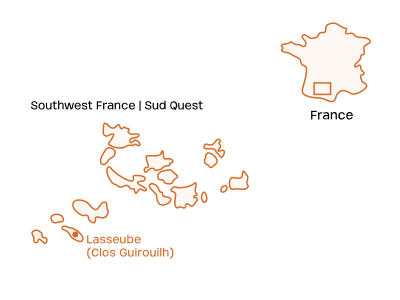
Jurançon | Southwest France

Among the most hard-core, traditional domaines of Jurançon, Clos Guirouilh makes sweet and dry wines that provide a window into the overlooked region’s historic soul.
Introducing the Estate
Deep Roots
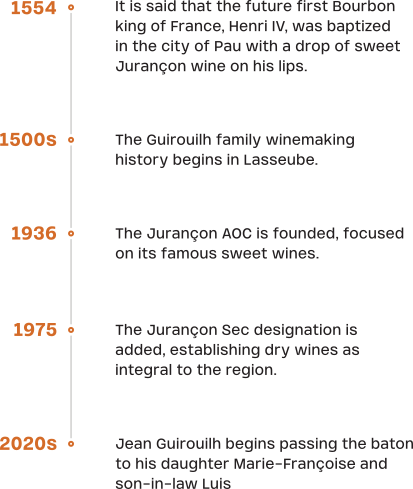
Above the small village of Lasseube, at the foot of the Pyrenees mountains, Jean Guirouilh preserves the unchanged, time-honed craft of Jurançon winemaking passed down through his family since the 16th century. Undeterred even during the two World Wars, when the women took over the estate while the men fought in the French resistance, the family has never stopped making exceptional wines from the local gros manseng, petit manseng, and petit courbu. Today, most things are still done as they have been for centuries, with a few updates where they can help improve the wines. Jean’s daughter Marie-Françoise and her husband Luis are the next generation to care for Clos Guirouilh, ensuring the family legacy continues.
History & Origins
Masters of Manseng and Courbu
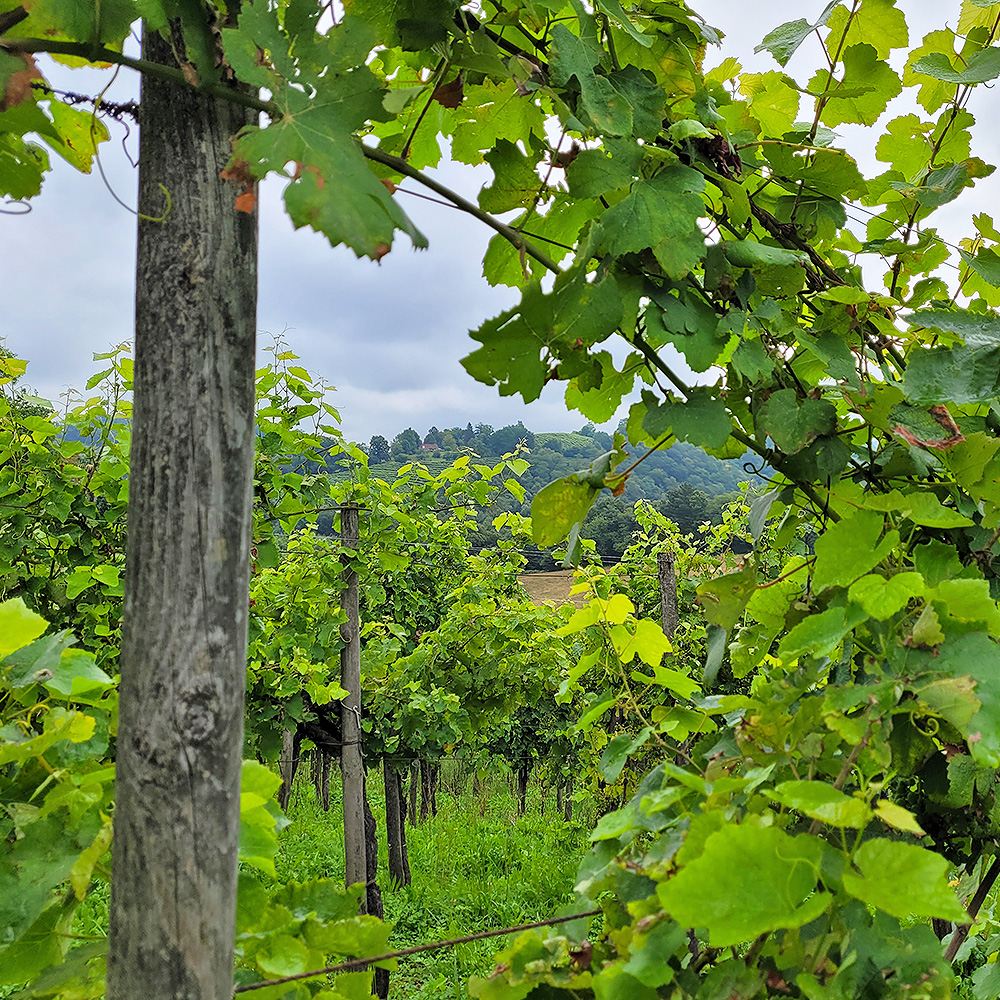
The Guirouilh family has farmed in the valley above Lasseube for four centuries—a testament to their excellent location. Their 10 hectares of gros manseng, petit manseng, and petit courbu are planted at around 350 meters above sea level, surrounding their ancient farmhouse and tiny cellar.
The vines are all in excess of forty years old, and trained in trellises, to maximize ventilation and take advantage of the Foehn wind that blows warm, dry air off the leeward side of the Pyrenees mountains, encouraging a long, even ripening cycle. The clay-limestone soils, full of yellow sandstone called grès, contribute to making the truly distinctive and complex wines that the region is known for.
The Vision Behind Clos Guirouilh
Tradition and Savoir-faire
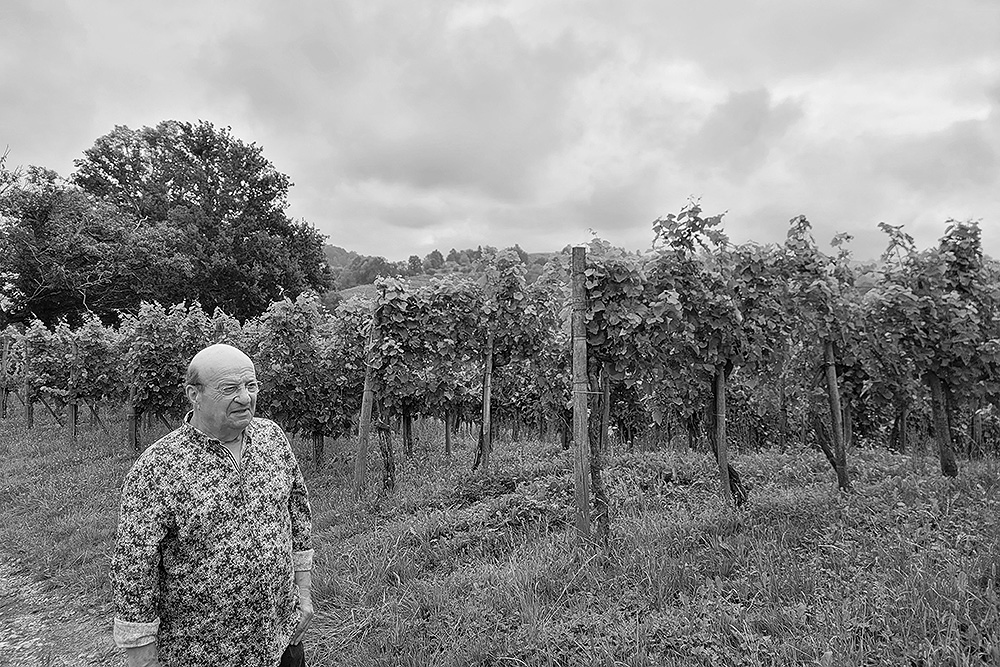
At Clos Guirouilh, nothing is rushed, and there are no concessions to the pace of the modern world. The patient approach begins in the vineyard: the Foehn wind allows the family to make multiple harvests, extending as late as December in exceptional years. These late, rot-free harvests are the key to the wines’ amazing concentration.
Grapes are picked by hand in a minimum of three successive passes through the vineyard, but more are often needed. Once in the cellar, wines ferment spontaneously with indigenous yeasts and without temperature control. Since the cellar is already cold when the grapes come in, alcoholic fermentation crawls along until spring, when it picks back up again. The resulting wines are essentially Jurançon: deeply rooted in history, uncompromising and majestic.
Products
Wine
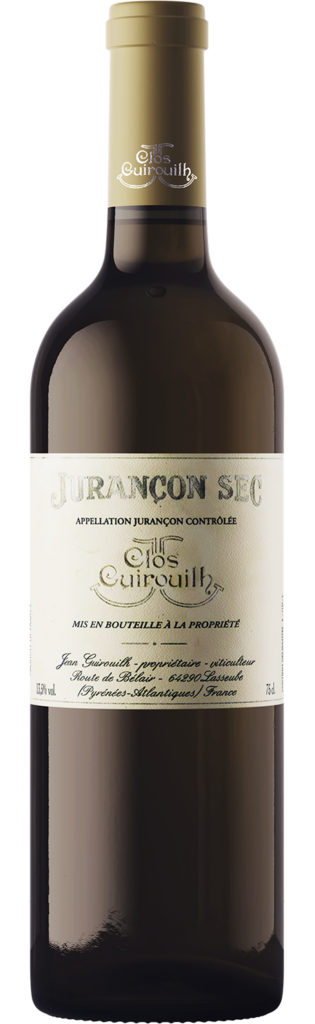
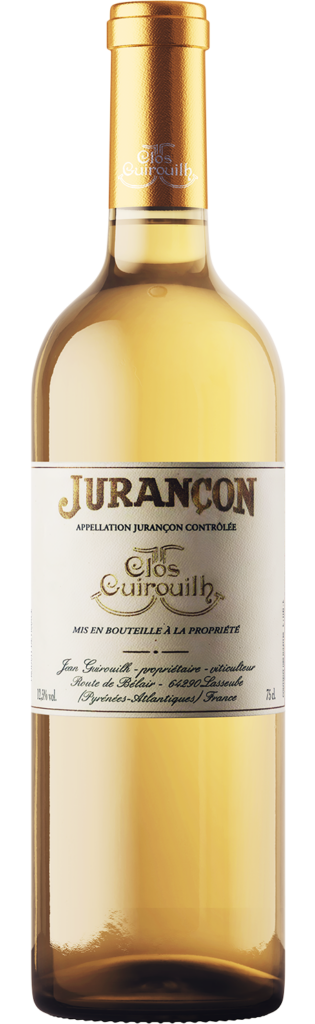
Clos Guirouilh Jurançon Sec 2021