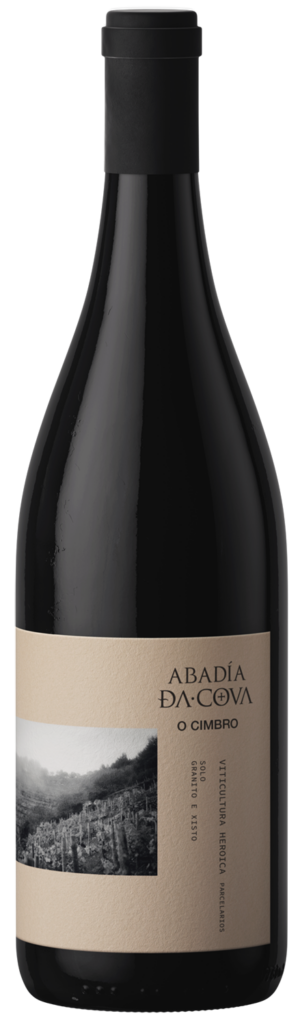
Abadía da Cova
Ribeira Sacra | Galicia

Abadía da Cova is a family winery that has worked the steep, ancient terraced vineyards along the Miño River for over a century, standing as guardians of tradition while guiding Ribeira Sacra into the future.
Introducing the Producer
Vineyards Among Canyons
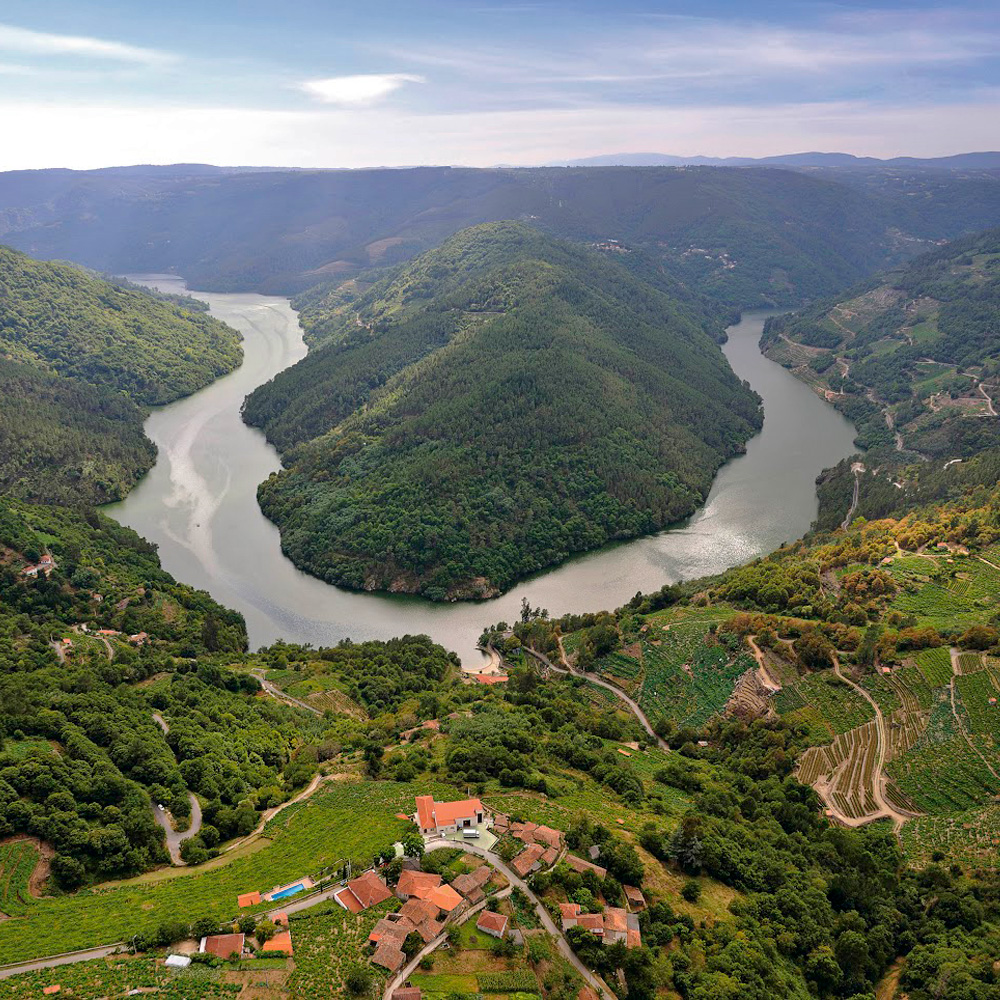
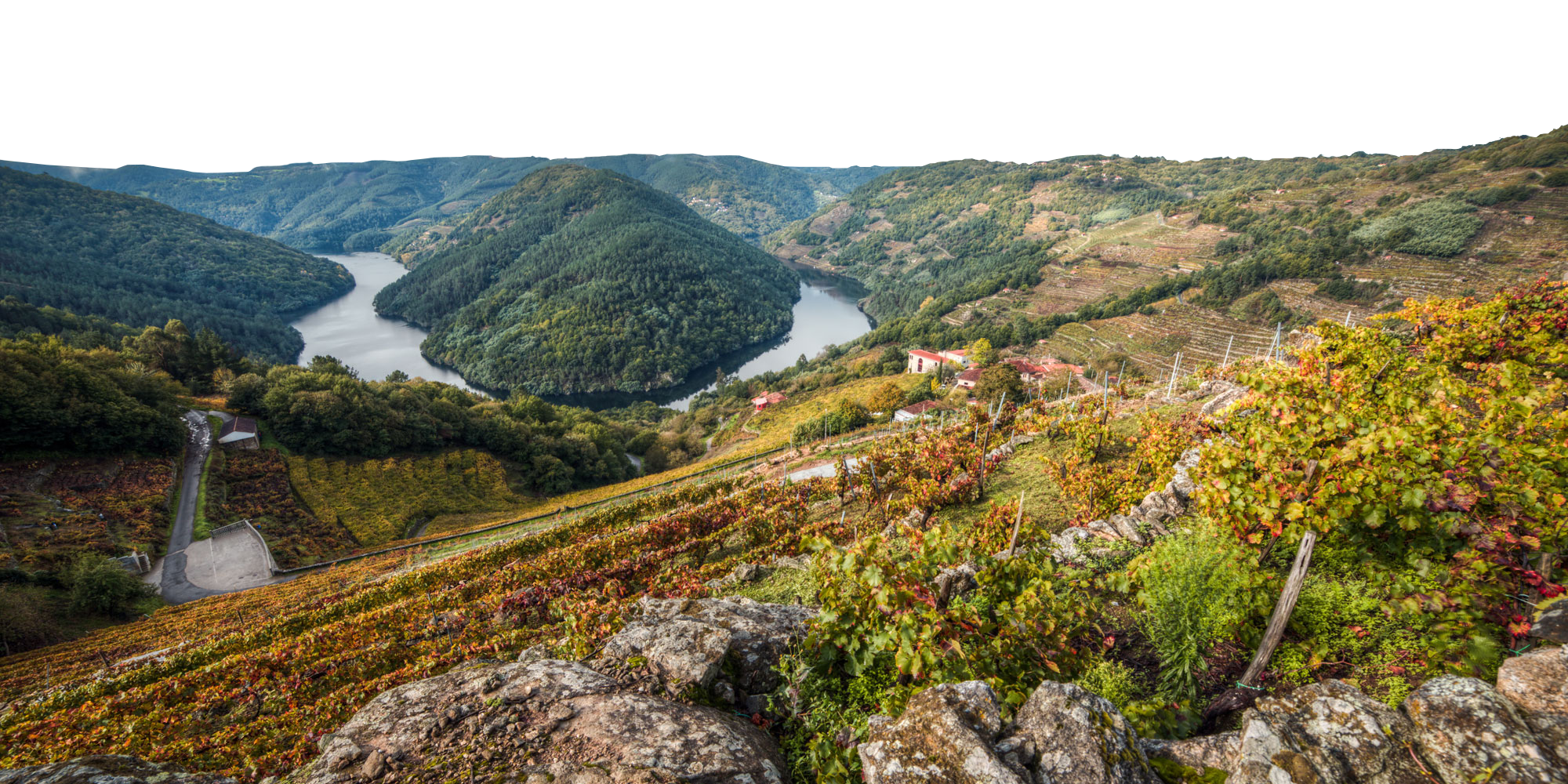
Ribeira Sacra is one of the most stunning vineyard landscapes in the world. In the heart of Galicia, in northwestern Spain, deep canyons and ancient terraced vineyards conceal medieval Romanesque churches and monasteries built by religious orders searching for an isolated place to pray.
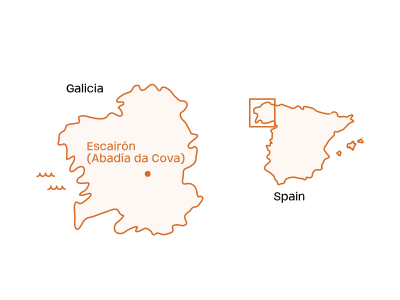
In the village of A Cova, on the banks of the Miño River, siblings Paloma and Adrián Rodríguez Moure and their cousin José Moure make up the fourth generation to lead Abadía da Cova. The winery takes its name from one of Ribeira Sacra’s famous monasteries—specifically an abbey, or abadía, that holds deep significance as the birthplace of their great-grandmother.
History & Origins
Four Generations of Innovation
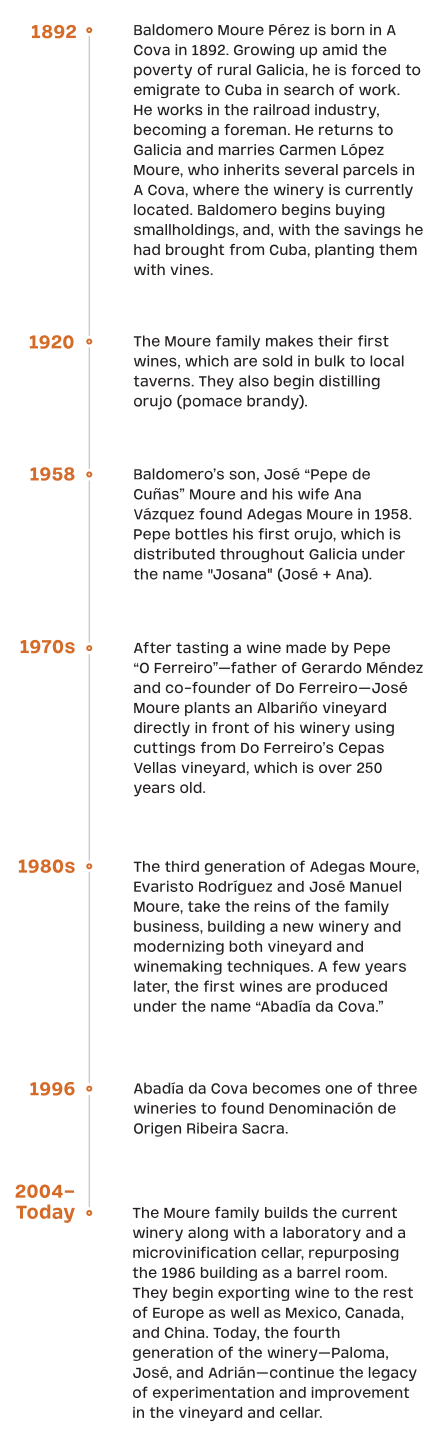
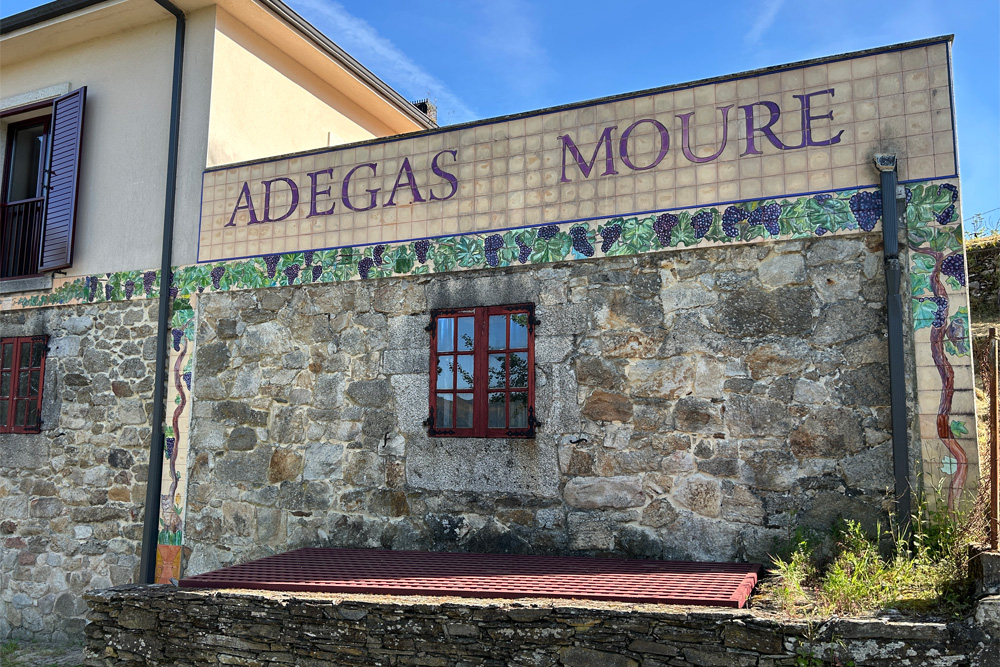
At the turn of the 20th century, Baldomero Moure Pérez left A Cova bound for Cuba, during a wave of emigration in which huge numbers of people left rural, interior Galicia in search of a better life. After a few years working as a railroad foreman, Baldomero was able to save up enough money to come home to A Cova, where he met his wife Carmen. When she inherited a small plot of land with a vineyard, Baldomero bought several neighboring vineyard plots with his hard-earned savings and began making wine, laying the foundation for a family legacy that endures to this day.
By the time Baldomero’s son, José “Pepe de Cuñas” Moure, took the reins in the 1950s, the family was already selling their wines locally and had developed a reputation as the best distillers of orujo, Galician pomace brandy. Pepe was a visionary—he and his wife Ana officially founded Adegas Moure in 1958, and he was among the first in the region to bottle his wines.

In the 1980s, Pepe’s son Jose Manuel and nephew Evaristo became the first in their family to study at university. Full of new perspectives and determined to expand their worldviews, they traveled widely, visiting vineyards in France and the Mosel in search of winemaking innovations to bring back to the Ribeira Sacra. In 1995, they were instrumental in establishing Denominación de Origen Ribeira Sacra, securing recognition for their ancestral land and its incredibly special wines.
Evaristo and Jose Manuel also began the task of modernizing the winery, exchanging concrete fermentation tanks for temperature-controlled stainless steel and focusing on meticulous attention to detail in the vineyard. They set out to make a traditional wine with modern techniques, and labeled it under the name “Abadía da Cova”. Suffice it to say, the name stuck. Although you’ll still see Adegas Moure on the labels, today the Moure family winery is universally known as Abadía da Cova.
Galician Power Trio
A New Generation
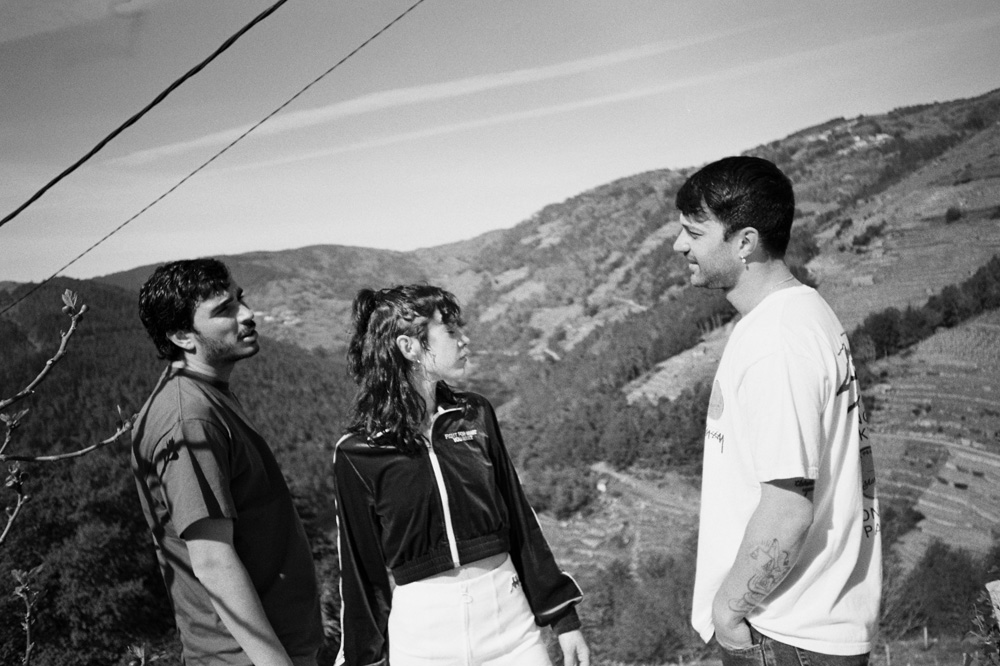
The vision of a young Baldomero has been passed down through this humble and hardworking family, and the fourth generation of Abadía da Cova is determined to honor the past while being pioneers in their own right.
Paloma, Adrián, and José grew up among the vine-covered slopes where their family has been making wine for over a century. Today, they’re determined to do things differently to save the Ribeira Sacra — starting right at home in A Cova.
The future, according to their bold new vision, lies in exploring the region’s full potential, creating a social movement to anchor people back to the land, and saving these vines from disappearing forever. As with each preceding generation, they have a foundational commitment to Ribera Sacra as both a winemaking and cultural region.
The trio share responsibilities in the vineyard and winery, each doing many jobs to keep the family business running smoothly. Adrián is in charge of viticulture and winemaking, while Paloma leads the family’s award-winning wine tourism initiative, which aims to tell visitors the story of Ribeira Sacra’s heroic viticulture and winemaking tradition while impressing on them the need to conserve the surroundings for future generations.
Process & Philosophy
Regional Pioneers
The Rodríguez Moure family have always been pioneers, whether it was using only the highest quality pomace for their distillates, being the first to introduce barrel-aging to Ribeira Sacra, or putting their faith in traditional grape varieties like merenzao or brancellao.
Since the creation of the Ribeira Sacra appellation in the 1990s, the vast majority of wineries have put their focus on young, mencía-based wines to be bottled immediately and shipped off in bulk to Galicia’s bars and restaurants. This structure persists to this day, encouraging wineries to produce as much as possible, paying growers very little for their grapes and even leading some to cancel contracts with little notice in years of surplus wine.
In contrast to this model, Abadía da Cova works with a small group of local growers with whom they have developed decades-long relationships, helping the growers to transition to organic and sustainable methods of grapegrowing. By continuing to work with local farmers even as they explore the potential of their estate vineyards, Abadía da Cova aims to actively encourage residents to stay in the Ribeira Sacra and create a sustainable model of rural life.
High-Grade Farming
Certified Heroic Viticulture
The terraces that cover the steep slopes of the Miño and Sil rivers were built long before the advent of the truck, tractor, or even rototiller. It’s impossible for machines to work in the narrow spaces, which means all vineyard work has to be done by hand.
This makes Ribeira Sacra one of the best examples of heroic viticulture, a term that refers to grape-growing conducted on extremely steep, high-altitude, or otherwise perilous terrain that requires intensive manual labor and specialized techniques. The CERVIM (Center for Research, Environmental Sustainability and Advancement of Mountain Viticulture) awards a specific seal for heroic viticulture if a wine region meets certain criteria, such as cultivating vines at altitudes of 500 meters (1,600 feet) or more, having vines on slopes above 30% gradient, and having vines on terraces. Elsewhere in Europe, regions like Valtellina and Trentino Alto-Adige in Italy and France’s Côte Rôtie hold this distinction. In Spain, Ribeira Sacra is one of only a few regions that can use the seal.
Many of Abadía da Cova’s vineyards are on slopes that exceed 70% gradient, carrying a natural risk of erosion. As the weather becomes more unpredictable due to climate change, prolonged periods of drought might be followed by torrential rains, heightening the risk of erosion and affecting the soil’s ability to retain water and nutrients.
With this in mind, Abadía da Cova maintains plant cover to protect the soil from erosion, promote water infiltration, and increase organic matter. They add natural compost made from distillation residues and other organic waste produced on the farm, correct acidic pH with limestone and organic fertilizers, and minimize tillage to preserve soil structure, prevent compaction, and protect microbial life. They also promote biodiversity by planting native species that strengthen ecosystem resilience and avoiding all herbicides and insecticides in its vineyards and across the property.
Products
Wine
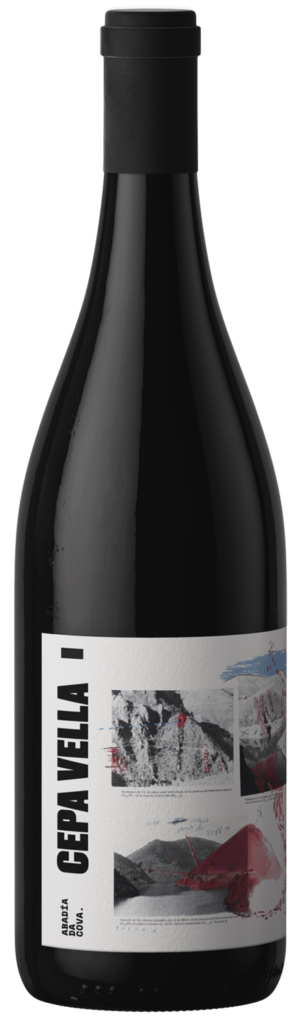
Abadía da Cova ‘Cepa Vella’ Mencía 2025
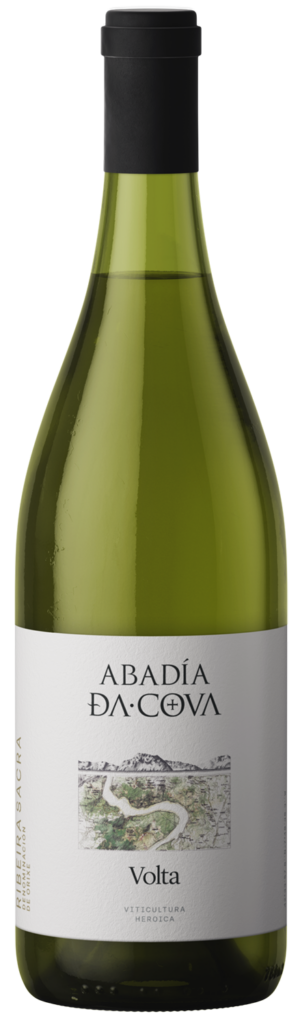
Abadía da Cova ‘Volta’ 2023
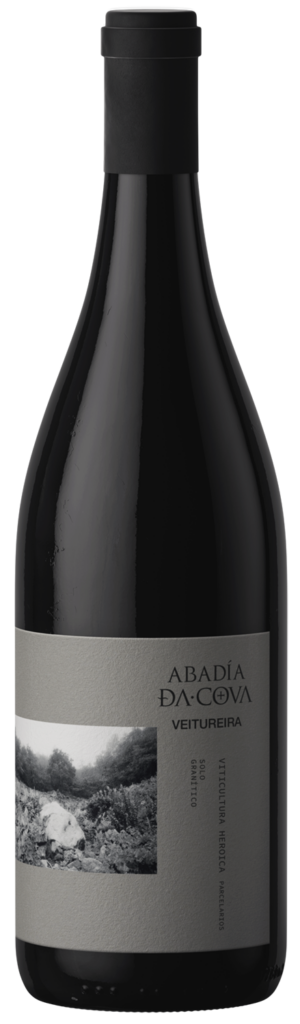
Abadía da Cova ‘Veitureira’ 2022