Château de Verreux
Arbois | Jura

This newly-revived estate once belonged to Joseph Girard, who led the creation of Arbois AOC in 1936, and now produces biodynamic wines from the region’s signature grapes.
Introducing the Producer
An Historic Reconstruction
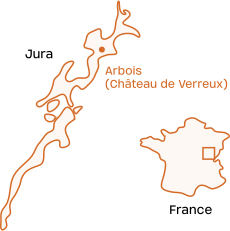
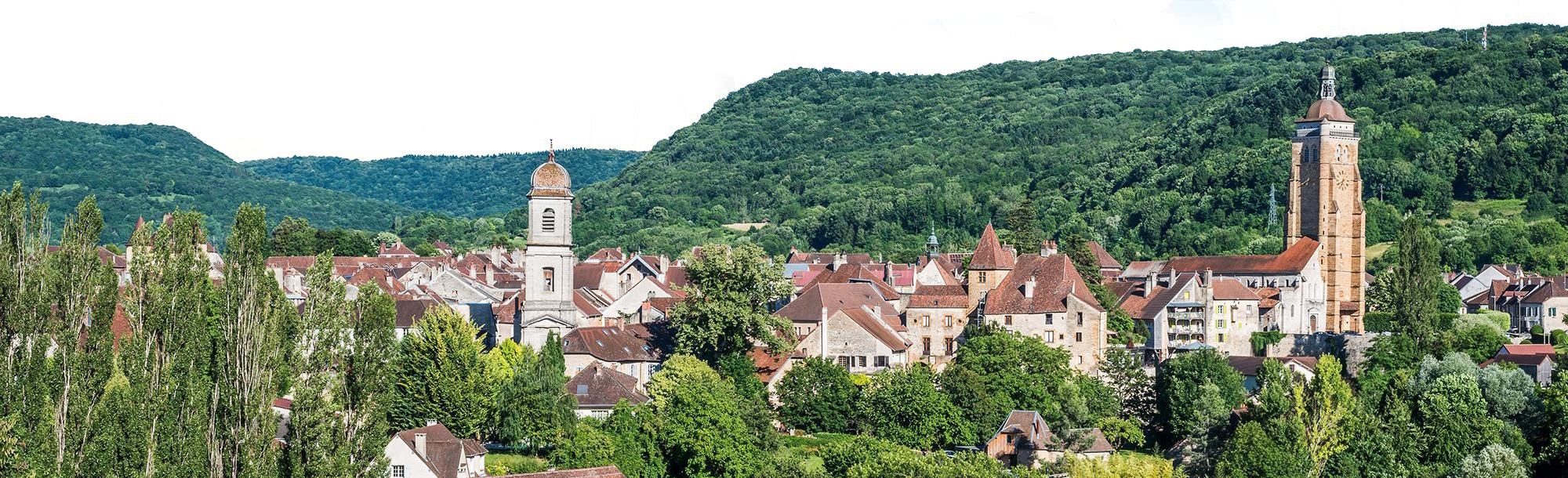
Located in the center of Arbois, Château de Verreux will forever be connected to the origin of the appellation—purportedly the first AOC in France. Decades after Joseph Girard, the godfather of the Arbois appellation, passed away, the property fell into deep disrepair, becoming a grey, uninhabited ruin in the center of the village.
Today, winemaker Vincent Remillet, who honed his craft for more than a decade at Domaine du Pélican, along with partners Vincent Richard and Yann Greset, have revived the estate with the goal of restoring a historic piece of Arbois to its former glory and crafting transparent wines from historic terroir.
History of the Estate
The Origin of Verreux and the Arbois AOC
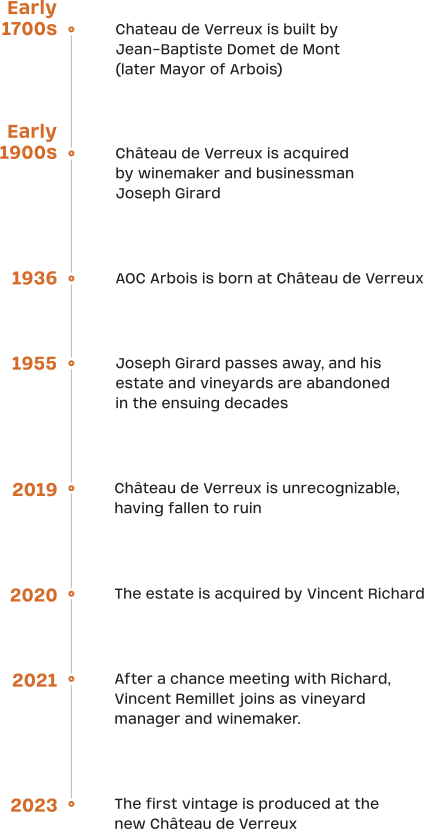
Château de Verreux was originally built in the early 18th century by Jean-Baptiste Domet de Mont, who would later become the mayor of Arbois. Owned by several families through the centuries, the Château was ultimately acquired by Joseph Girard, a winemaker and businessman, president of the Arbois Viticulture Society, member of the INAO and a key player in the creation of the AOC system in France. Arbois became one of the first—if not the first—official AOC in France in 1936, thanks to Girard’s tireless dedication and work at Château de Verreux.

The quality of Girard’s wines were highly regarded in the Jura for decades, and Château de Verreux was responsible for launching local winemakers to further fame—none other than the father of the legendary Jacques Puffeney was its winemaker at one point.
Girard left no heirs when he died in 1955. The Château was abandoned, and remained in joint ownership for fifty years until it was acquired in 2020 by Vincent Richard. Today, he and his business partners are charting a new path forward for Arbois’ nearly-lost and foundational wine estate.
Producer Bio
Resurrecting an Icon
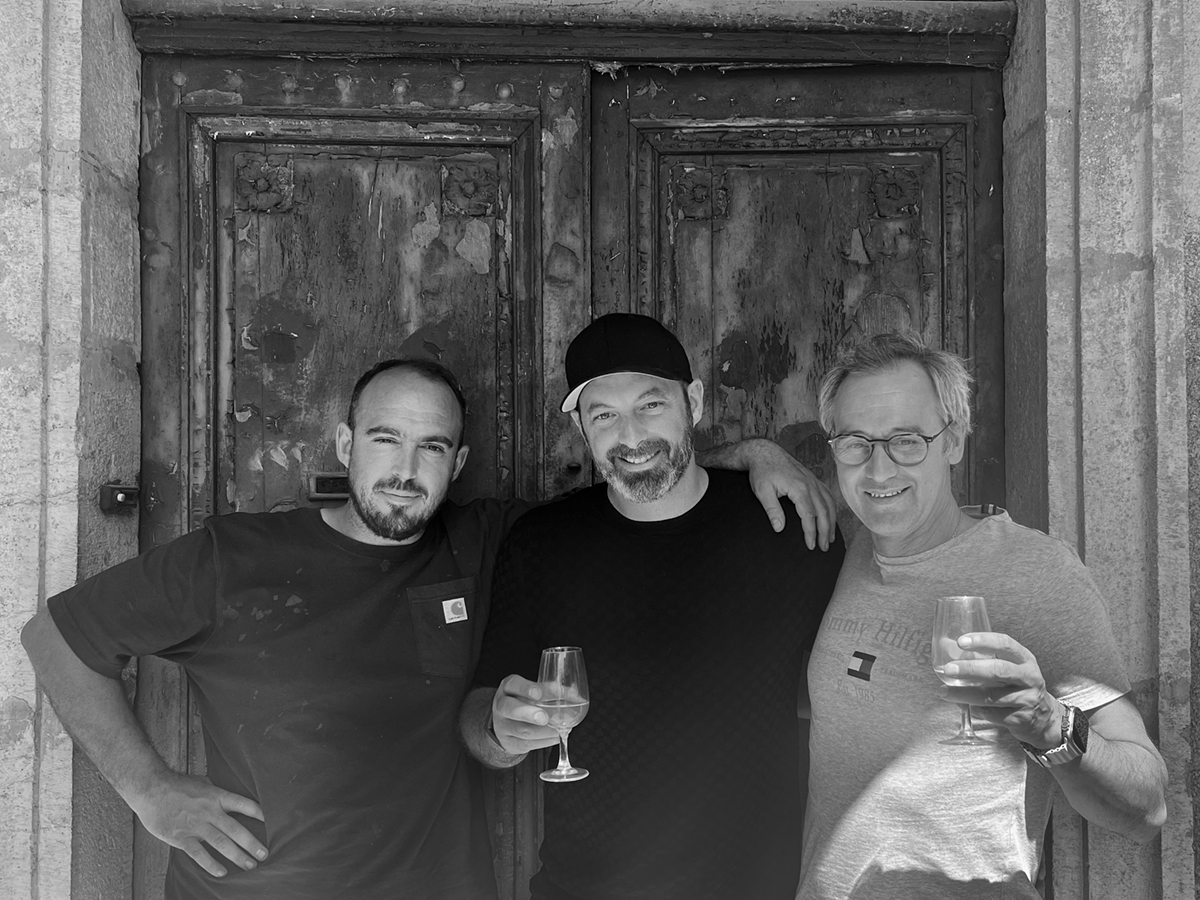
At Château de Verreux, Vincent Remillet, Vincent Richard, and Yann Greset are in the midst of a complex, multi-layered restoration project, honoring the estate’s deep history by reconnecting it to its past importance.
The project’s immense scale stems not only from decades of disrepair, but also from the bureaucracy involved in restoring a historical landmark. The team is not only reconstructing the Château, but going stone by stone, utilizing original materials and hiring artisans capable of restoring its former majesty. At every step of the way, they have to navigate the meticulous administrative requirements of the French government.
Showing as much attention to detail in the vineyard as in the manor house, they have acquired historic lieu-dit parcels in Arbois and are well on their way to restoring Verreux’s former importance as a winemaking estate. The aim is to produce estate wines that are transparent expressions of terroir, translating the true history, soil, and deep roots of Arbois with clarity into every bottle.
Vineyards & Land
Once a Seabed, now a Viticultural Paradise
Along with the Verreux property, Richard purchased nine hectares of organic vineyards that had previously been owned by Lornet and Morin, focusing on on the emblematic grapes of the region: pinot noir, poulsard, trousseau, chardonnay and savagnin.
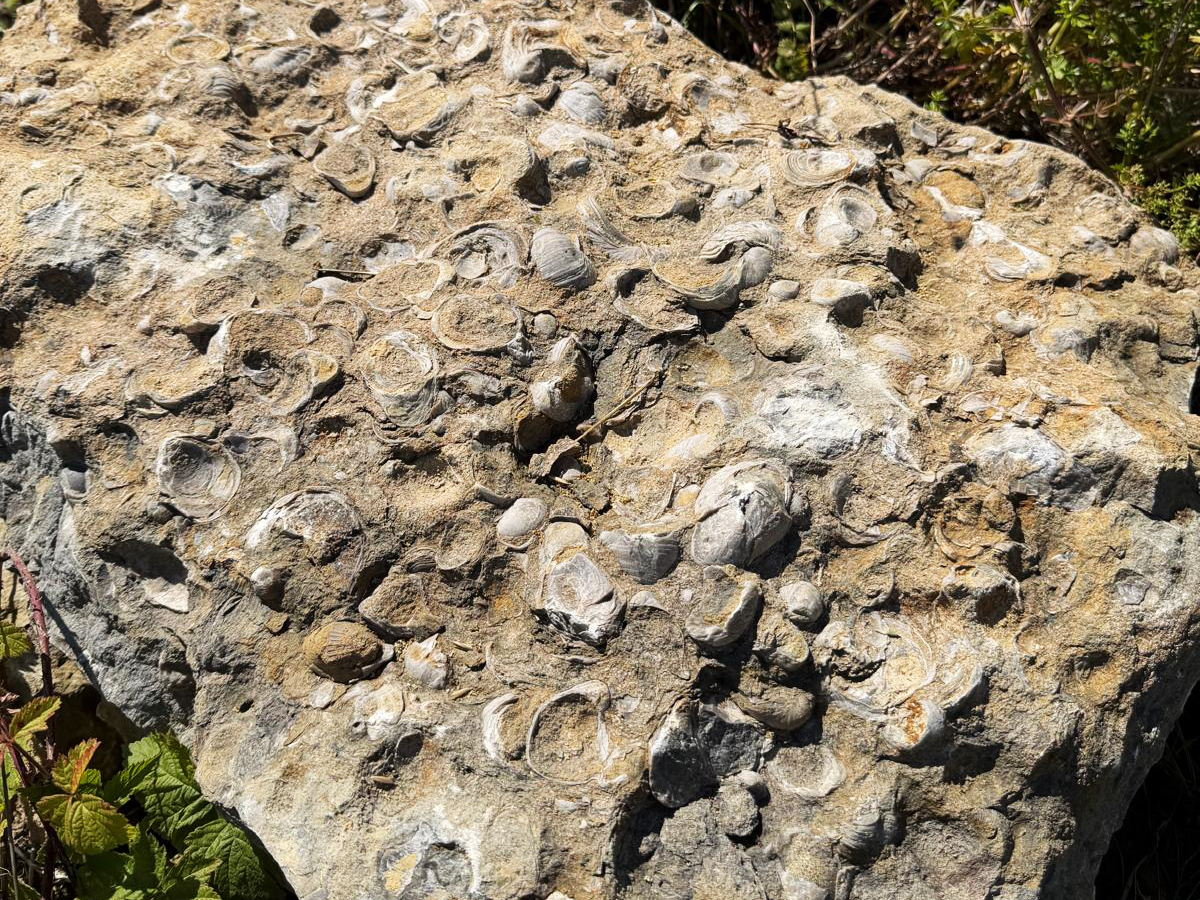
In Arbois, the terroir was defined millions of years ago, during the Jurassic period, when grey marls rich in limestone and clay were formed beneath a prehistoric sea. Over millions of years, tectonic shifts lifted and folded the land, turning seabed into rolling hillside. The effect of this terroir on the wines of this area is clear: marls give freshness, structure, and a saline edge.
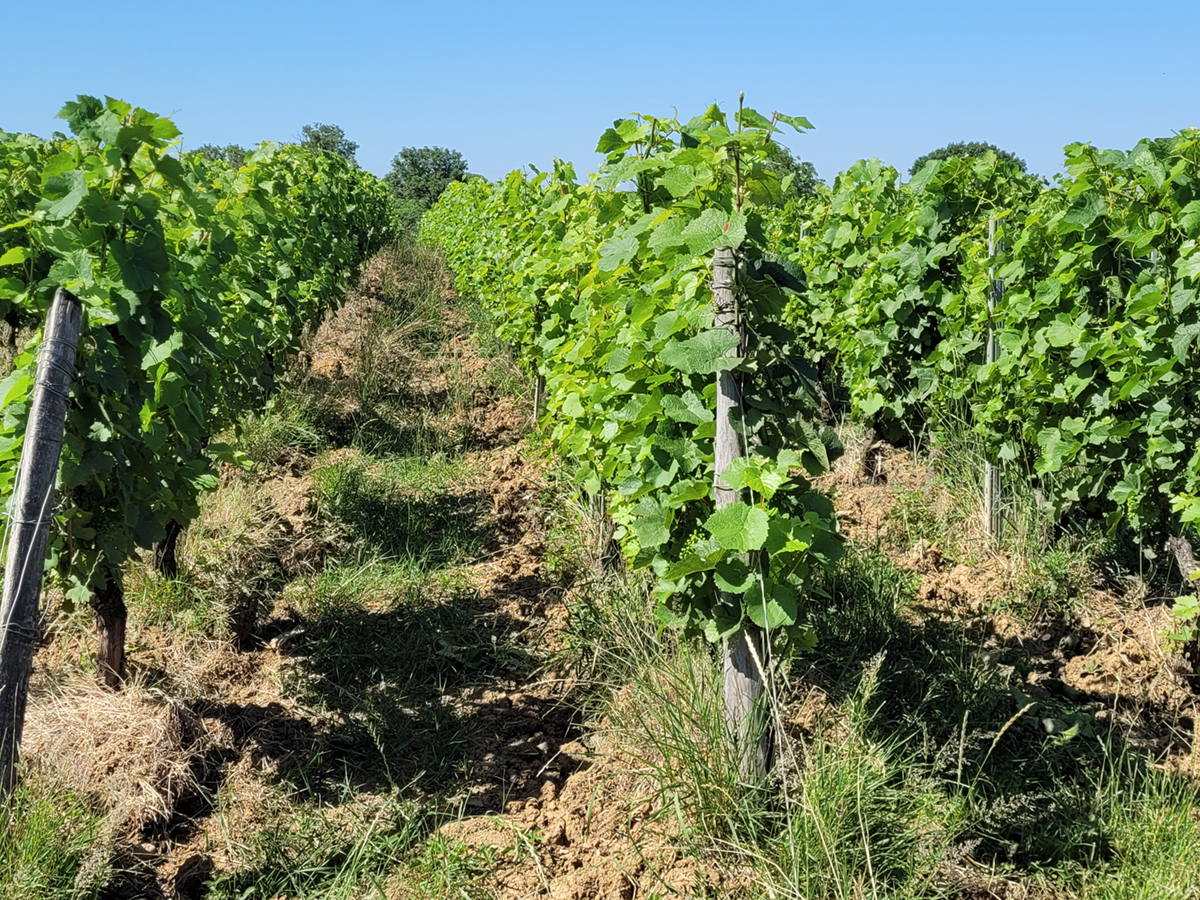
Château Verreux’s vineyards are centered around four primary parcels in the commune of Arbois: “En Brut”, “Monteillet”, “Source de Brut”, and a north-facing amphitheater lieu-dit planted primarily to Savagnin with a small planting of Trousseau called “En Verleule.” The current 6ha in production are low-yielding, with a total production of approximately 60,000 bottles per year.
Process & Philosophy
Biodynamics as a Commitment
All of the work at Verreux is biodynamic, and the estate will be Demeter certified at the end of 2026. This commitment is exceedingly rare, given the climate challenges of the region: fewer than 11 producers hold Demeter certification in all of the Jura. However, Remillet believes the vines and their balance in nature define the honest character of what is in the bottle, and he wants to let nature shape the precision and purity of expression of the wines as much as possible. All the work in the vineyard is observant and methodical: the rhythm respects the natural equilibrium between soil, plant, and moon cycles.
But in a region where the best wines are often reduced to commodities to be traded back and forth on the secondary market, our connection with Henri Le Roy is a reminder that true gems are discovered by seeking character, not chasing trends.
In the Cellar
A River Runs Through It
The highlight of Château de Verreux’s cellar is a natural mountain stream that flows directly inside, providing a naturally cool and humid environment for élevage. Here, the natural vibrancy of the wines leads the winemaking process, and the result is a clear, classical expression of the Arbois where you can feel the depth of the Jurassic soils and alpine marl.
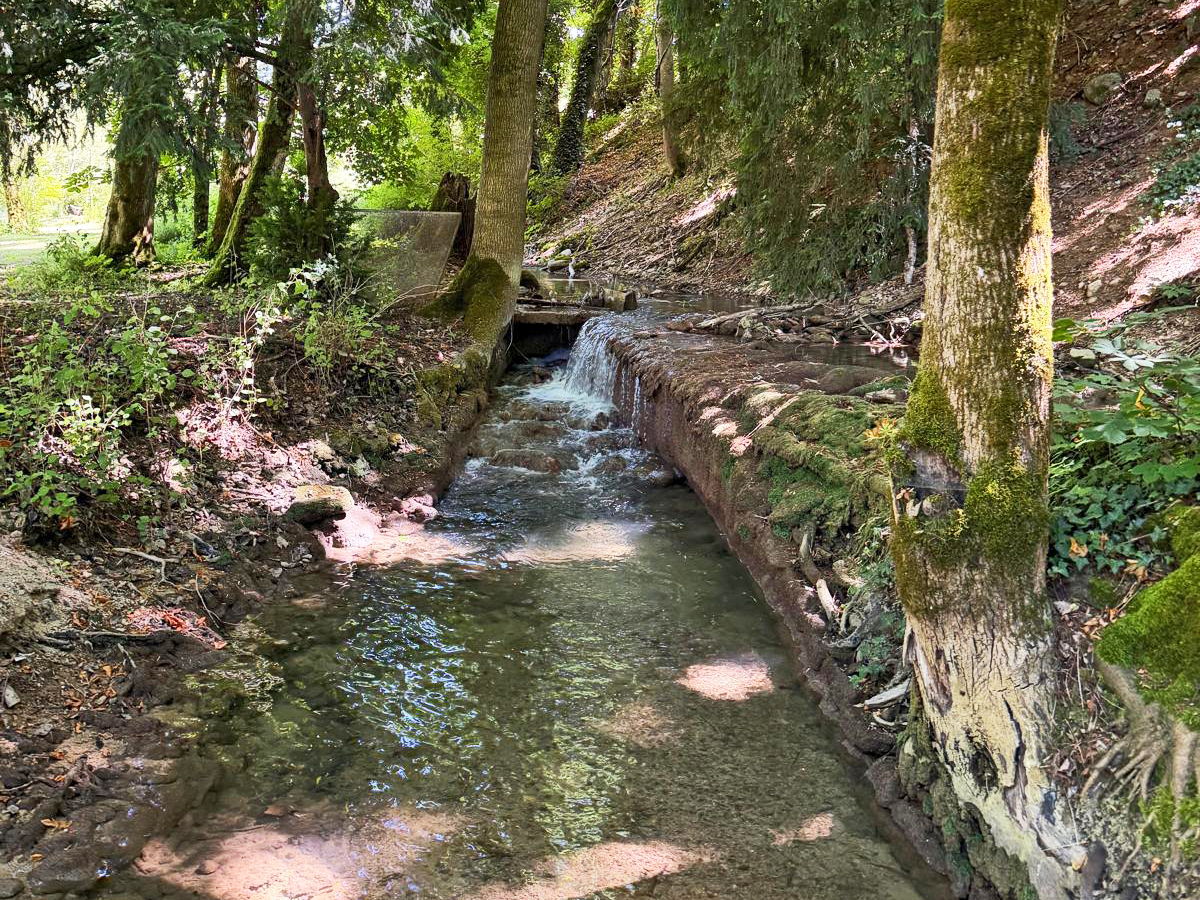
Fermentations happen naturally with exclusively indigenous yeast. Elevage is primarily in used barrels of 225L and 400L except for the poulsard, which is raised in stainless steel. There are no chemical adjustments. The white wines undergo a light filtration, and for both red and white, only a very small dose of sulfur is added just before bottling. Remillet prefers to let the natural quality of the grapes shine over any one technique. He uses pre-fermentation cold soaks on the reds to lessen extraction as much as possible, and includes stems on select vintages. He leaves the whites alone during a long elevage, leading to intense, complex wines that preserve a shining, pristine quality.
Products
Wine
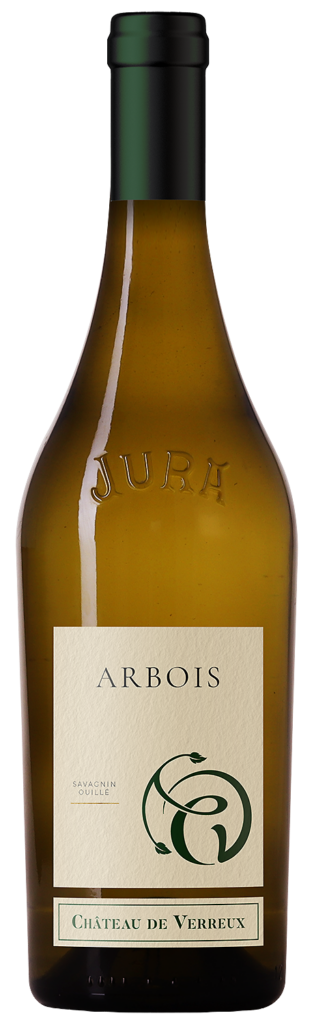
Château de Verreux Savagnin Ouillé 2024
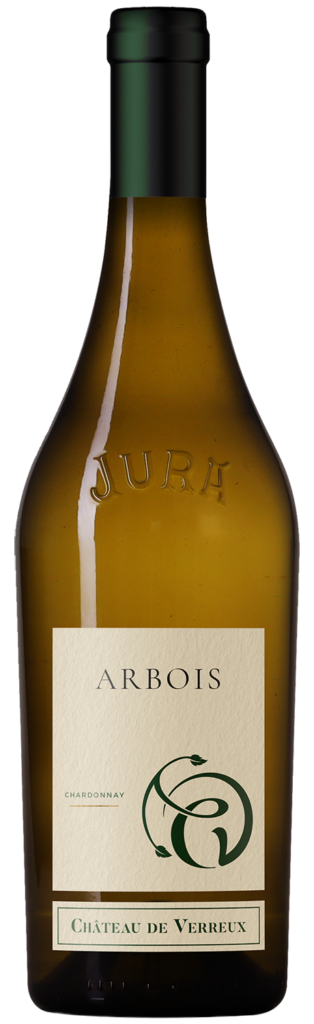
Château de Verreux Chardonnay 2023
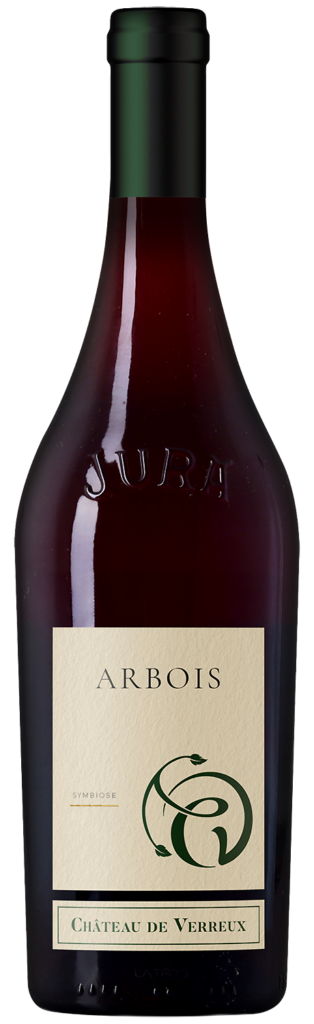
Château de Verreux ‘Symbiose’ 2023
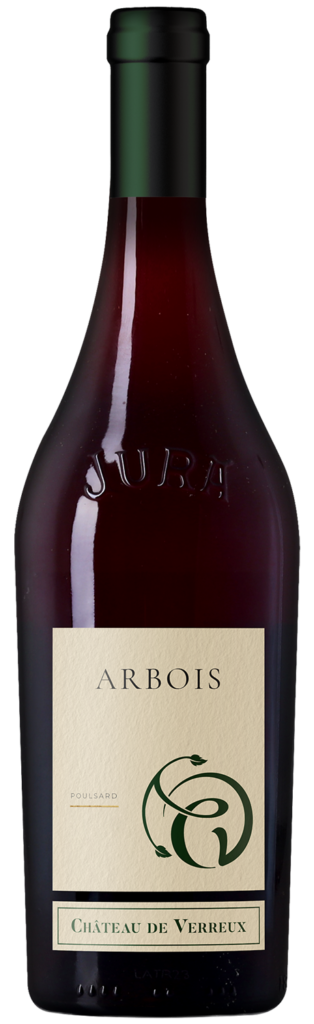
Château de Verreux Poulsard 2023
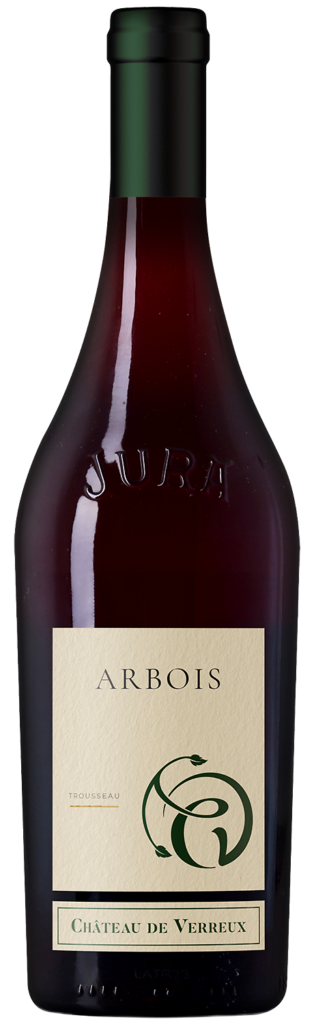
Château de Verreux Trousseau 2023