Domaine les Roches Bleues
Beaujolais

Named for the blue diorite soils under the vineyards on Mont Brouilly, Jonathan Buisson’s winery employs natural principles to produce its delicious Beaujolais, with a well-honed combination of levity and seriousness that comes across in the glass.
Introducing the Estate
So Terroir-Focused They Put it in the Name
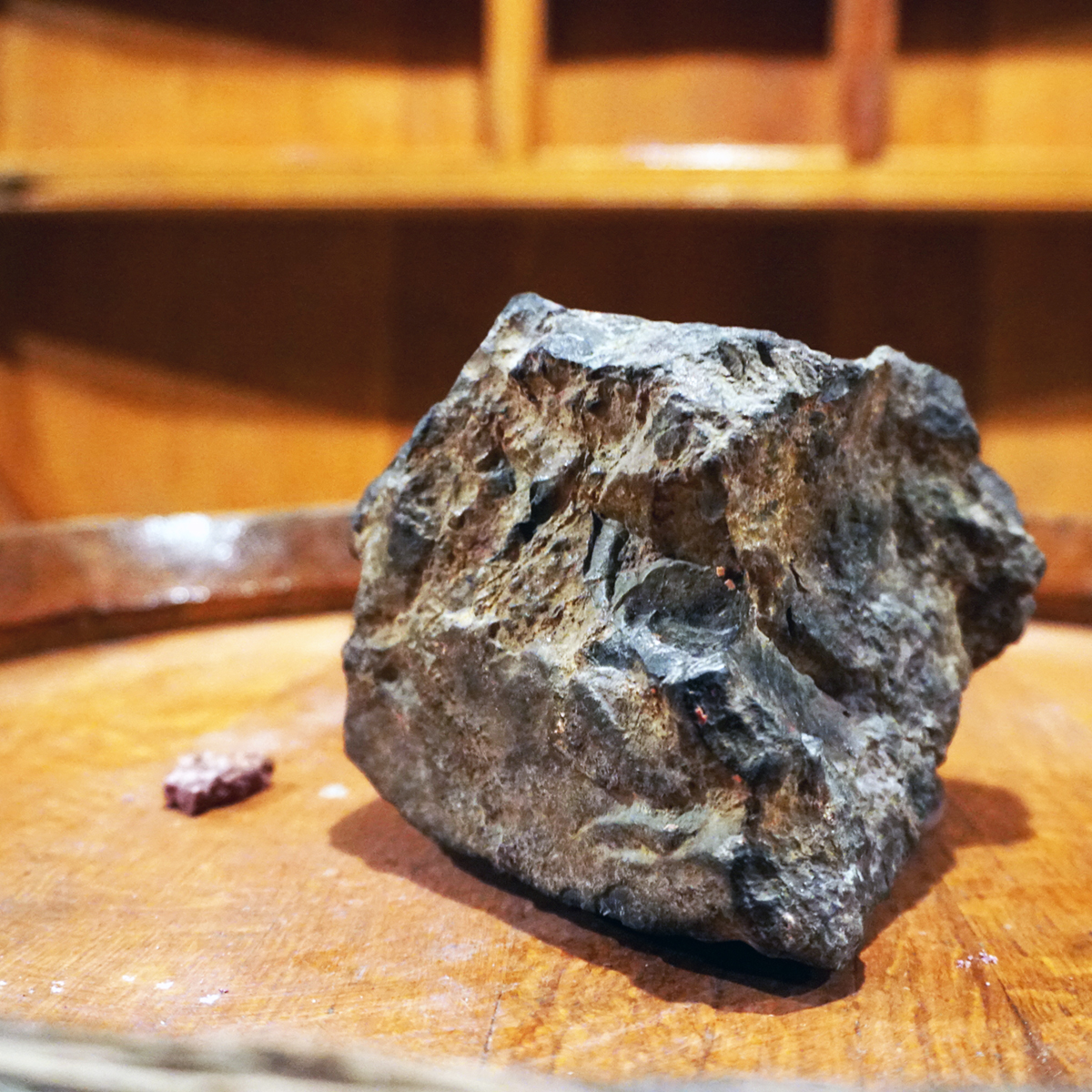
One couldn’t ask for a better position than that enjoyed by Jonathan Buisson and his wife Chloë. In 2017, they began running their family’s Domaine les Roches Bleues, on the southern side of Mont Brouilly between famous neighbors Château Thivin and Pierre Cotton. The roches bleues (blue rocks) in the name refer to the signature pierres bleues (diorite), a hard igneous rock typical of Côte de Brouilly, found abundantly in their vineyards. This stone, associated with volcanic activity, was unearthed by the formation of the Alps when it was pushed up from beneath the seabed and exposed at the surface. The winery currently farms 11 hectares of estate-owned gamay vines planted on the Côte de Brouilly and Brouilly appellations, mostly situated on pierres bleues.
History & Origins
A Throughline on the Slopes
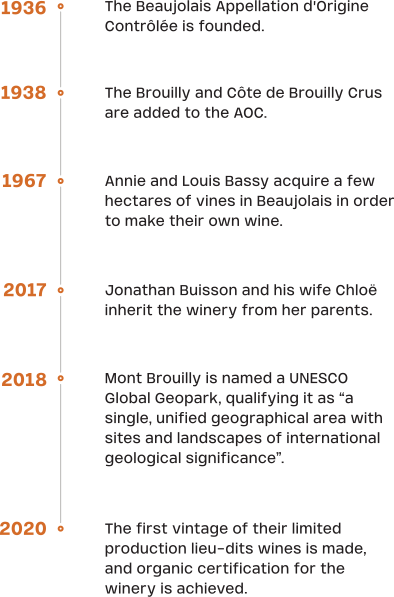
Chloë’s grandparents, Annie and Louis Bassy, acquired a few hectares of vines in Beaujolais in 1967 with the bold aim of starting their own domaine. It was a daring idea at a time when very few growers owned their own vines, and even those that did primarily sold to the large negociants, who reigned supreme. The family was quality-minded from the beginning, and by dint of their focus and possession of excellent terroir, the domain has been able to attain success in the decades since its founding.
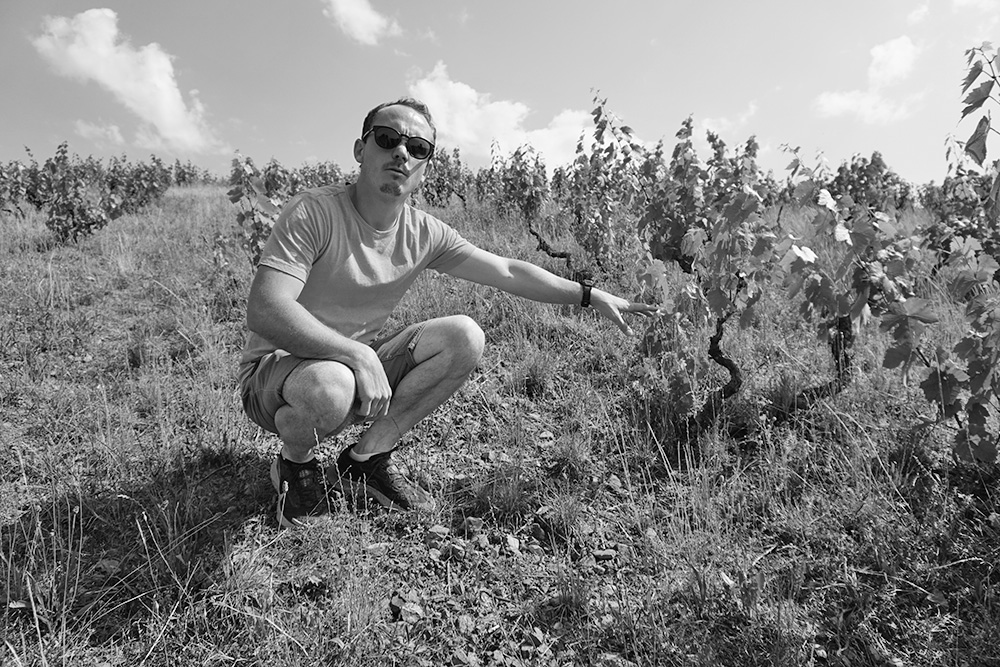
Jonathan and Chloë ushered in the third generation here in 2017, and have continued pushing for ever-greater horizons for their wines. They brought with them an emphasis on organic and natural practices and principles of agroecology, and specifically agroforestry, to the estate (which has since been certified organic). The unbroken focus of the domaine has remained the same: producing the purest, most delicious expression of terroirs as possible, with incredible energy, structure, and freshness.
Terroir of Southern Beaujolais
The Many Faces of Brouilly
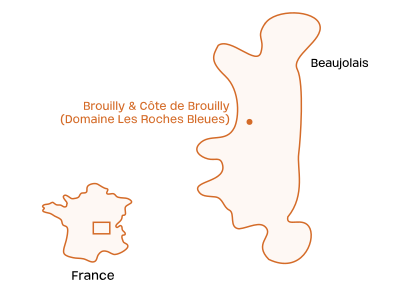
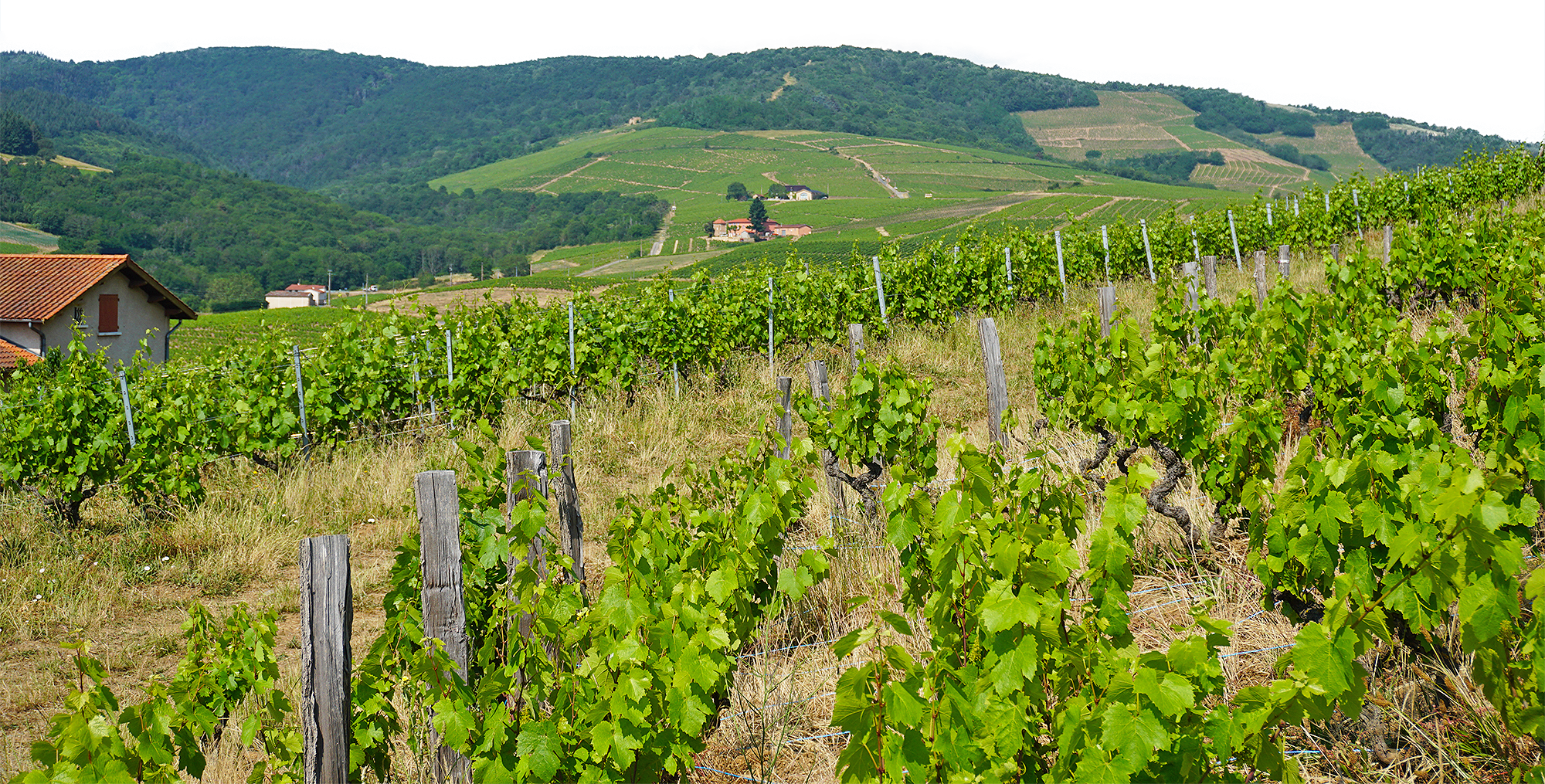
The Côte de Brouilly cru is the geographical top of the mountain, actually an extinct volcano, at 300-450m above sea level, surrounded by the Brouilly cru around its lower elevations. Côte de Brouilly takes advantage of the superior drainage and exposure offered by the steep slopes, in conjunction with its soils, which contain a preponderance of the sought-after blue schist. Mont Brouilly produces some of the most mineral, ageable wines of the entire region, with a slight nod to the south toward the syrah-based wines made in the northern Rhône Valley.
The Brouilly cru, meanwhile, is defined by soil variety: a plurality of pink granite, with a combination of limestone, marl, clay, shale especially in the east. Jonathan’s vineyards here produce wines that tend to be more elegant, red-fruity, and incredibly food-friendly.
Vineyards & Viticulture
Look to the Trees
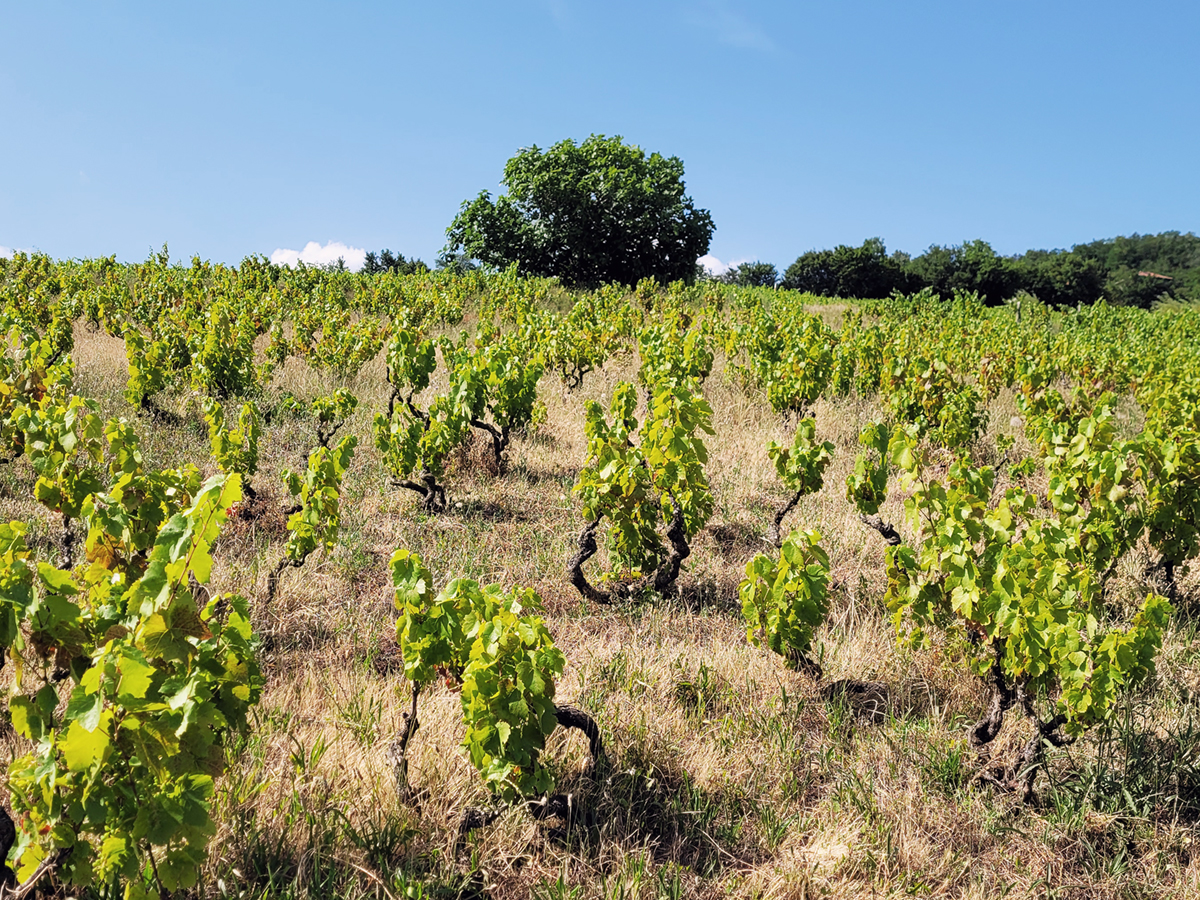
Jonathan’s vineyards were certified organic in 2021; he does not use any chemicals in the vineyard or winery. Agroecology and agroforestry (plant cover, hedges, planting trees within plots) inform the ethos of the project, putting the tree at the heart of the vineyard system to improve the quality of the soil, the environment, and fight climate change. The trees and hedges at the periphery of the vineyards also provide a “highway” for animals and insects to access the forest at the top of the mountain (a UNESCO Global Geopark), as well as find their way into his neighbor’s vineyards, cohering the entire ecological system. He utilizes wild grasses in the vineyard to help with water retention and guard against erosion. The grasses also lower the temperature in the vineyards by an average of ten degrees on the ground.
The average age of his vines is 50-65 years, with some vines exceeding 100 years old. Jonathan is also planting young vines and switching to cordon training, which is better for organic and biodynamic farming by raising the vines up off the ground. This method allows for more aeration and does not trap humidity close to the ground, which in turn negates the need for chemical inputs.
Process & Philosophy
Inside, Outside, and Around the Bottle
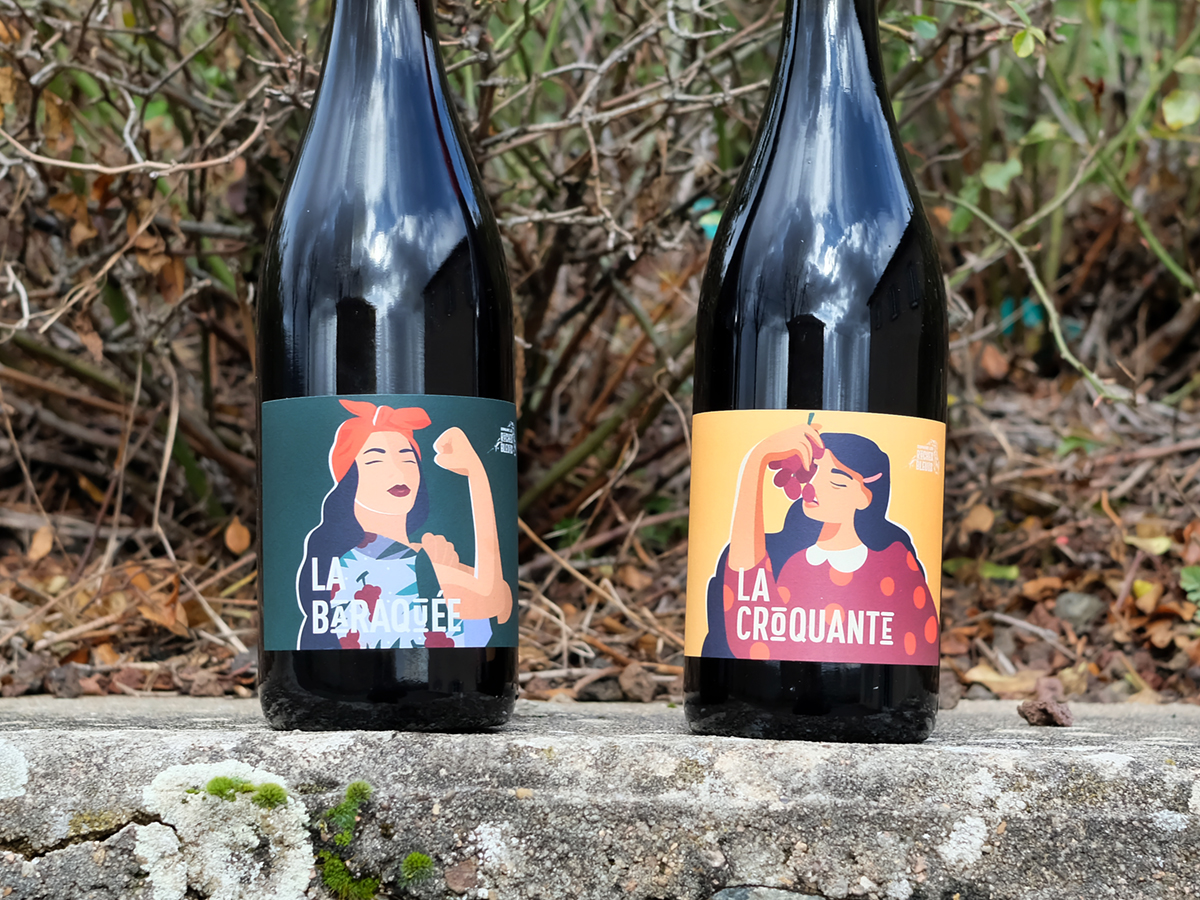
Grapes are always hand-harvested in small boxes to maintain the integrity of the clusters. Vineyards are collected and vinified separately. In the cellar alcoholic fermentation is carried out in the traditional large cement vats common in Beaujolais with thermoregulation, followed by aging in traditional old foudres from six to 12 months. Vinification is carried out in the most natural way possible, with carbonic maceration and indigenous yeasts, and with very limited sulfur added (if any at all) at bottling, depending on the cuvée and vintage. Wines are bottled without fining and little-to-no filtration.
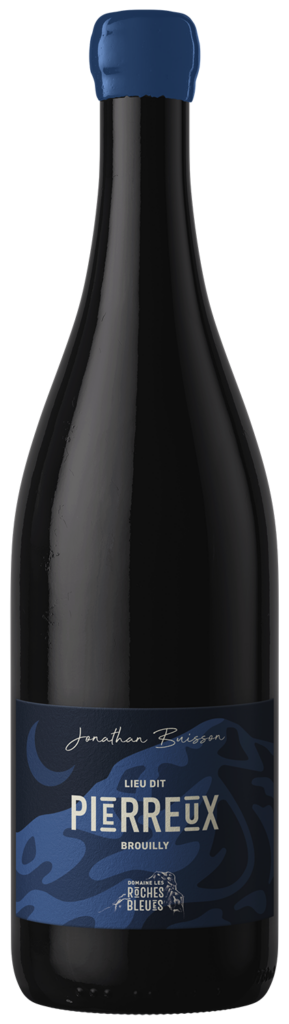
The instantly-identifiable labels were created by Jonathan’s good friend and artist, Astrid Amadieu. They tell a story of the personality and flavor progression of the different cuvées while celebrating women, as imagined by Astrid. She joined Jonathan for two harvests at Domaine Les Roches Bleues in 2010 and 2011, where she would make portraits of the grape pickers during her evenings there. The labels for the lieu-dit wines are an homage to Astrid’s style, depicting the natural character evoked by the vineyard sites, and done in-house by the De Maison team in conjunction with Jonathan’s guidance.
Shared Values
We’re in this Together
Grapes at Roches Bleues are always hand-harvested in small boxes to maintain the integrity of the clusters. Vineyards are collected and vinified separately. In the cellar alcoholic fermentation is carried out in the traditional large cement vats common in Beaujolais with thermoregulation, followed by aging in traditional old foudres from six to 12 months. Vinification is carried out in the most natural way possible, with carbonic maceration and indigenous yeasts, and with very limited sulfur added (if any at all) at bottling, depending on the cuvée and vintage. Wines are bottled without fining and little-to-no filtration.
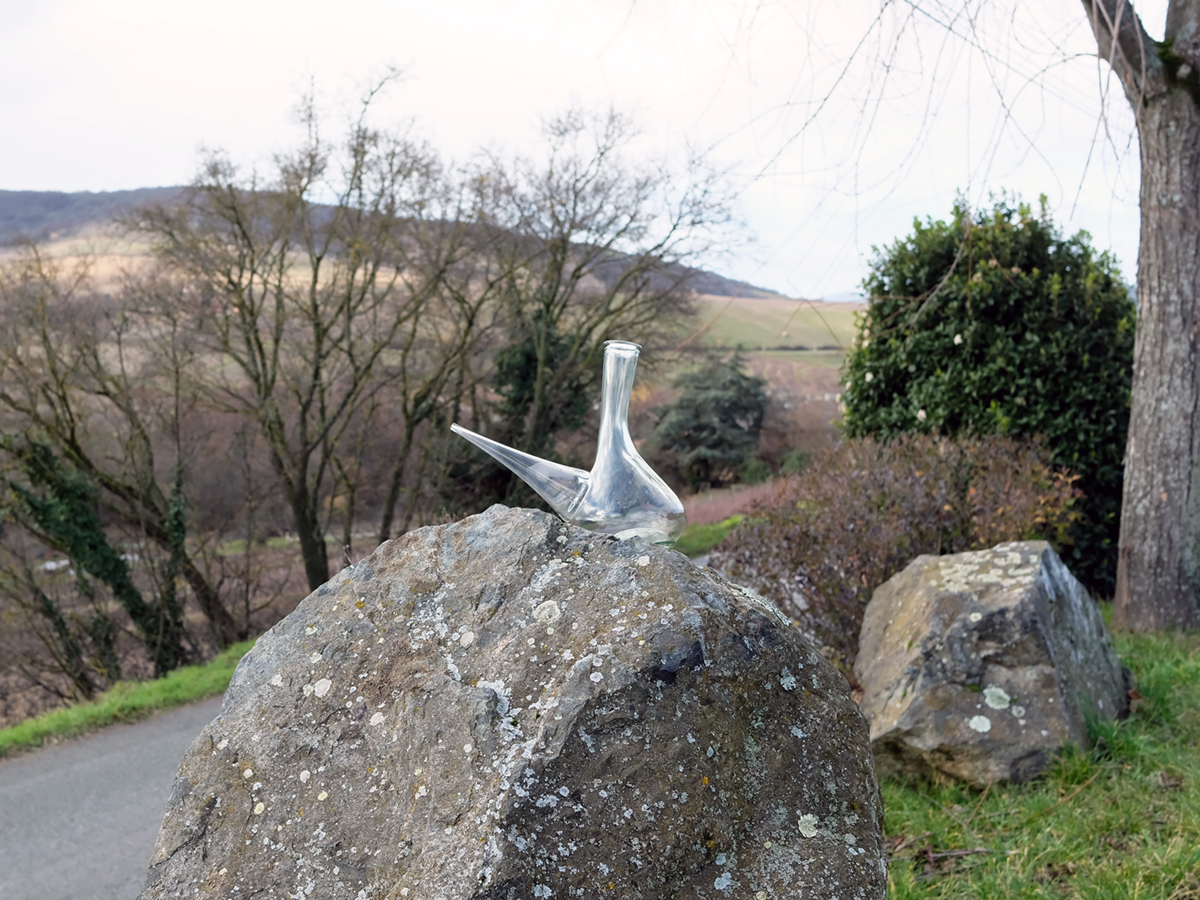
The instantly-identifiable labels were created by Jonathan’s good friend and artist, Astrid Amadieu. They tell a story of the personality and flavor progression of the different cuvées while celebrating women, as imagined by Astrid. She joined Jonathan for two harvests at Domaine Les Roches Bleues in 2010 and 2011, where she would make portraits of the grape pickers during her evenings there. The labels for the lieu-dit wines are an homage to Astrid’s style, depicting the natural character evoked by the vineyard sites, and done in-house by the De Maison team in conjunction with Jonathan’s guidance.
Products
Wine
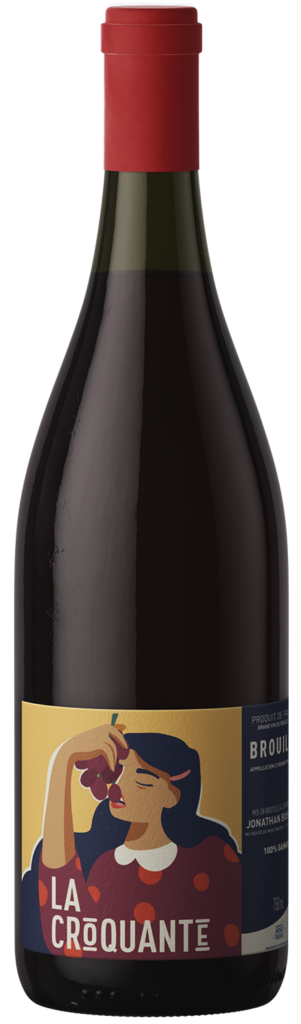
Domaine Les Roches Bleues ‘La Croquante’ Brouilly 2025
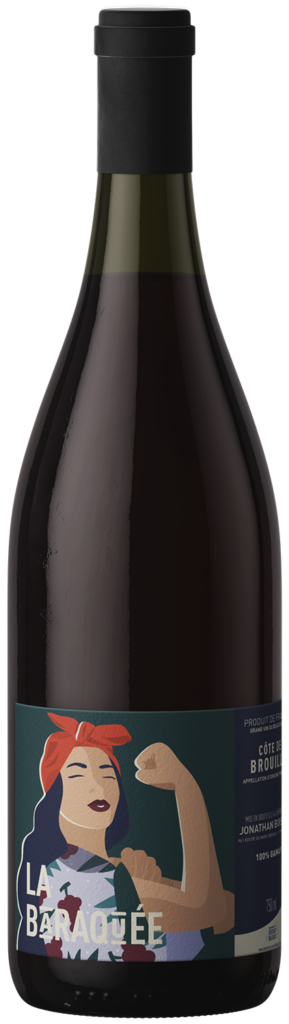
Domaine Les Roches Bleues ‘La Baraquée’ Côte de Brouilly 2023
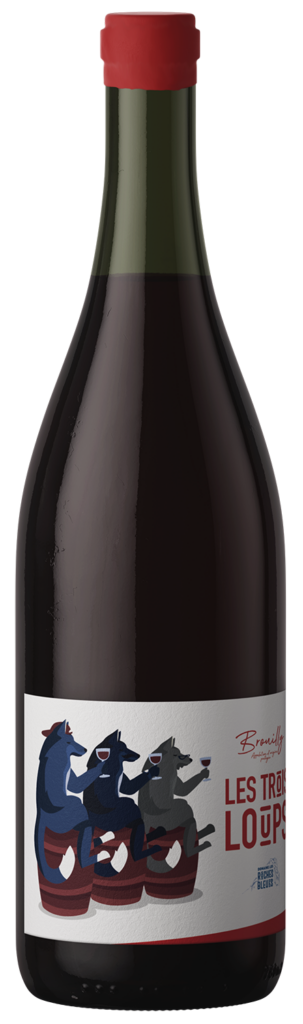
Domaine Les Roches Bleues ‘Les Trois Loups’ Brouilly 2020
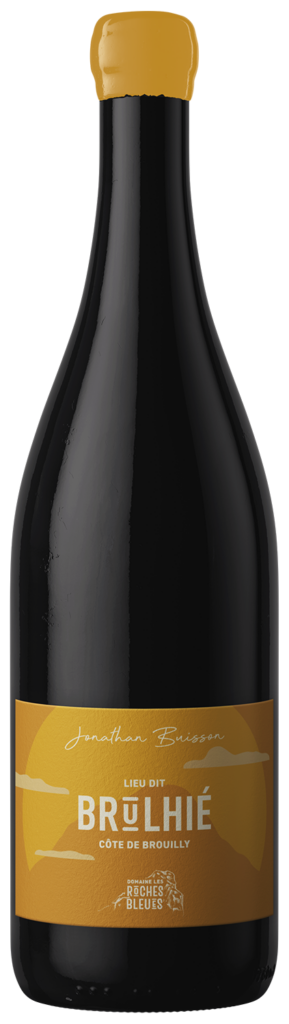
Domaine Les Roches Bleues Lieu-dit ‘Brulhié’ Côte de Brouilly 2020
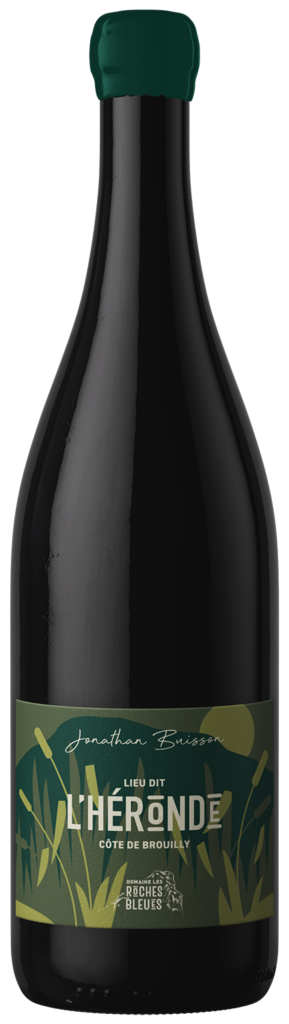
Domaine Les Roches Bleues Lieu-dit ‘L’Héronde’ Côte de Brouilly 2020