Mesquida Mora
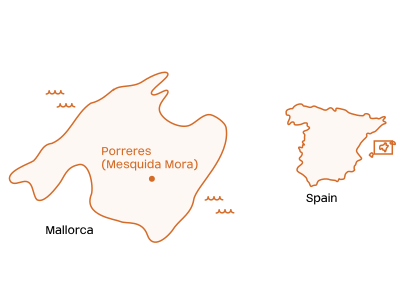
Mallorca

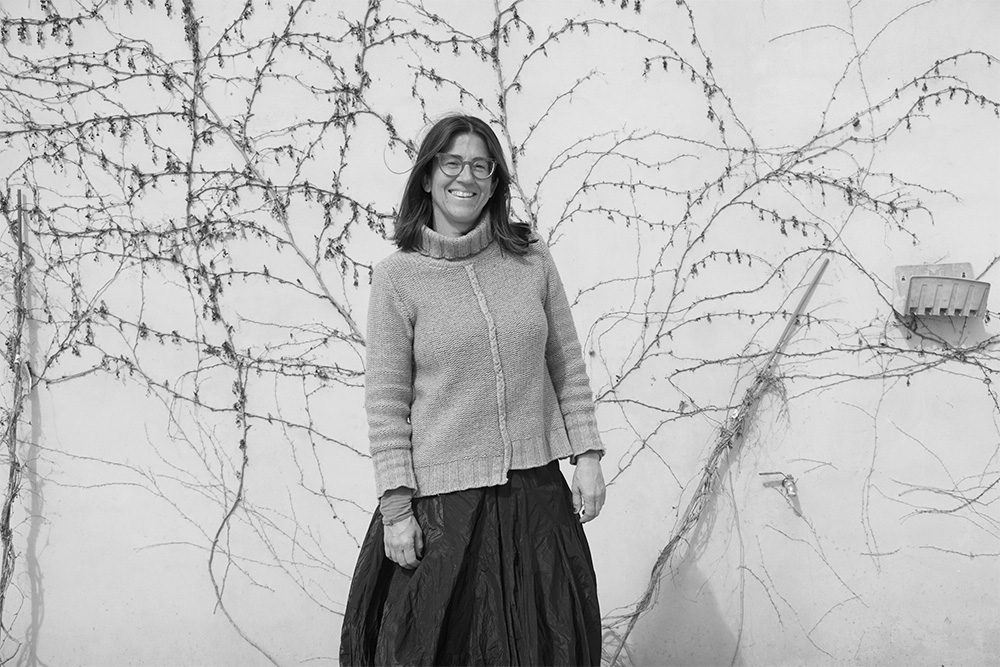
Bàrbara Mesquida Mora is a pioneering Mallorcan winemaker dedicated to biodynamic and regenerative agriculture. Using indigenous grape varieties, she makes refined, elegant, and energetic wines that point toward the future of viticulture on the island.
Introducing the Producer
A New Voice in Mallorca
Like her flagship cuvée “Sincronia” suggests, Bàrbara’s wines are the synchrony of Mallorca’s past, present, and future. They form a rich viticultural tapestry that honors her pioneering winemaking family while looking to the future with native Mallorcan varieties. Through the lens of biodynamic and regenerative agriculture, she is helping to usher Mallorca into a new age of vibrant, terroir-driven winemaking.
History & Origins
A Family Legacy, Reimagined
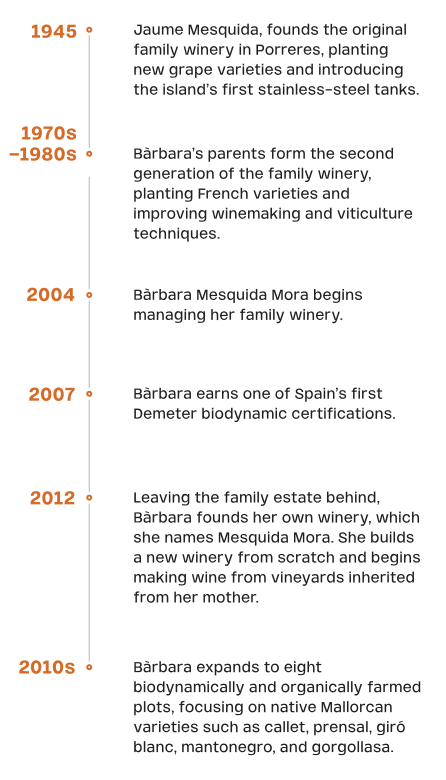
While studying Catalan at university, Bàrbara’s brother gave her a book that would change her life forever. It wasn’t any Catalan text, but rather Rudolf Steiner’s writings on biodynamics. Bàrbara fell in love with the idea of biodynamic farming, and decided to return to Mallorca to manage her family winery, founded by her grandfather in 1945. After completing her degree in Catalan, she studied enology, and began working at the winery. Soon after her return, she achieved one of Spain’s earliest Demeter certifications in 2007. Five years later, Bàrbara decided to strike out on her own, and launched Mesquida Mora from scratch using historic vineyards inherited from her mother.

For more than two decades, she has been a passionate practitioner of organic, biodynamic, and regenerative agriculture, encouraging biodiversity throughout her vineyards. Her multilingual, artistic foundation informs every facet of her work. She is firmly among the vanguard of young producers reviving and contributing to Mallorca’s cultural and viticultural heritage.
The Vineyards & Landscape
A Mosaic Rooted in the Land
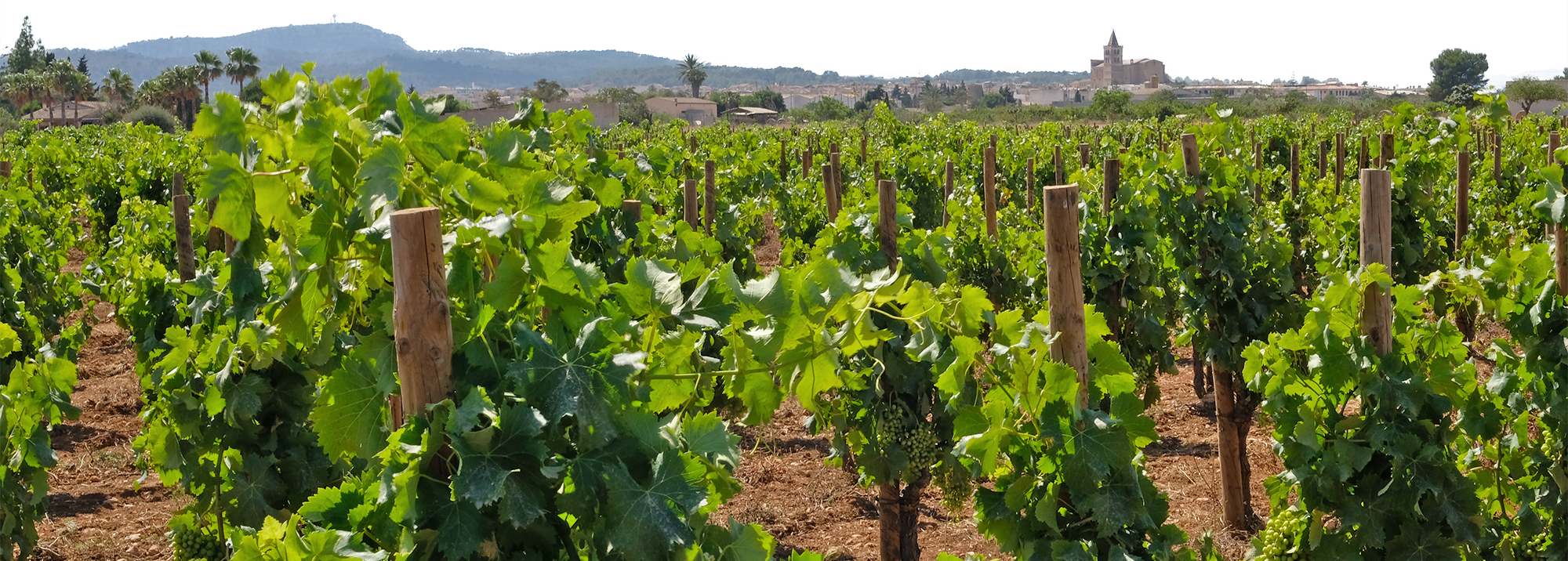
Bàrbara’s vineyards are made up of eight plots ranging from 3 to 65 years old, planted on calcareous clay, limestone, and the red, iron-rich clay soil known as cal vermell. All of them are certified organic by the Consell Balear d’Agricultura Ecològica. Together, they form a varietal mosaic where the first examples of foreign grape varieties planted in Mallorca coexist with the island’s native varieties. Mostly bush-trained to preserve traditional methods, resilient, old vines are protected by the apricot trees once tended by Bàrbara’s mother’s family.
Her great-grandfather, Jaume Mesquida, was a pioneer in the Balearic wine renaissance who planted new grape varieties and introduced the island’s first stainless-steel tanks. Today, Bàrbara brings this legacy full circle, merging past and present. Though her main focus is native grape varieties such as prensal, callet, mantonegro, giró, and gorgollasa, Bàrbara maintains old vines of French varieties introduced by her parents, including syrah, cabernet sauvignon, and chardonnay.
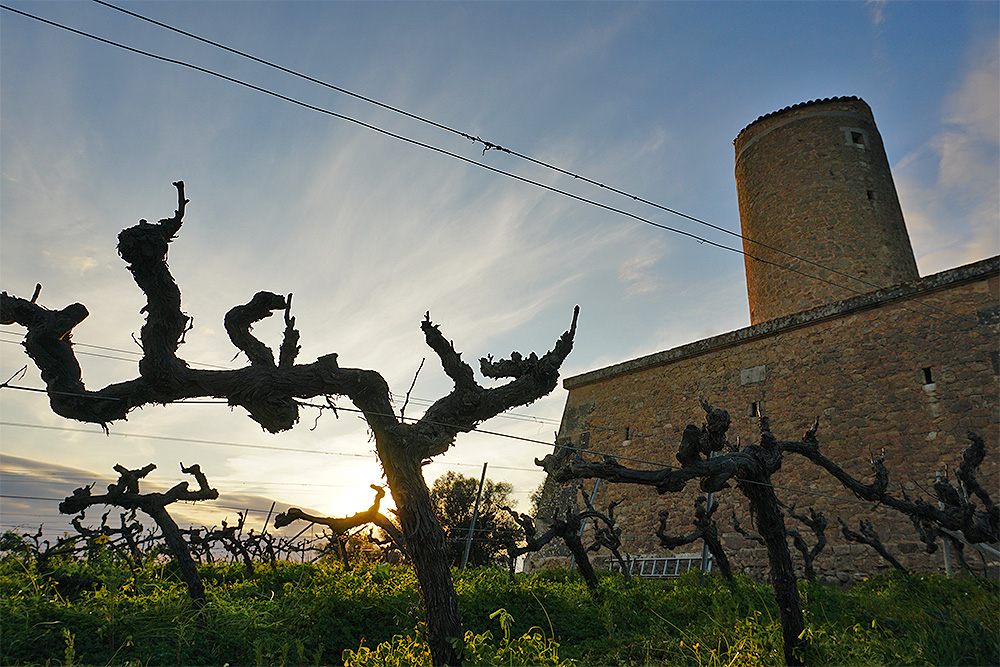
Built in 1850, the Son Porquer mill shelters these first foreign varieties, planted over 40 years ago. Across the road, in an old apricot orchard, Bàrbara planted her very first vineyard in 2005. These were among the last trellised vines and the final foreign varieties she planted, as her vision began to evolve towards exclusively focusing on Mallorca’s native grapes. Still, without the enthusiasm of Bàrbara’s family, Mallorca’s viticultural history might have been very different. Past efforts to improve wine quality by introducing foreign varieties provided her with the context for reviving Mallorca’s native grape varieties in the present.
One jewel of the estate is the 80-year-old Es Pou de Sa Carrera vineyard. This is one of Mallorca’s oldest callet parcels, planted between massive red-cheek apricot trees. It is the basis for her perfumed, elegant, cuvée Sòtil, considered one of the most exceptional reds on the island.
Process & Philosophy
Farming First
Bàrbara farms in dialogue with nature, planting cover crops, applying compost and biodynamic preparations, and using medicinal plant infusions. All the work in the vineyard is done by hand according to the lunar calendar. Her aim is to make great wine while leaving fertile, rich soils for future generations.
In the cellar, she is a minimalist. All wines ferment spontaneously with indigenous yeasts, sulfur is used sparingly during production, and none is added at bottling when the vintage allows.
The Collection & Expression
Wines with a Voice
From her stewardship of old vineyards to her striking label designs and the names of each cuvée, Bàrbara’s project is shaped with intention and energy.
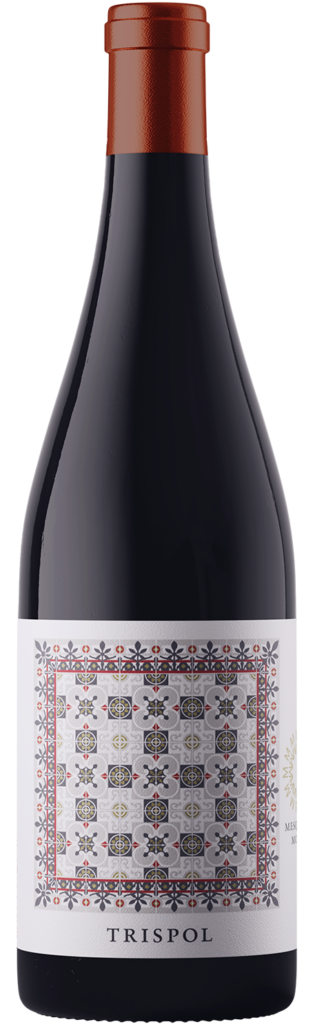
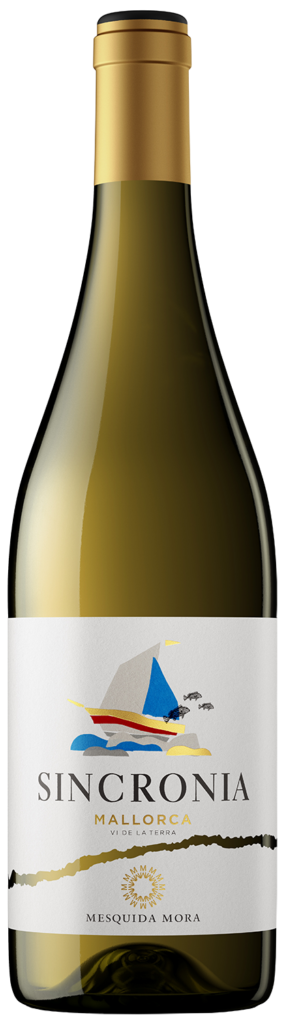
Her labels reflect what she calls the “little paradise” where she was born: ‘Acrollam’ is a reversal of Mallorca, ‘Sincronia’ reflects both the synchrony of past, present, and future, and the idea that nothing happens by accident, and her top two red cuvées recall her humble origins, when she started with neither a ceiling—‘Sòtil’, in Mallorquín—nor floor—’Trispol’.
The names of her wines and their label artwork reveal the sophistication and artistic commitment behind her wines. The Sincronia labels, made from fragments of colored paper, evoke the Mediterranean landscape.
Products
Wine
Mesquida Mora Sincronia Blanc 2025
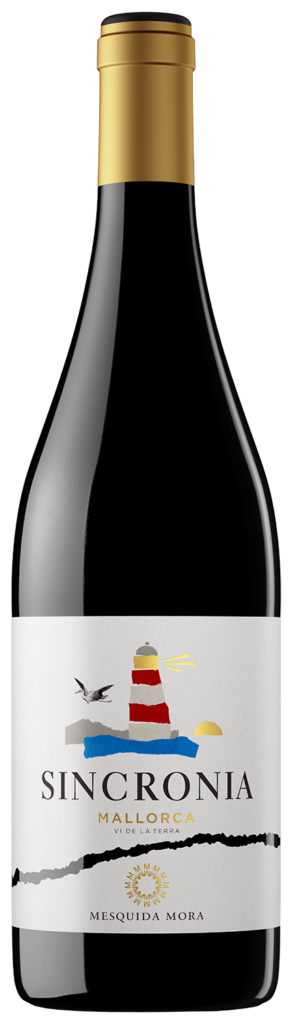
Mesquida Mora Sincronia Negre 2025
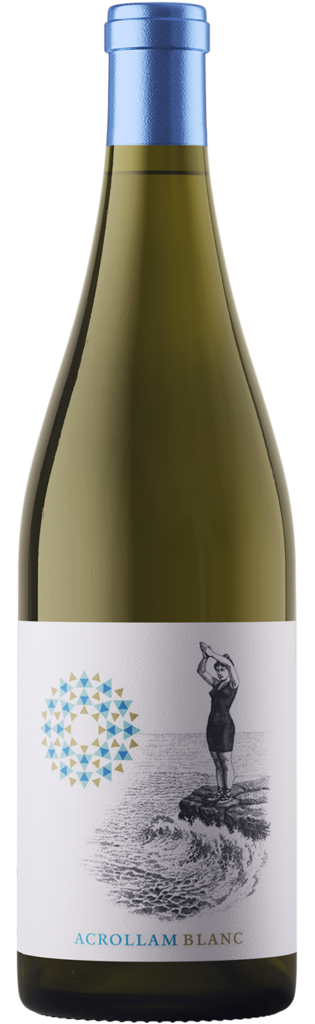
Mesquida Mora Acrollam Blanc 2025
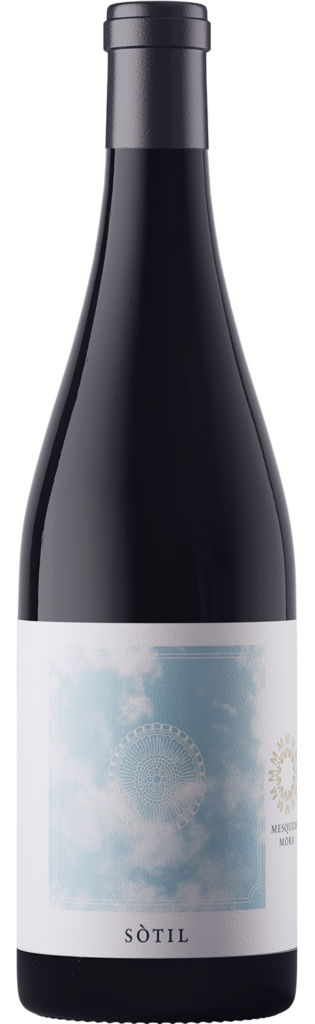
Mesquida Mora ‘Sòtil’ Vi de la Terra Mallorca 2021