Camille Mélinand
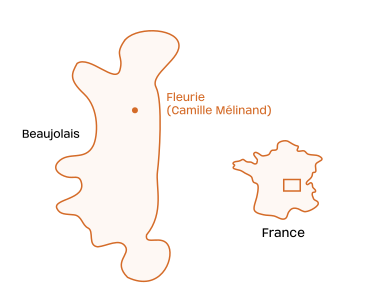
Fleurie & Chiroubles | Beaujolais

Camille Mélinand is a young winemaker making small amounts of ultra-elegant and delicious Cru Beaujolais from estate vineyards in Fleurie and Chiroubles. Using organic farming and production methods and drawing on his family’s long winegrowing legacy, he crafts joyous, exuberant, expressive wines
Introducing the Estate
Cult Classic
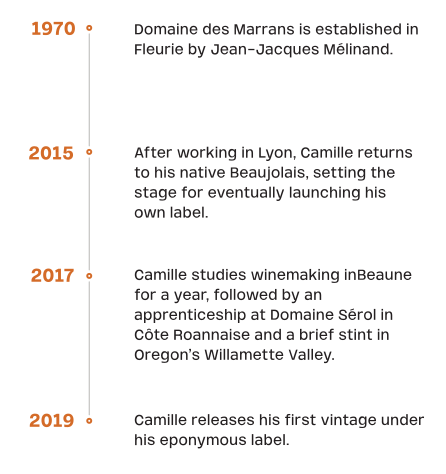
Though Camille grew up at his family’s cellar, Domaine de Marrans, he wanted to do anything but make wine. He initially got a job outside the wine industry in Lyon, but as he returned home on the weekends, the allure of a life in the vines became clear. In 2016, he came back to Beaujolais and joined his brother, Mathieu, at the family domaine.
In 2019, he debuted the first vintage under his own name, with wines from two vineyards he owns in Fleurie and Chiroubles that are vinified at the family cellar. His is a joyous, artistic project that doesn’t take itself too seriously, but still manages to make precise, clean, delicious wines.
History & Origins
Return to the Roots
Camille’s return home passed through several other regions. Even though he had grown up in the vineyards of Beaujolais, he felt he needed to get more winemaking experience before striking out on his own. He trained in Beaune for a year, followed by an apprenticeship at Domaine Sérol in Côte Roannaise, where he learned how to work with biodynamics. After a short time in Oregon’s Willamette Valley, he returned to Fleurie, and launched Camille Mélinand.
Camille’s Vision
Joie de Vivre, Travail d’amour
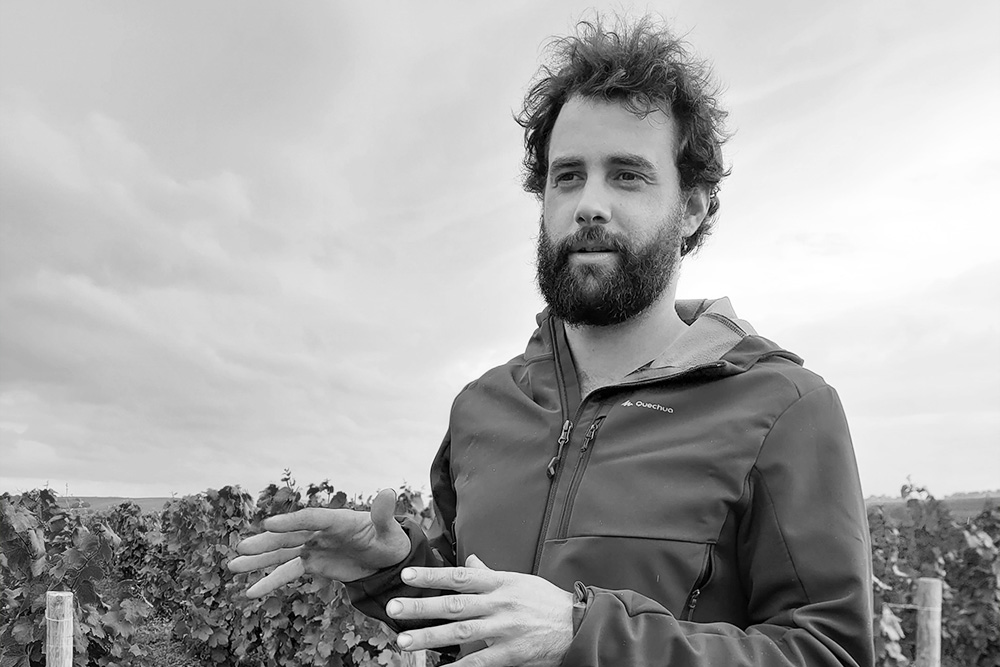
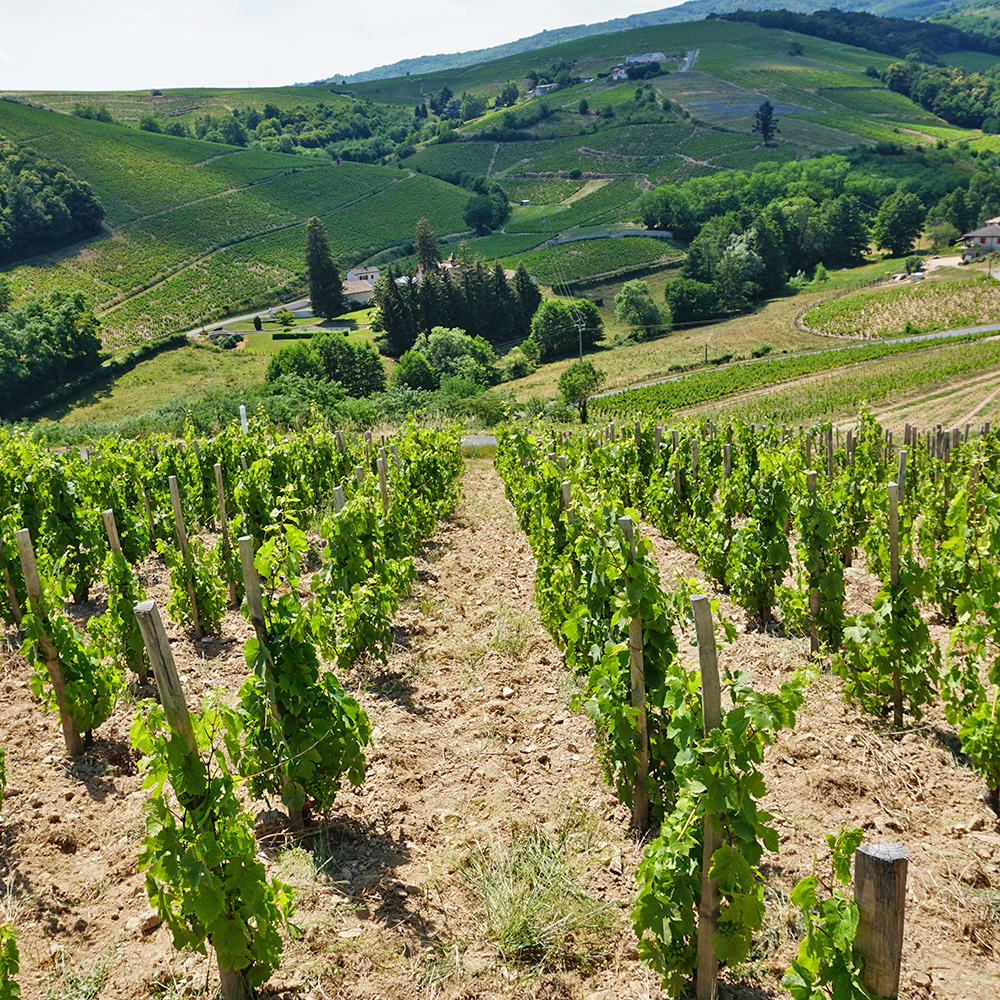
Camille farms two of his own vineyards: a one-hectare lieu-dit called Tempéré in Chiroubles—the highest Cru in Beaujolais at 400m—and a hectare and a half of the lieu-dit La Chapelle des Bois in Fleurie.
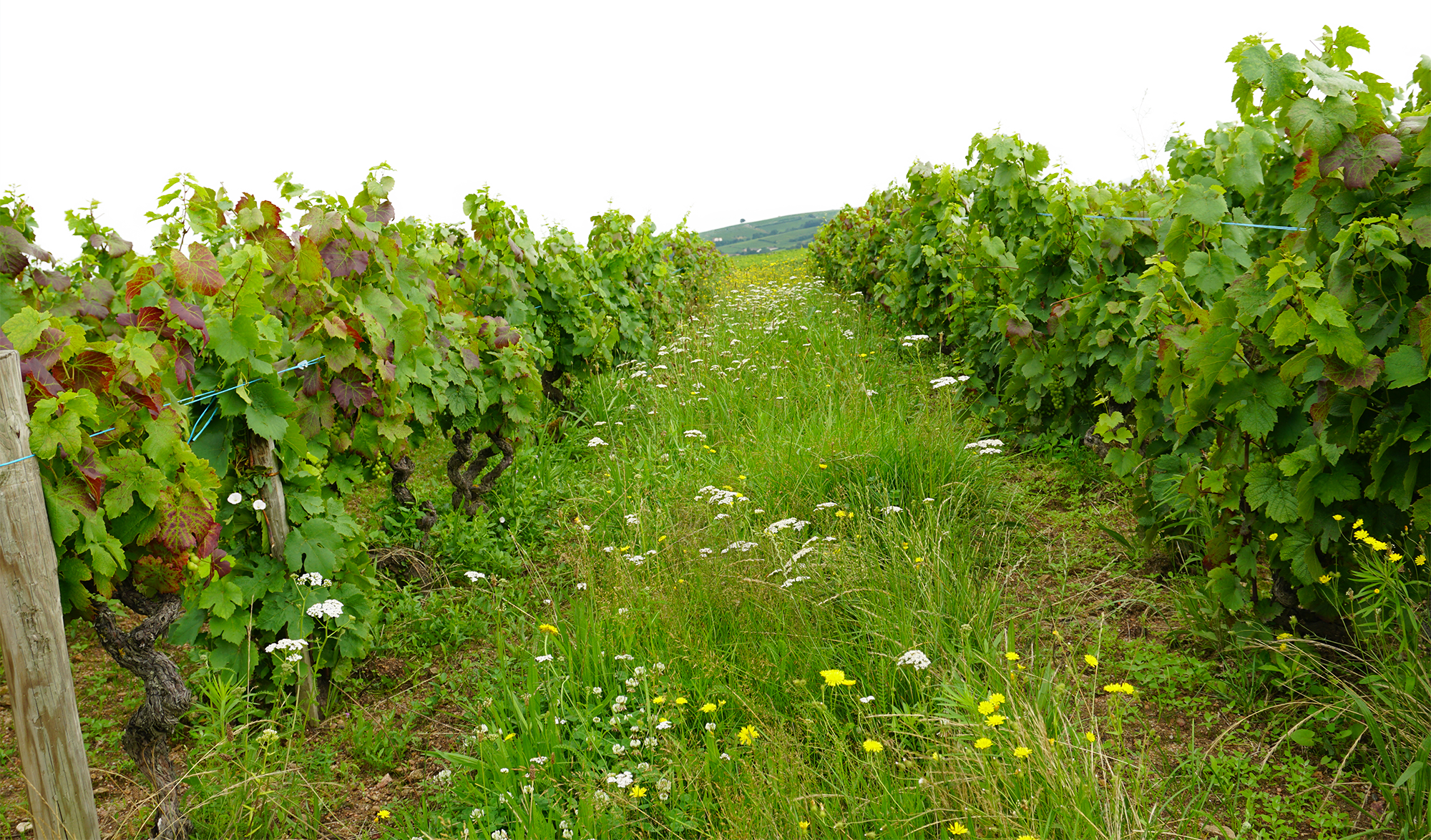
In Tempéré, 50-year-old, gobelet-trained gamay vines are planted in pink granite soils on a very steep, south-facing slope of 35% grade. Camille farms both vineyards organically and entirely by hand; in Tempéré, he uses a system of cables and winches to help him push the plow up the steep hill. It’s painstaking work, but he feels the results in the vineyard are worth the massive effort.
In La Chapelle des Bois in Fleurie, 60-year-old gamay vines are planted at 300m on shallow, stony, pink granite soils that are a little more decomposed than the soils in Chiroubles. Here, Camille is gradually training his vines up to cordon, where they can benefit from natural ventilation to combat disease.
The entire winemaking process is organic, with no chemicals in the vineyard or winery. Both vineyards are vinified in the same way: whole clusters are hand-harvested in small boxes and undergo a traditional 15-day carbonic maceration, followed by spontaneous alcoholic fermentation with native yeasts. Camille ages the wines in large, old oak foudres for 12 months, and bottles his wines without fining, filtering, or manipulation of any kind.
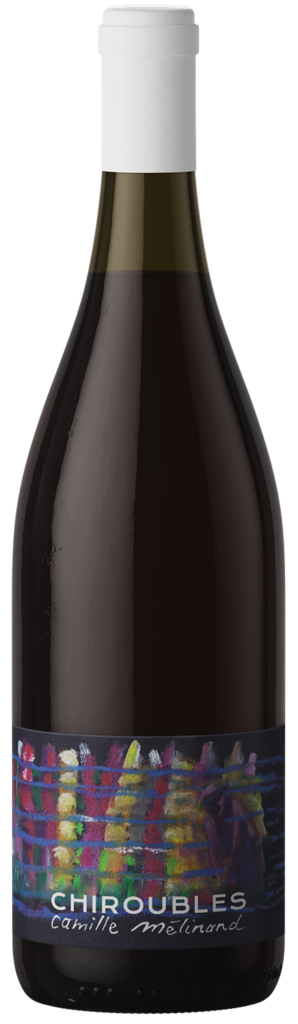
The artistic, interpretive labels are done by a friend and local artist in Romanèche-Thorins named Delphine Chauvin. Camille says that art, like wine, is quite subjective and wants his wines and labels to actively engage the drinker and inspire conversation, so there are several things hidden in the labels for the drinker to discover.
Products
Wine
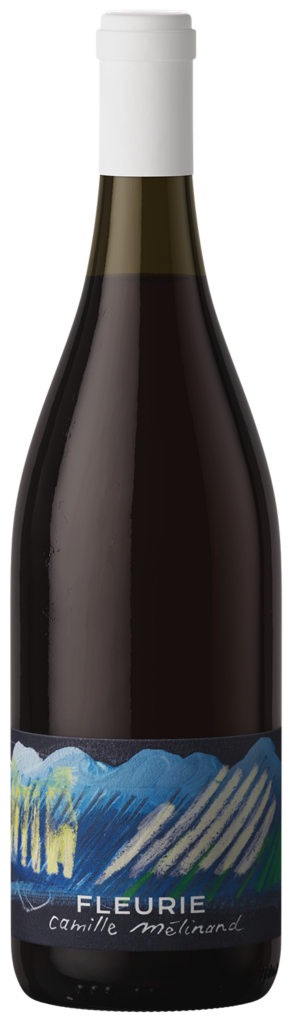
Camille Mélinand Fleurie 2023