Naguelann Distillerie
Brittany

Naguelann is Lénaïck Lemaitre’s deeply personal study of whisky, connecting the Celtic cultures of Brittany and Scottish through distilling and aging traditions.
Introducing the Estate
Drams and Anagrams
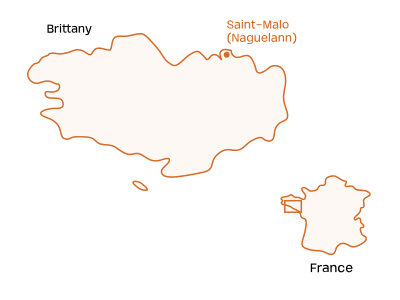
Naguelann whiskies capture the Celtic spirit of maritime Brittany via the creative vision of founder Lénaïck Lemaitre. Starting in 2014 near Saint-Malo, Naguelann—a playful reorganization of the name of its hometown, Languenan—was inspired by Scottish techniques and Breton terroir. In a tiny, traditional stone house, Lénaïck has built a workshop wherein he can explore both the math and the melody of whisky-making, resulting in some of the most intentional and contemplative bottlings to emerge from the French new wave of craft spirits.
History & Origins
A French Whisky Renaissance
France’s passion for whisky made it the largest consumer of Scotch by volume until 2023, when it was dethroned by the much more populous India. Perhaps as a result of its appreciation for the spirit, France has experienced a groundswell of homegrown Gallic whisky, with over a hundred distilleries sprouting up in just the last thirty years. In northern France, Brittany has been called “the spiritual core” of French whisky. The cool, maritime climate, rich and unique Celtic culture, and high-quality grain are a perfect recipe for top tier, Scotch-style malt whisky.
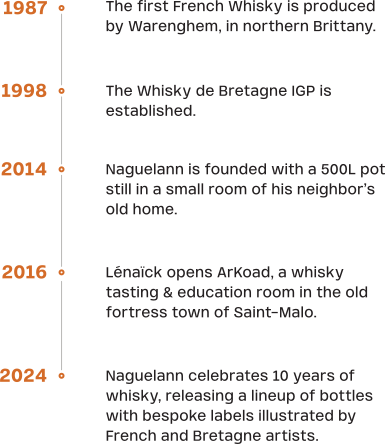
Against this background, it’s no surprise that the first French whisky was produced by the Warenghem distillery in Lannion on the northern coast of Brittany, nor that an IGP Whisky de Bretagne would follow. Since that release in 1987, and the subsequent launch of Armorik single malt in 1998, Whisky de Bretagne has been joined by only one other IGP—Whisky d’Alsace. While the latter has fairly strict parameters defining production, Brittany has chartered broader, more creatively-permissive guidelines. Whisky de Bretagne can incorporate a variety of still types, cask finishes, and grains—including the area’s signature sarrasin, or buckwheat (eddu in Breton), a key ingredient of regional delicacies like galettes and Gâteau Breton.
Brittany, Bretagne, Breizh, Aromorica
The Celtic Connection
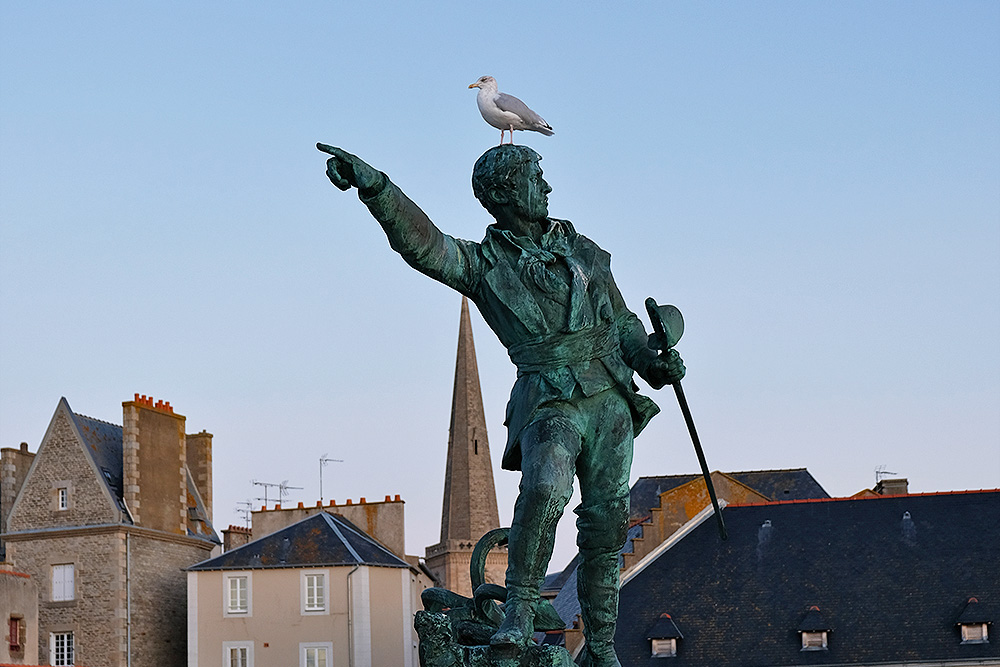
Brittany, or Bretagne, is a region that covers the Armorican peninsula in the northwest of France, directly across the English channel from Cornwall. Considered one of the six historic Celtic nations (alongside Scotland, Ireland, the Isle of Man, Cornwall, and Wales), Brittany has a completely distinct heritage from the rest of modern France, with its own indigenous language, specific local foods, music, dance, and art. As with many nations that have continued to persist as minorities within modern political borders, there is a reinvigorated interest in exploring and strengthening those traditions, for the sake of the survival of the culture. The Naguelann project is an integral part of this movement.
The Vision Behind Naguelann
From Interest to Devotion
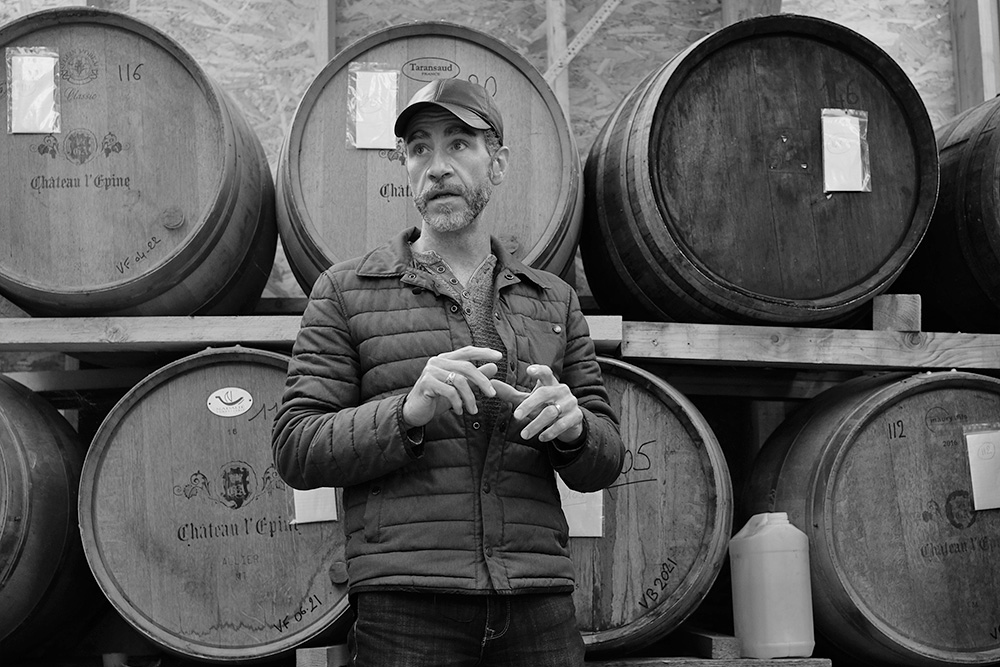
Lénaïck Lemaitre never planned on operating a distillery, but fate intervened. From bartender to blender, cellarer, bottler, and eventually distiller, his calling slowly revealed itself over many years.
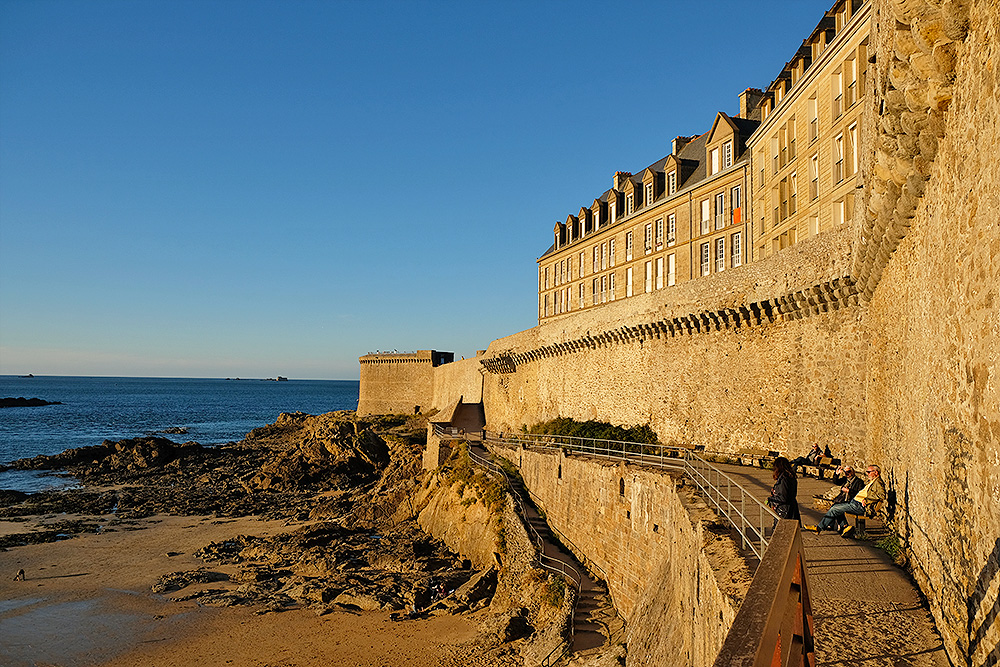
While working as a bartender, Lénaïck won a trip with a small group of other French professionals to tour distilleries in Scotland. This experience cemented his devotion to the spirit, and he later opened ArKoad, a bottle shop and tasting room in picturesque Saint-Malo. A private scotch label, The Celtic Guy, allowed him to purchase, age, and blend his own Scotch bottlings for the French market.
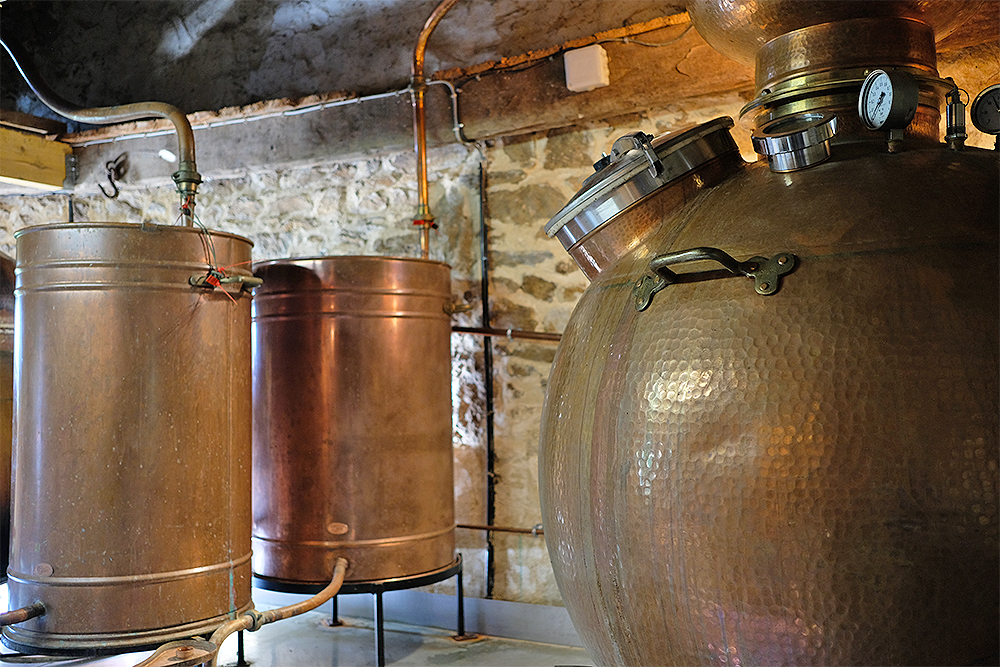
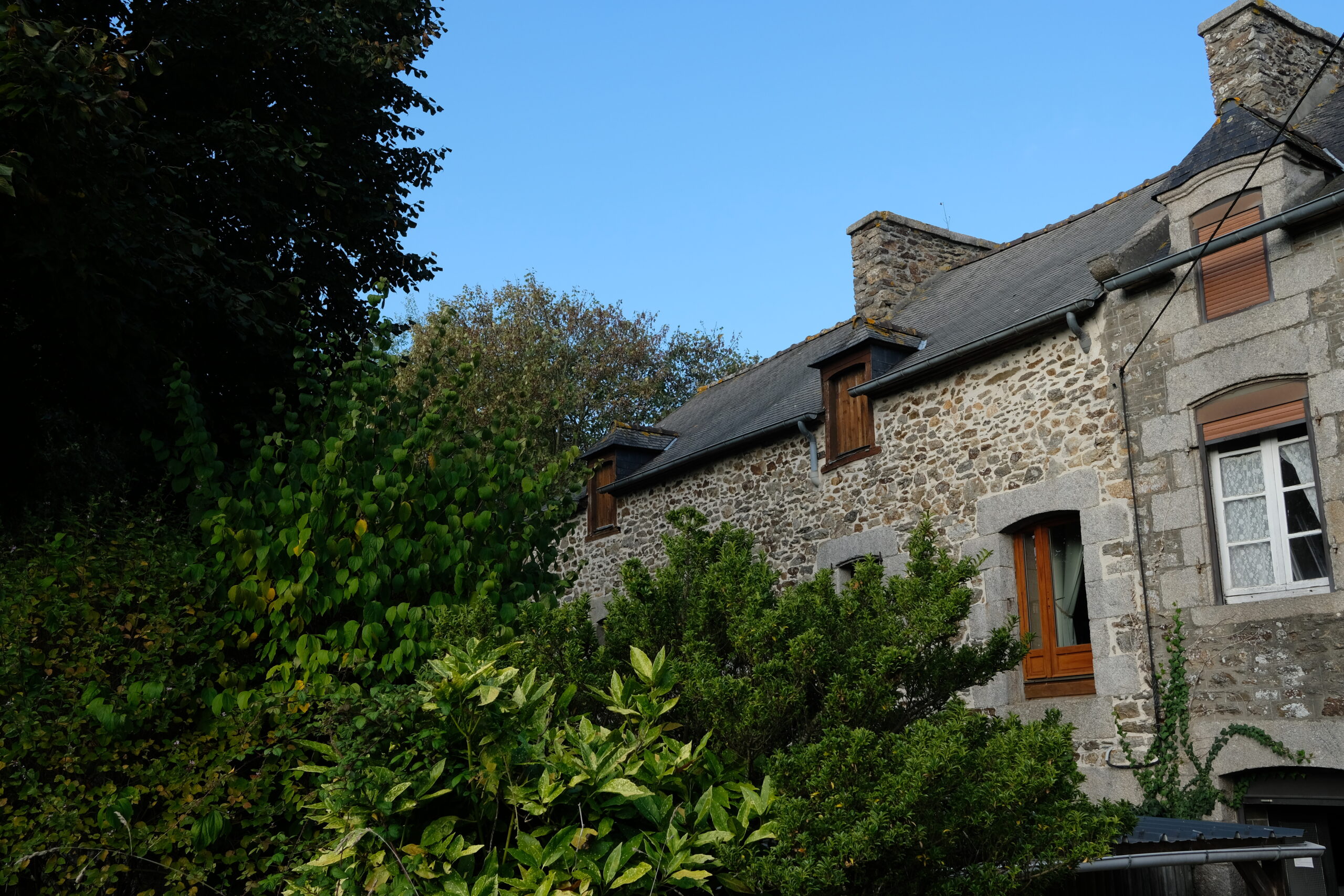
Lénaïck soon began aging local distillates from his friends, including buckwheat spirit made nearby at Distillerie des Menhirs. After a few years of working with friends’ whiskies, he became eager to tell a deeper story of Breton whisky. He bought a copper pot still—a petite 500L—from German manufacturer Unicobres, and installed it in the tiny, rustic room that is now the main stillhouse. The distillery and his office actually occupy what was once his neighbor’s house, and his parents still live right over the fence in his childhood home. The neighbor’s grandfather was known for making some of the best traditional cider in the area, which sparked an early interest in beverages for the young Lénaïck. The Naguelann distillery was built with the family’s blessing, as an homage to this tradition.
Lénaïck describes the distillery as built like a boat, with every single inch used to maximum efficiency. In fact, when he squeezed in three additional 1,000L alembics to accompany his original still, he had to take out parts of the ceiling plank by plank to accommodate them.
Whiskymaking Philosophy
Dour, Koad, Gedal
On every bottle, you’ll find Nagelann’s mantra: Dour, Koad, Gedal—Breton for ‘Water, Wood, Time’. These three elements speak directly to the origins and intent of the project. Lénaïck approaches each spirit with the patience of an artist and the endurance of an athlete, a perspective that is essential to his sense of self—the multifaceted Lénaïck is a composer, pianist, and marathoner.
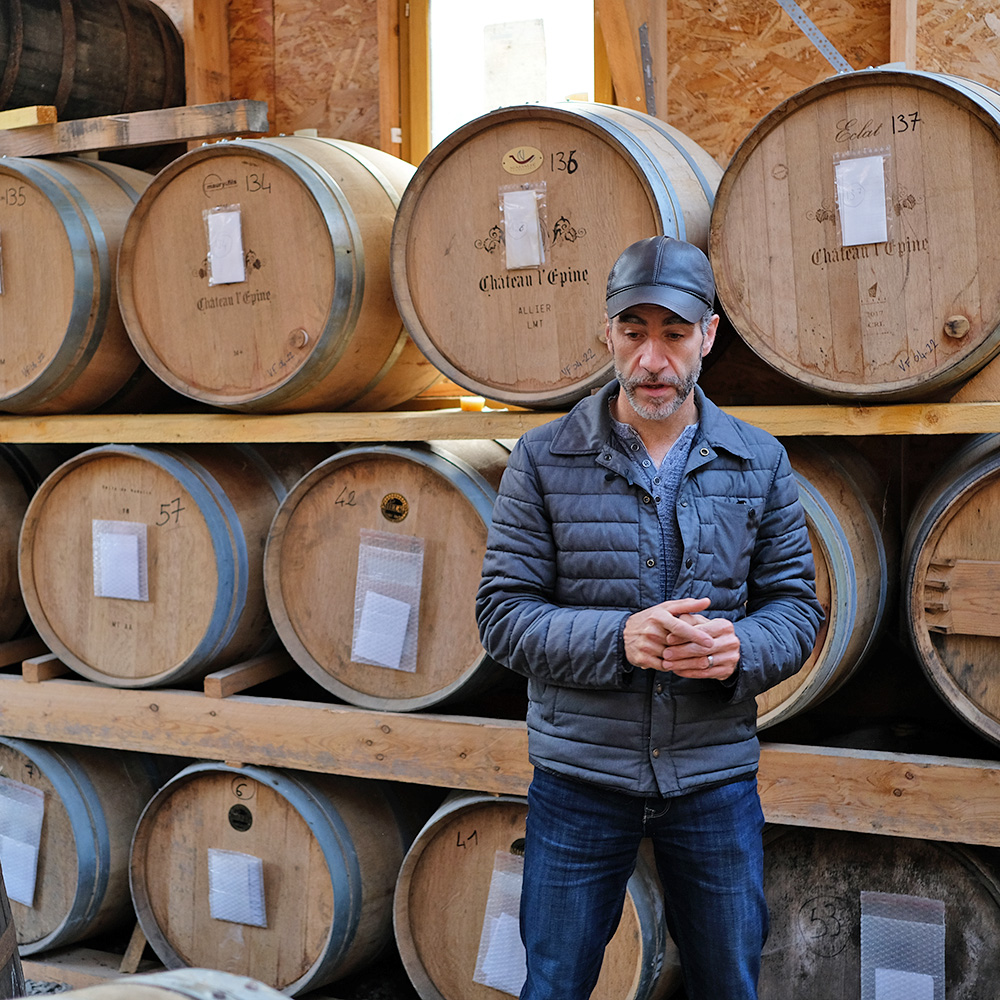
Walking into the barrel house, a small dunnage room with sunlight streaming through the partly open roof, Lénaïck quips “welcome to the kitchen.” He inherited an understanding of the tension between fixed recipe and intuition from his chef father, forming the core of his whisky-blending ethos. There are no cask finishes at Naguelann; every whisky is distilled with a specific vision, and new make go immediately into their intended casks, which can range from from old French oak and St-Émilion red wine casks to ex-Islay whisky casks.
“I only have recipes,” Lénaïck explains. “There is no ‘single-malt-plus-cask-finish.’ It’s not cask finishing, it’s cask starting.” This technique flips the Scotch aging style on its head, and takes an incredible amount of courage. Rather than starting his whisky in ex-Bourbon or neutral oak barrels and then adding a dash of personality at the conclusion, Lénaïck forges his own path by deciding the direction of each of the whiskies at inception and carefully guiding its individual path through his cellar.
Aging Process
Using the Whole Palette
Lénaïck’s barrel library is a motley crew of oak, wine, and whisky origins. While he sources classic French oak barrels, both old and new, Lénaïck also uses first-fill, ex-St-Émilion Bordeaux casks as well as a variety of ex-Scotch casks. This includes very old barrels from Ben Nevis in the Highlands, ex-Islay casks from Caol Ila, and a variety of others from the likes of Tullibardine and Glenrothes.
Most of the barrels are left in their original 60L sizes, but Lénaïck also works with two local coopers to resize some into quarter-cask formats. Inspired by Laphroaig, these smaller barrels offer a far more intense extraction of flavor than a larger barrel due to a higher proportion of direct liquid-on-wood contact. When factoring in the impact of, say, an ex-St-Émilion red wine cask, the effect is amplified even more so than with new or neutral oak.
Once carefully aged, blended, and rested, every Naguelann whisky is minimally filtered by gravity before bottling, using merely a cheese cloth to capture particulates. This light touch can occasionally leave a touch of cloudiness in the whisky, which speaks to its authenticity and depth of flavor.
Naguelann is downproofed with Brittany’s prized natural mineral water, Plancoët, showing the heart of the whisky like a prism amplifying a ray of light.
Explaining The Range
Teaching Breton Through Whisky
Not so long ago, Brittany’s native Celtic language was in danger of extinction. It was prohibited in public schools for almost one hundred years, a ban that was lifted only in 1951. Luckily, Breton is now undergoing a revival, concurrent with a resurgent sense of pride in Breton identity. Lénaïck himself has been earnestly studying his heritage language, and his use of it on everything from the whisky bottles to the signage at the distillery reflects the high priority he has ascribed to Brittany’s culture.
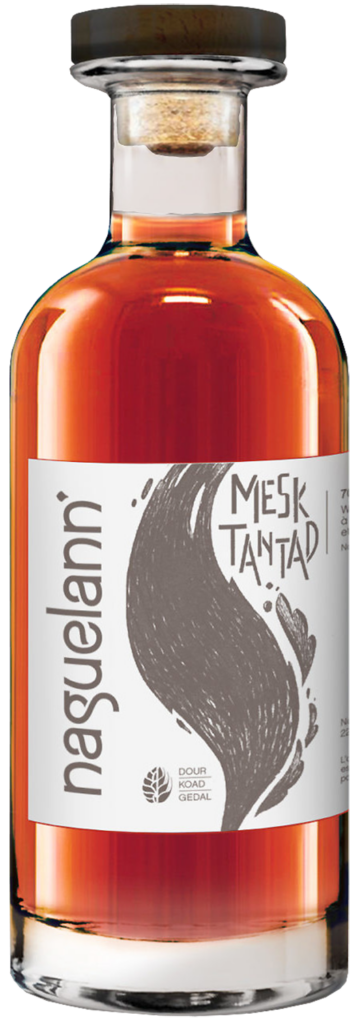
The terms on the bottle substitute Breton words for traditional whiskey terms: Dieil replaces “single malt”, Tantad stands in for “peated”, and Mesk means “blend”.
The first US release of Naguelann whiskies centers around a trio of single malts, the Dieil series, each carefully aged three to six years in a sequence of different barrel types: ex-red wine, ex-Islay whisky, freshly charred barrels, and very old French oak barrels. The varied wood influence presents like decisively applied splashes of color on a canvas of ocean-tinged, peated whisky.
The three Dieil whiskies are accompanied by a single malt whisky called Ruz! (red), boldly aged start-to-finish in ex-St-Émilion Bordeaux casks, and a blended whisky of unpeated barley, peated barley, and local buckwheat called Mesk Tantad (burnt blend).
The Full Package
Audio/Visual Accompaniment
In 2023, to celebrate the 10th year of Naguelann, Lénaïck embarked on an ambitious project. During a post-pandemic sabbatical in Saint-Jacut-de-la-Mer, he composed an entire piano album, re-engaging a passion that was put on the back burner while he built the distillery.
That album is an audio accompaniment for his whisky range, and like the whiskies themselves, is serious, nuanced, heartfelt, genuine—and very good.
Lénaïck also has a way of dodging pretension in his pursuits, a trait reflected in his collaboration with local and French illustrators and cartoonists on special boxes and labels for the anniversary edition of Naguelann.
Their custom artwork helps define the specific contents of the bottlings, as well as reinforcing the lighthearted Celtic character of the whole enterprise. We’re delighted to feature this packaging on every bottle of Naguelann that De Maison brings to the US.
Lénaïck’s Vision
The Terroir of Culture
Naguelann is driven by the terroir of culture; not by individual plots of land, but by the specific history and artistry of a place and its people. It digs deep into the Celtic roots of the Brittany region, applying Scotch techniques with absolute precision, delivering something as personal as a fingerprint. It takes a visionary like Lénaïck to create spirits like these whiskies, so specific to their region and their maker. Through this amalgamation of culture, land, history, and heart, the whisky speaks loudly and clearly for itself, in crystal-clear Breton.
Products
Spirits
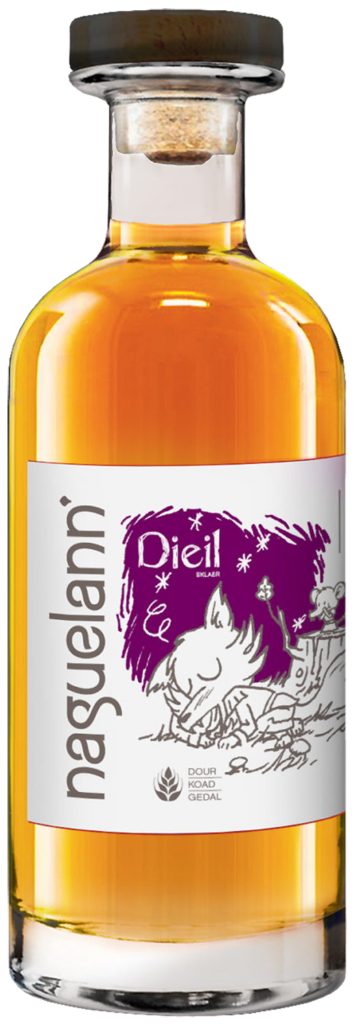
Naguelann ‘Dieil Sklaer’ Single Malt Whisky de Bretagne
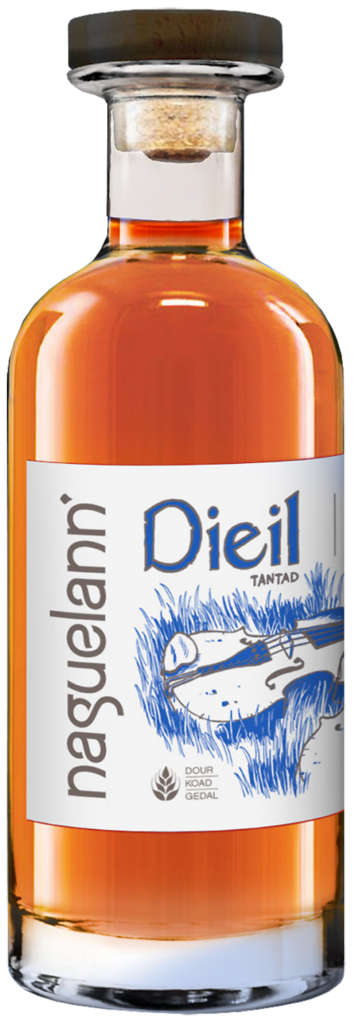
Naguelann ‘Dieil Tantad’ Single Malt Whisky de Bretagne
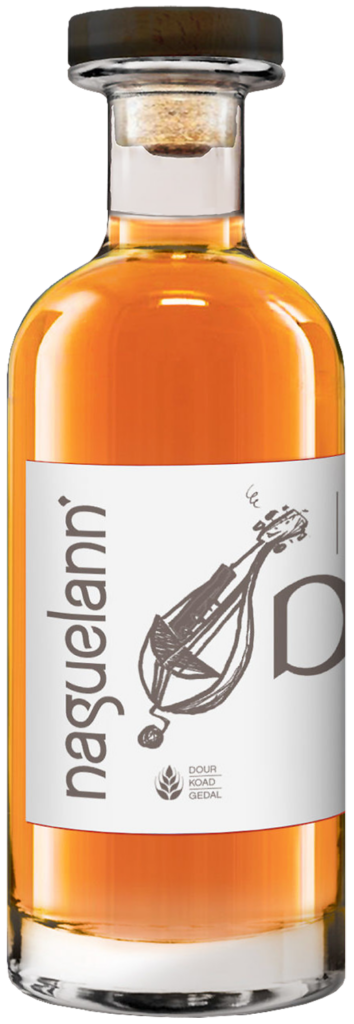
Naguelann ‘Dieil Pevar Ch’oad’ Single Malt Whisky de Bretagne
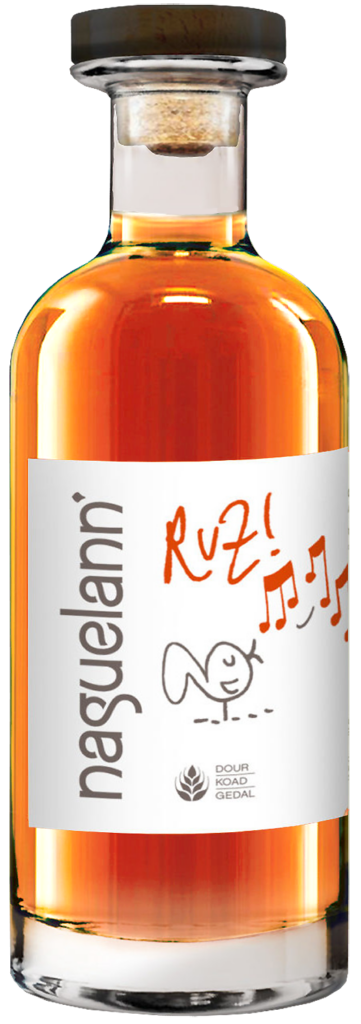
Naguelann ‘Ruz!’ Single Malt Whisky de Bretagne