Bourgoin Cognac
Fins Bois | Cognac

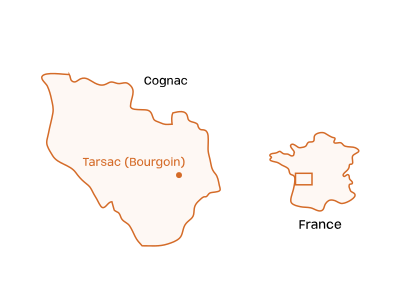
Bourgoin is an artisan Cognac house from the village of Tarsac in Fins Bois, where Frédéric and Rebecca Bourgoin distill organically-farmed grapes into honest, terroir-driven brandies. Four generations of expertise inform their forward-thinking, radically transparent approach that is nothing short of revolutionary in a place where homogeneity and anonymity are the norm.
Introducing the Estate
Romance & Revolution
Cognac is definitely not the first region that comes to mind when you think about natural, agricultural spirits producers. Although it employs detailed controls for both grape growers and winemakers, there are very few restrictions for wholesalers. This means that while the base wine is incredibly natural, what ends up in the bottle often contains the full 16g per liter of additives allowed by Cognac AOC. With 98% of base Cognac currently sold to large brands rather than bottled by grower-producers, control over the spirit from vineyard to bottle is exceedingly rare. Sugar, caramel coloring, and boisé are normal.
In the midst of this negociant-dominated landscape, fourth-generation Frédéric Bourgoin and his wife Rebecca represent a very different approach to Cognac. Their brandies are agricultural products, whose quality comes from estate grapes that are vinified, distilled, aged, and bottled on site. Their passion and intentionality craft incredibly compelling spirits that stand to revitalize the category.
History & Origins
Geologic and Viticultural Legacy
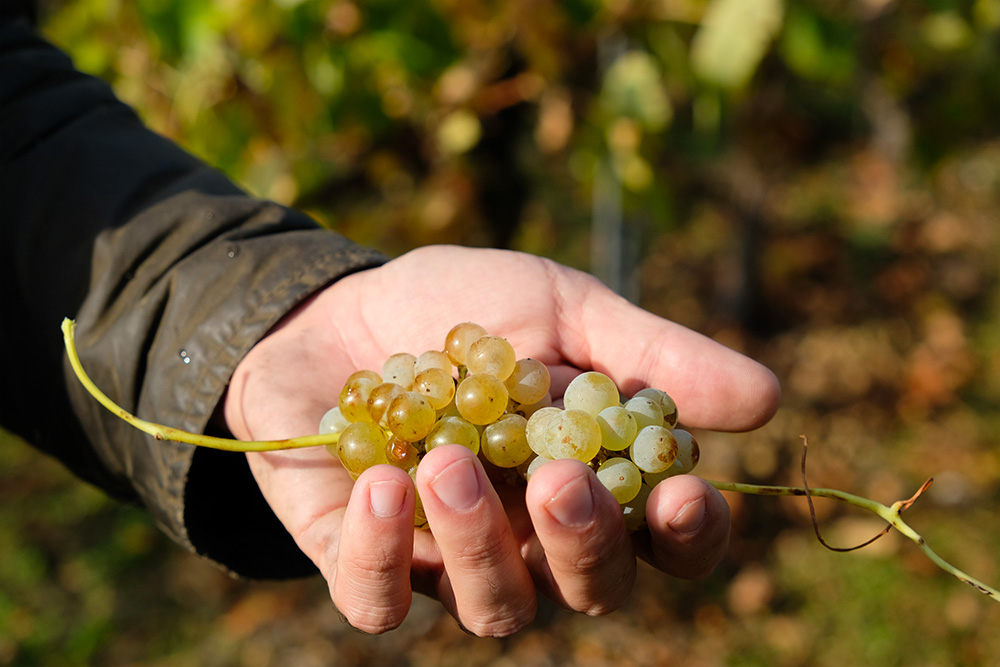
The exceptional quality of Bourgoin Cognac begins in their estate vineyards. From the time Frédéric’s great-grandparents married and merged their family holdings, each generation has slowly acquired vineyards scattered throughout several different villages in the Fins Bois sub-region of Cognac.
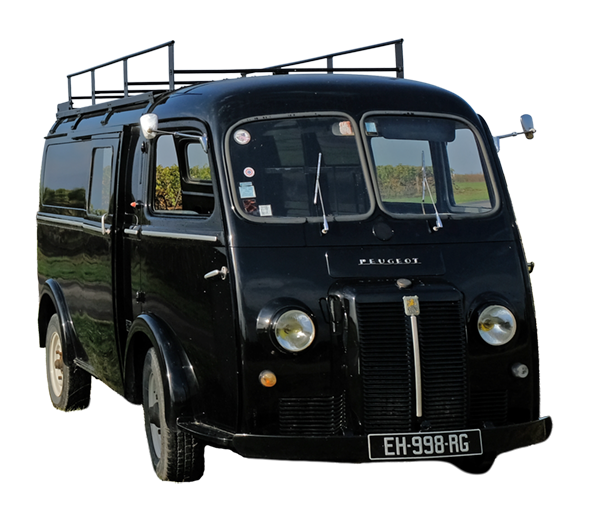
The family have been working organically since 1986, and are currently in the process of obtaining organic certification. Their vineyards are planted exclusively to double Guyot-pruned ugni blanc, the most typical variety in the Cognac appellation.
A few miles from the distillery, a 2.7-ton block of solid chalk that Frédéric calls the “Bourgoin Monolith” watches over some of their prized estate ugni blanc vines. Pulled from the ground nearby and erected in August 2019, the Monolith is both an identification marker for the vineyard and an educational tool. It’s made of calcium carbonate dating from the Cretaceous period, and provides a stunning visual example of the 54 meters of chalk found beneath their vineyards. This base lends their brandies the exceptional acidity and finesse found only in the very best Cognacs.
History & Origins
Distilled Heritage
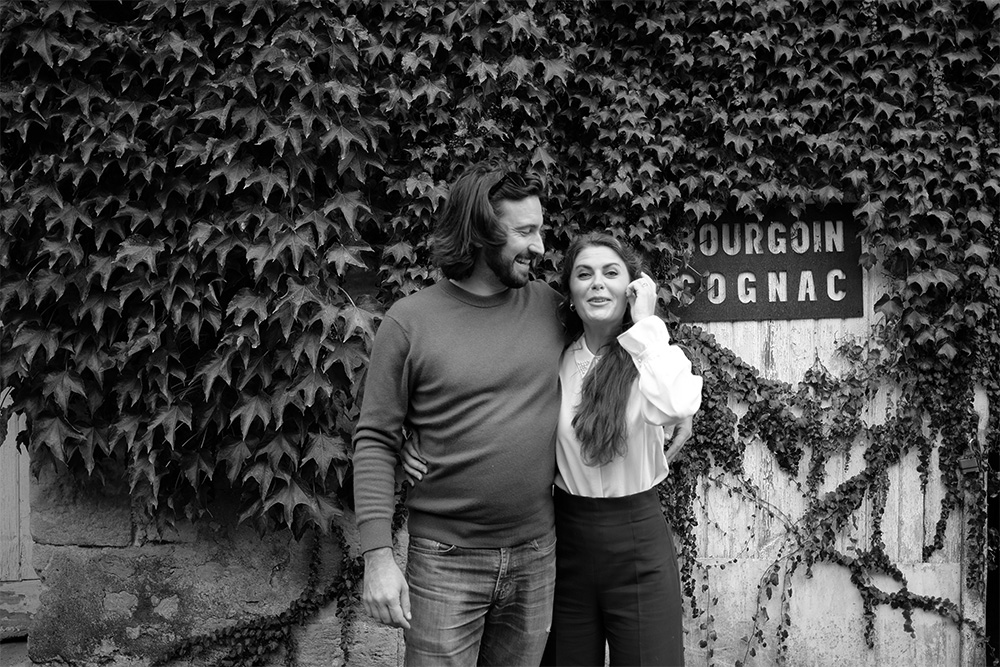
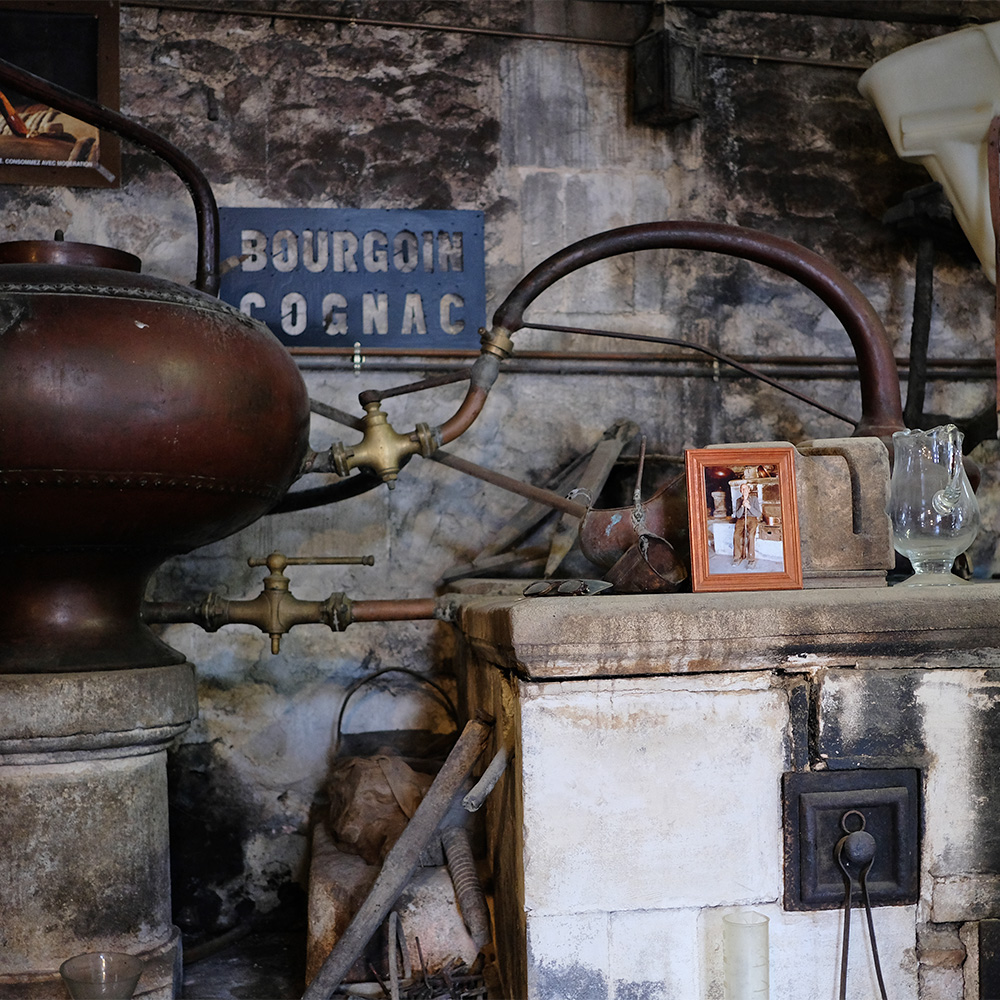
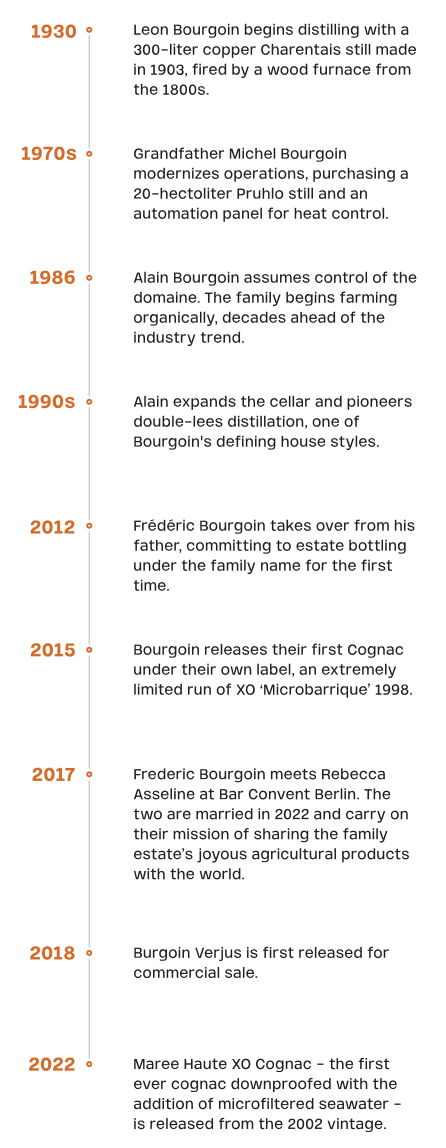
Frédéric’s great-grandfather Leon Bourgoin began distilling with a 300-liter copper Charentais still made in 1903, fired with a small wood furnace from the 1800s. During the distillation months, Leon would use wax to attach a copper cup onto the still’s swan neck before he went to sleep. When the neck was warm enough to indicate the evaporation of alcohol vapors, the wax would melt and drop the cup to the ground, waking and alerting him that distillation had begun.
In the 1970s, Frédéric’s grandfather Michel Bourgoin began to modernize the distillation process. He bought a 20 hectoliter Pruhlo still, as well as a state-of-the-art automation panel for heat control, improving the spirit’s consistency. He passed this still down to Frédéric’s father Alain, who, in addition to expanding the cellar, contributed his own distillation innovation by pioneering double-lees distillation, leading to one of Bourgoin’s signature house styles.
The Vision Behind Bourgoin Cognac
Honoring Tradition with a Modern Vision
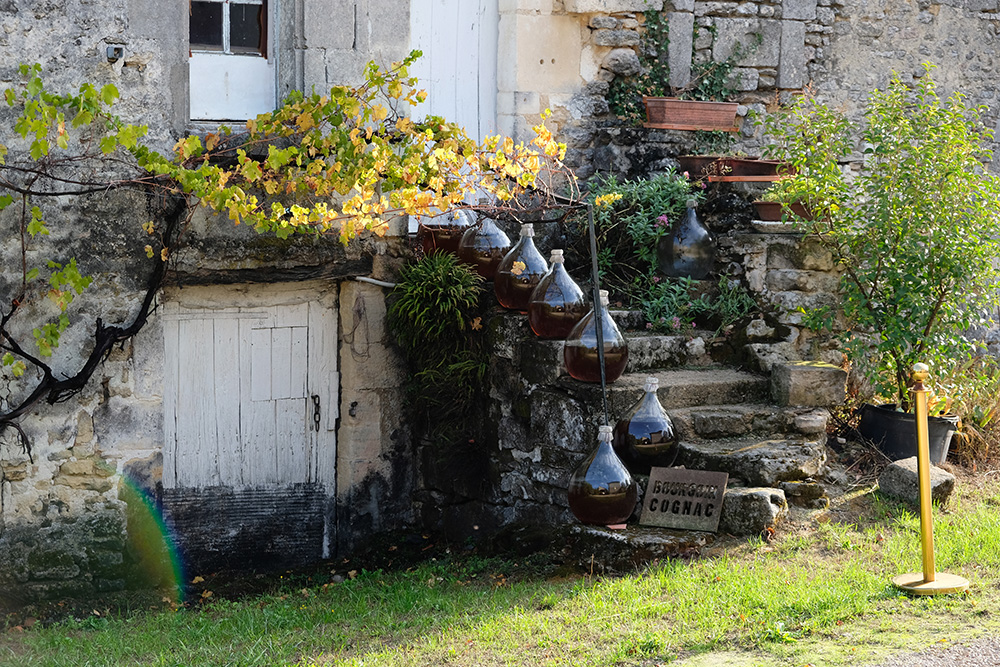
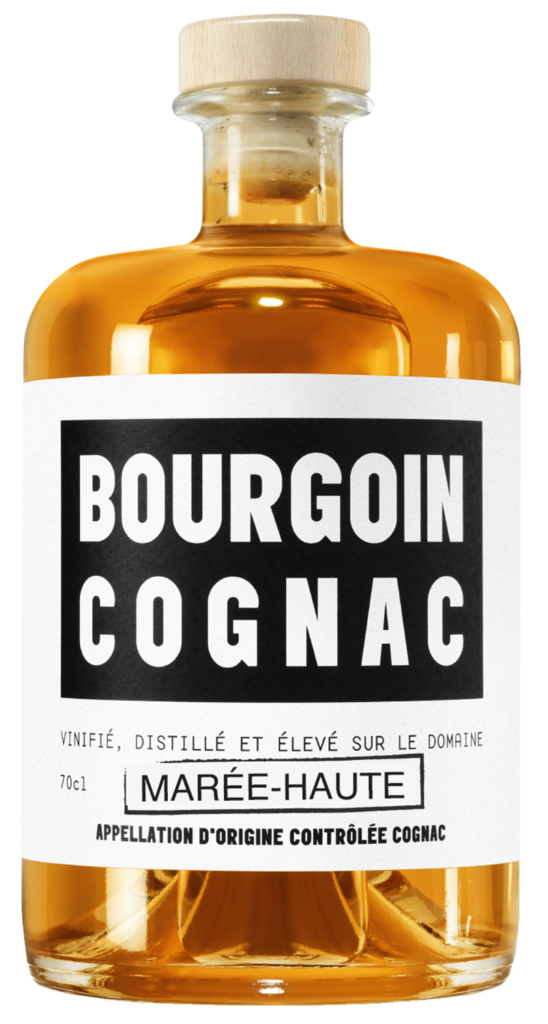
Frédéric took the helm of the domaine in 2012, determined to finally bottle and sell Bourgoin Cognac under the family name. His commitment to transparency and terroir is absolute: Bourgoin uses zero additives beyond local spring water, and the label carries GPS coordinates for the exact vineyard that provided the grapes to make the base wine, complete production details, and even Frédéric’s personal cell phone number in case the drinker has any questions!
Frédéric does not believe that innovation flies in the face of the way his ancestors made Cognac before him. Instead, his “Cognac revolution” is a return to the region’s roots:
“The word revolution doesn’t mean the sudden appearance of something new and unprecedented. Rather, it indicates the idea of a return, like that of our planet when it completes its orbit around the sun. The revolution is a return to the sources of what is ancient, pure and fundamental. It’s a journey to rediscover and restore first principles. It’s about restoring what was supposed to be as it was originally.”
— Frédéric Bourgoin
The Bourgoin family is serious about their Cognac, but they also see their brandies as a labor of love, with joy as the primary tenet of life. This is evident in Rebecca Bourgoin’s self-designated title of ‘Happiness Manager’ at Bourgoin.
While their terroir and technique place them among the world’s great Cognacs, they would rather have you in their cellar, under the rainbow colors of their party lights and glowing disco ball, inviting you to sign your name on their barrels while sipping their brandy. They want their Cognac to be shared and enjoyed.
Process & Philosophy
Old Wisdom, New Techniques
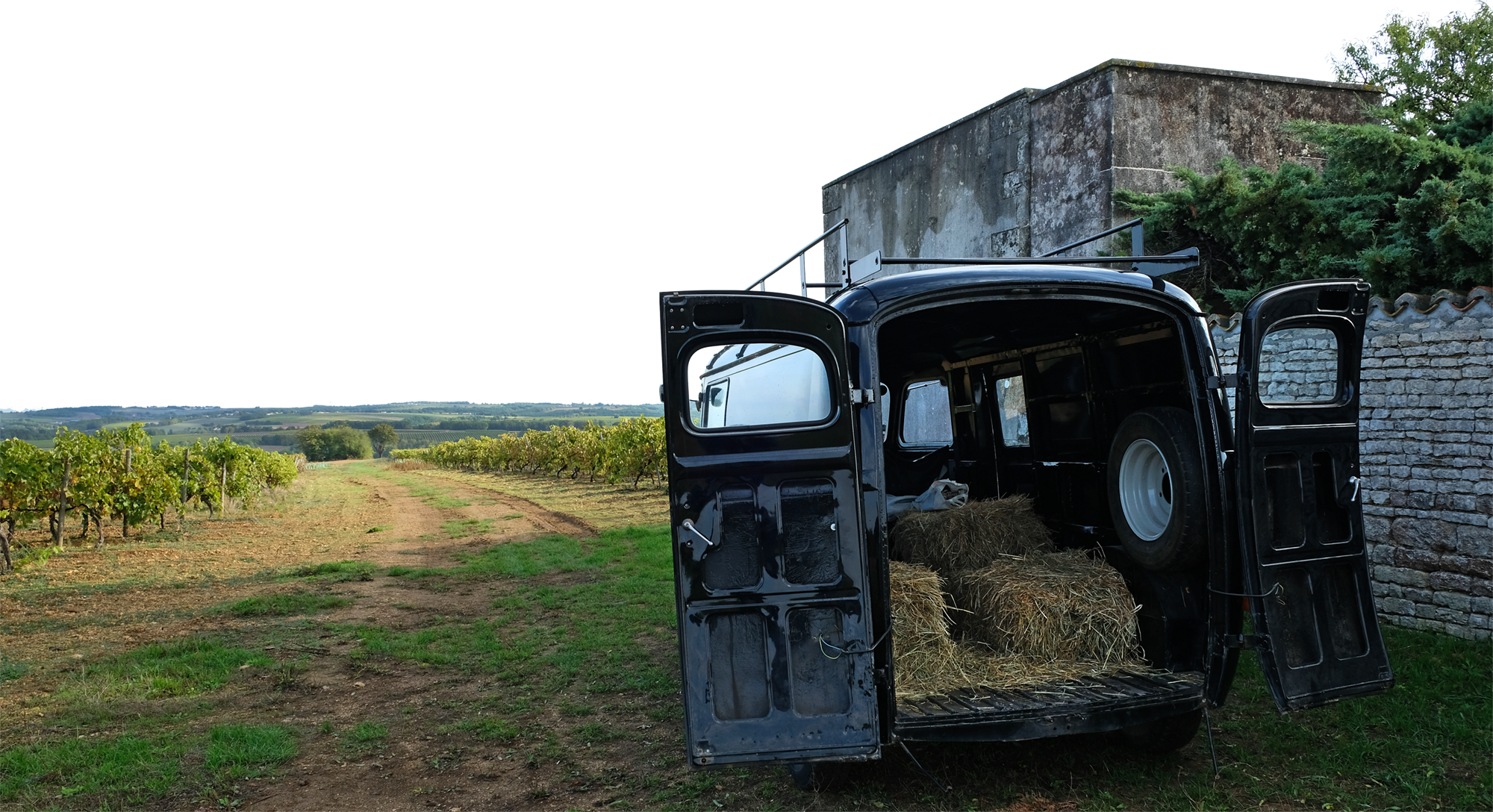
After harvest, spontaneous alcoholic fermentation takes place in temperature-controlled outdoor vats. Frédéric prefers indigenous yeast, but occasionally resorts to local, lab-multiplied yeast in difficult years. He draws the line at commercial yeast, which is never used.
The base wine ferments for four days with temperature control and without malolactic fermentation, which preserves the acidity essential to well-structured Cognac. Preventing malolactic fermentation is difficult without added sulfites, and is only possible due to the speed at which they can distill the harvest.
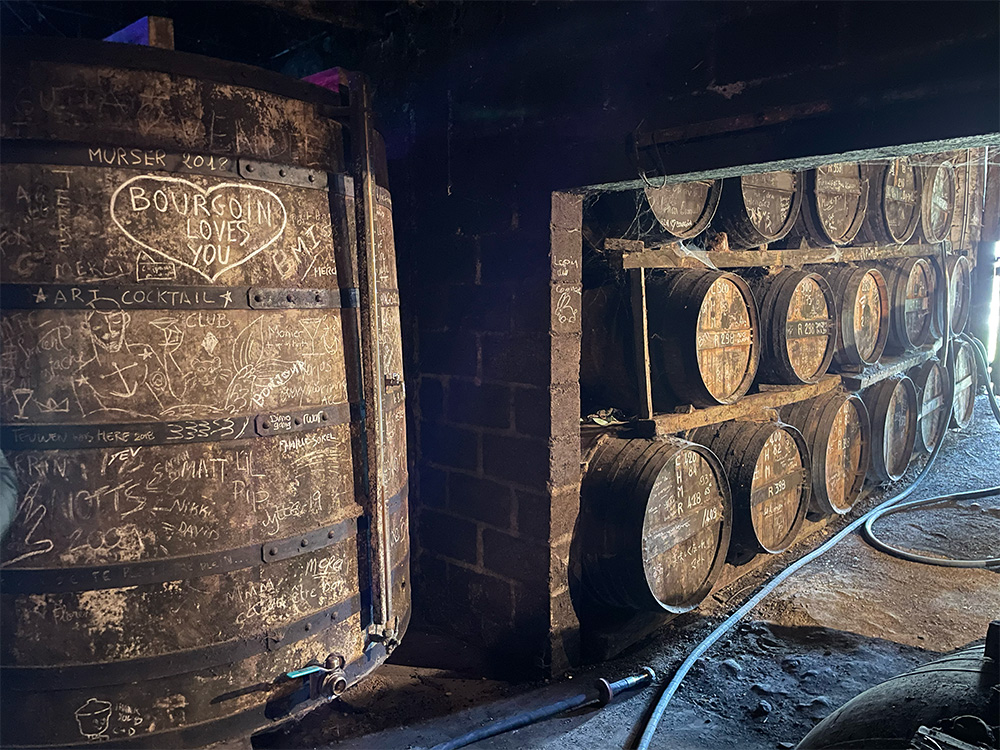
Using the method pioneered by Alain Bourgoin, the base wine is distilled with double the lees usually contained in wine destined for Cognac production. This increases the extraction of esters, creating an incredibly aromatic spirit that contains three times the esters of a standard Cognac.
Bourgoin works with a handful of coopers to source 350L barrels from the Limousin forest. While Frédéric selects for a wider-grain wood, simply sourcing based on grain is no longer enough. As the oak trees in the Limousin forest have begun to crossbreed, the soils have become a decisive factor for the quality of wood a tree will produce, and Frédéric selects based as much on the soils beneath the trees as the wood itself. In the distillery, they incorporate new casks very carefully, washing them at least three times with fresh eau-de-vie prior to their use for aging.
After aging, Bourgoin uses Fontaine Jolival water to down-proof their brandies. This local water comes from an ancient artesian well entombed 162 meters underground in an impermeable Portlandian aquifer in the heart of Fins Bois. Natural filtration through the various layers of rock for more than 20,000 years gives the water a unique signature of trace minerals and exceptional purity: it’s completely free of nitrates, pesticides, and other pollution from human activity.
Finally, none of Bourgoin’s brandies are blended, which naturally creates vintage and bottle variation. Although uncommon in Cognac, Bourgoin’s refusal to blend is a style that will be familiar to drinkers of agricole-style rhum or mezcal and a defining quality of their decidedly viticultural Cognac.
 Revolution in the Roots
A Natural Spirits Manifesto
Bourgoin was one of the first signatories of the Gnôle Naturelle (Natural Booze) Manifesto, a growing movement of European distillers working towards the revitalization of natural, unadulterated spirits. Rather than simply being a trend or a brand of “naturalness,” they have 12 strict tenets for what constitutes a Gnôle Naturelle, including no purchased ethyl alcohol, no additives or interventions, strictly organic base materials, and no filtration.
As this collective continues to grow in influence, groups such as RAW Wine, for example, are revising guidelines for spirits entries to align more closely with the Gnôle Naturelle tenets. The spirits community has a long way to go before the idea of a minimal-intervention spirit becomes mainstream, or even well understood, but the movement has begun.
Products
NoLo ABV
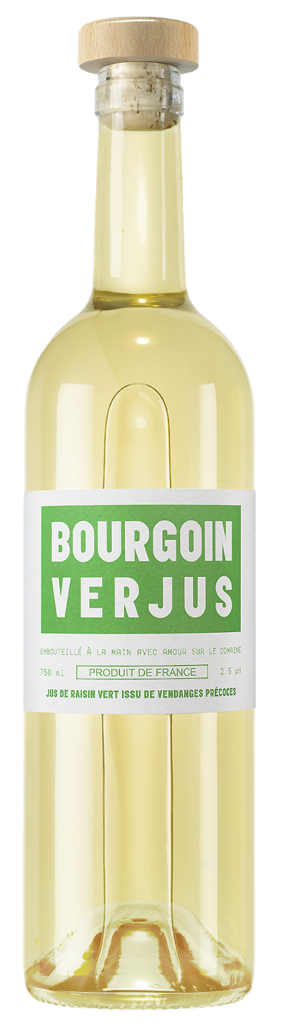
Bourgoin Verjus
Spirits
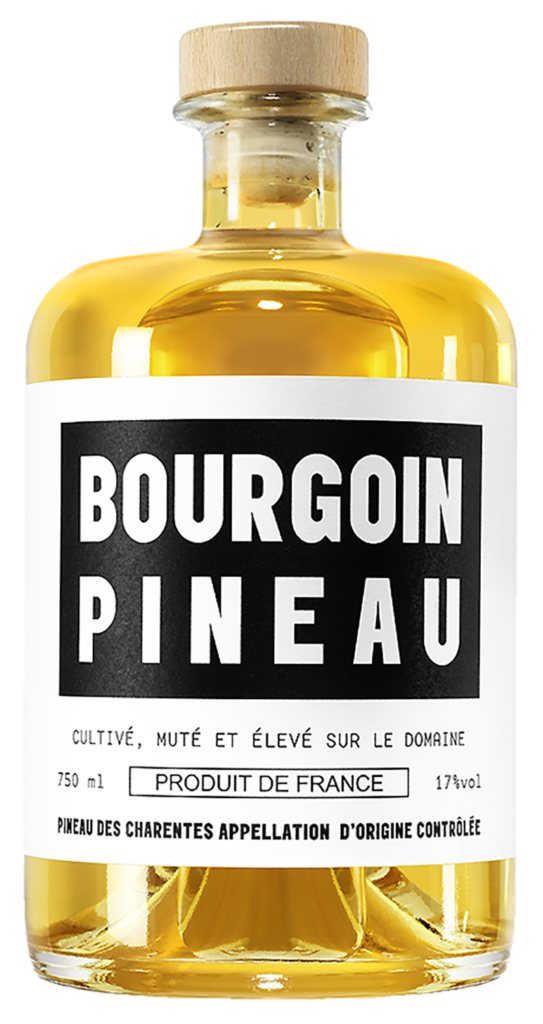
Bourgoin Pineau des Charentes
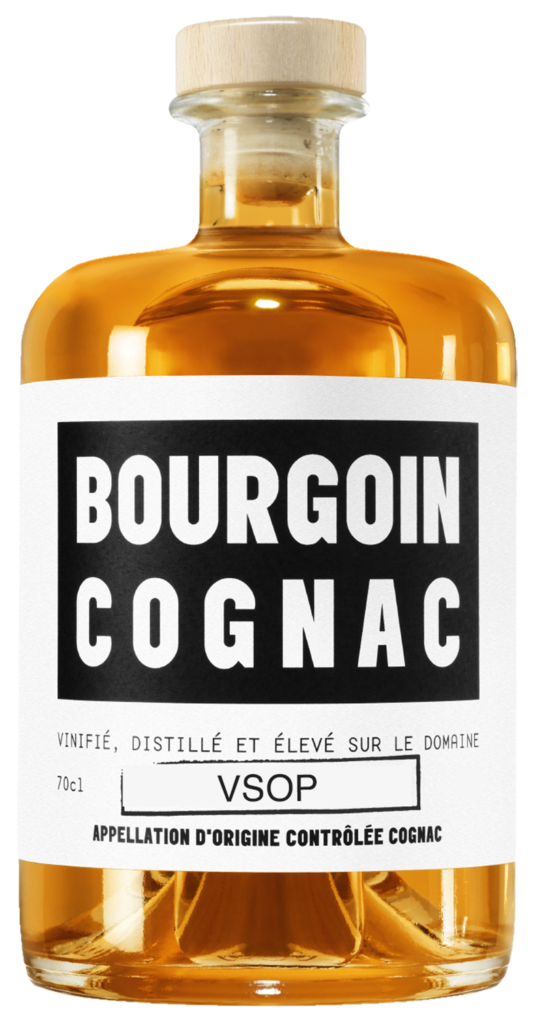
Bourgoin VSOP Cognac